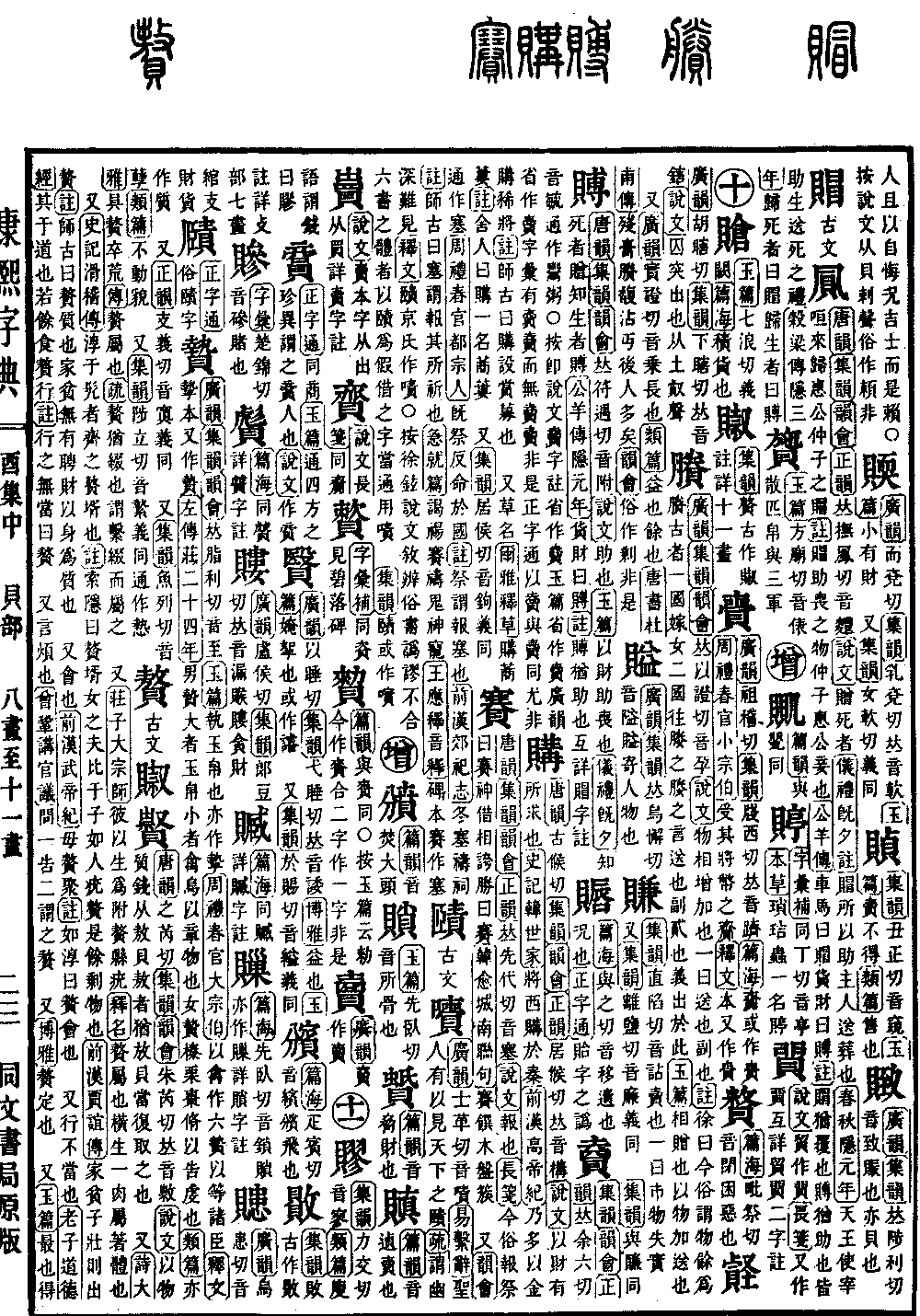
You Collection, Middle Volume
Radical: Cowrie (bèi)
Sai
Kangxi stroke count: 17
Page 1211, Entry 22
Pronounced sai.
According to the Explaining and Analyzing Characters (Shuowen Jiezi), it means to requite or repay.
In the Long Narrative (Changjian), it is noted that in common usage, offering sacrifices in return for blessings is called sai shen, and the act of competing with one another to boast of victory is also called sai.
In the poem composed by Han Yu, it is written: The sacrificial food for the ceremony was gathered on wooden platters.
Furthermore, the Rhyme Compilation (Yunhui) states that it is also used interchangeably with the character pronounced sai.
In the Rites of Zhou (Zhouli), Spring Offices, section on the Chief Official of the Capital: After the sacrifice is completed, report the result to the state. The commentary notes that sacrifice here refers to rewarding or repaying the gods.
In the History of the Former Han (Qian Hanshu), Records of Suburban Sacrifices: In winter, one performs the sai prayer rituals. The commentary by Yan Shigu states that sai refers to repaying that which was prayed for.
In the Urgent Reference (Jijiupian): Paying visits, performing exorcisms, and offering sacrifices to pray to ghosts and spirits for favor.
In the Sound Explanations by Wang Ying: Originally, the character sai was written as the character pronounced sai.