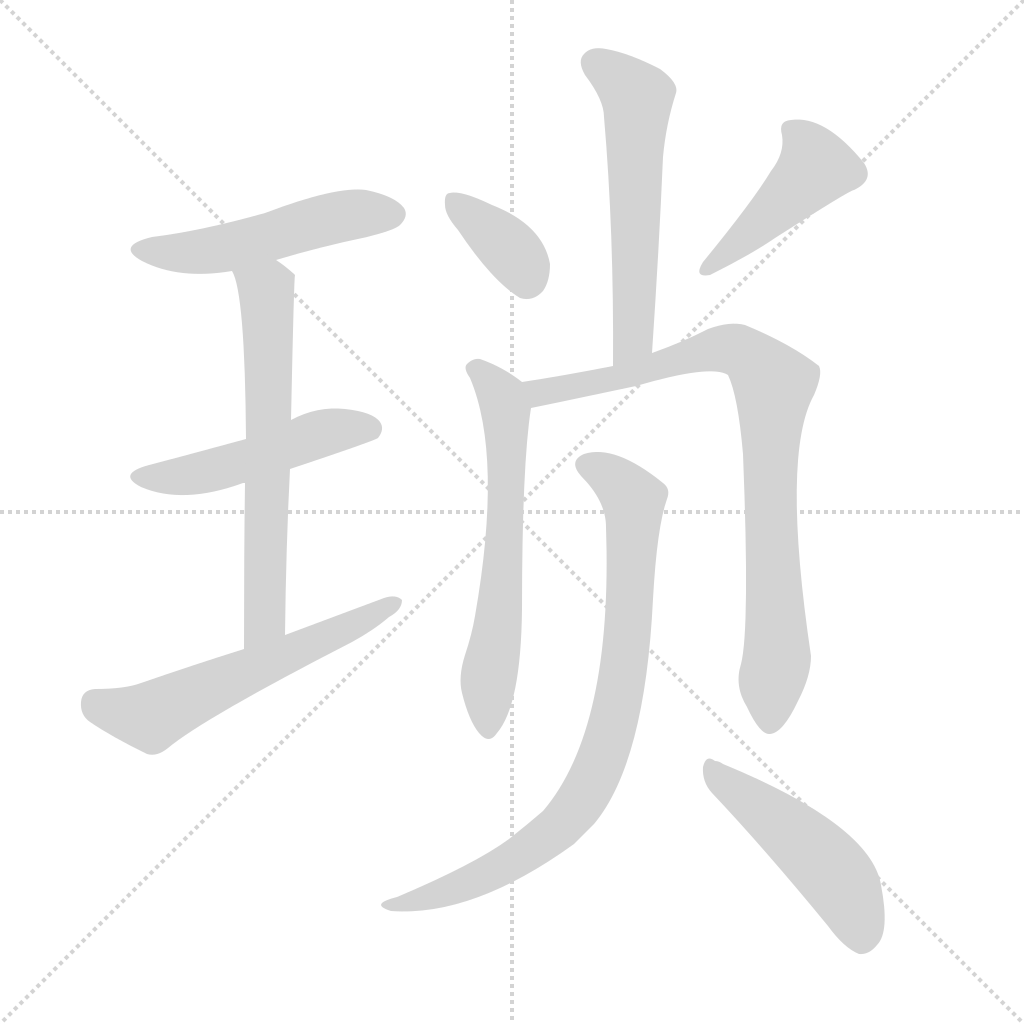
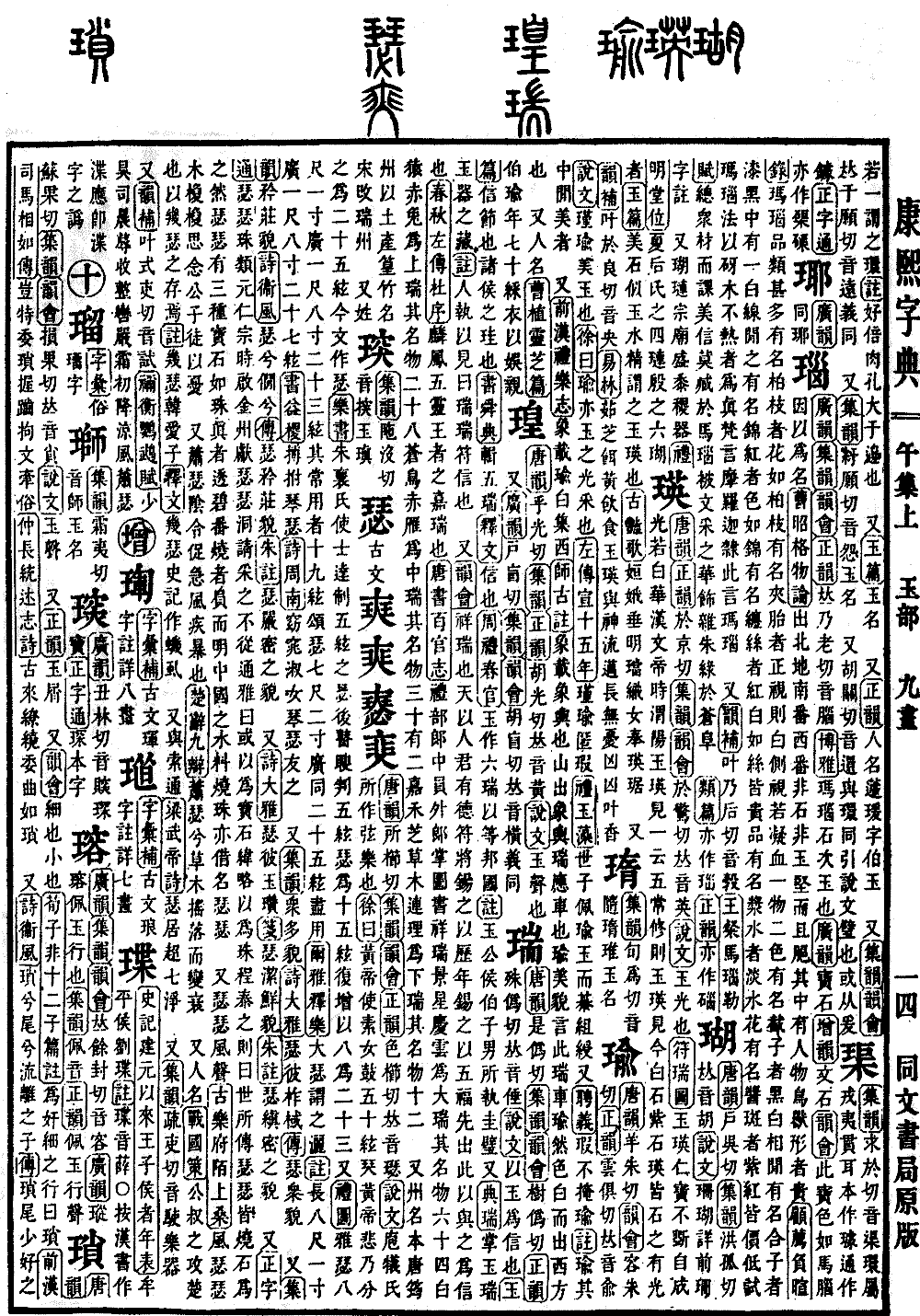
Wu Collection, Upper Volume
Radical: Jade (yù)
Kangxi Strokes: 15
Page 738, Entry 01
Tangyun dictionary, pronounced suo (falling tone). Jiyun and Yunhui dictionaries, pronounced suo (falling tone). According to the Shuowen Jiezi, the sound of jade. Also in the Zhengyun dictionary, jade powder. Also, according to the Yunhui, fine or small. Commentary on the Xunzi, Non-Twelve Masters chapter, states that committing acts of espionage is called suo. In the Book of Han, Biography of Sima Xiangru: How can one merely be insignificant and restrained, tied to texts and following conventions? In Zhongchang Tong's Poem on Expressing Ambitions: Since ancient times, intertwined and winding, like something small. Also, Book of Odes (Shijing), Odes of Wei: Small and weak, the children of the drifting. The Commentary states: Suowei refers to the appearance of youth and beauty. Also, according to the Yunhui, suosuo describes something trivial, fragmentary, and petty. According to the Erya, Explaining Words: Suosuo means small. The Commentary states: Talent and capacity are fine and coarse. In the Book of Changes (Yijing), Travel hexagram: The traveler is petty. The Sub-commentary states: Suosuo means fine, small, and base. In the Book of Odes (Shijing), Lesser Odes: Petty are the in-laws, they have no prominent rank. The Commentary states: Suosuo is an appearance of being small. Also, according to the Guangya, suo means to connect. Also a place name. In the Zuo Tradition (Zuo Zhuan), 11th year of Duke Xiang: The armies of the feudal lords were stationed at Suo. The Commentary states: To the west of the county is Suohou Pavilion. Also, according to the Yunhui, Qingsuo (Green Lattice) is the name of a gate. The Han system for those serving in the Yellow Gate required them to enter at dusk and bow at the Qingsuo Gate; this was called the evening official service. In Qu Yuan's Encountering Sorrow (Lisao): I wish to stay briefly at this spirit gate, but the day is fast approaching dusk. The Commentary states: Suo refers to carvings on a gate. The pattern is like connected links, which was the name of the provincial chambers of the King of Chu. Another source says it is where the divine spirits reside. The Suo gate has green lattice patterns. In the Book of Han, Biography of Empress Wang: The usurper went up to the red steps and the green lattice. The Commentary states: The edges of the door were painted blue and carved, which was the regulation for the Son of Heaven. Ru Chun states: The crossbar of the door was double-layered, like the collar of a garment; the double-layered part was blue, called Qingsuo, and was the gate regulation of the Son of Heaven. Yan Shigu states: Qingsuo refers to carvings made in the shape of linked chains, painted with blue. Also, according to the Yunhui, any object that is carved, latticed, or tied in an interlocking pattern is called suo, not just gate carvings. In Zuo Si's Rhapsody on the Capital of Wu: Finished with connected patterns. Also, bian-suo (border affairs). In the Book of Han, Biography of Bing Ji: Investigating the border magistrates, recording their regulations in detail. The Commentary states: Suo means to record. In Su Shi's poetry: Discussing military strategy in old age, assigned to border matters. Also a place name. In the Spring and Autumn Annals (Chunqiu), 12th year of Duke Cheng: The Duke met with the Marquis of Jin and the Marquis of Wei at Suoze. Also a surname. According to the Zhengzitong: A Jinshi degree holder in the Zhenghe era of the Song dynasty named Suo Zheng. Also a person's name. In the Book of Rites (Liji), Tan Gong: County Master Suo said. The Commentary states: Suo is the name of the County Master. Also, according to the Yunhui, sometimes written in a variant form (suo). In the Book of Jin, Biography of Xi Zuochi: Petty and drifting.