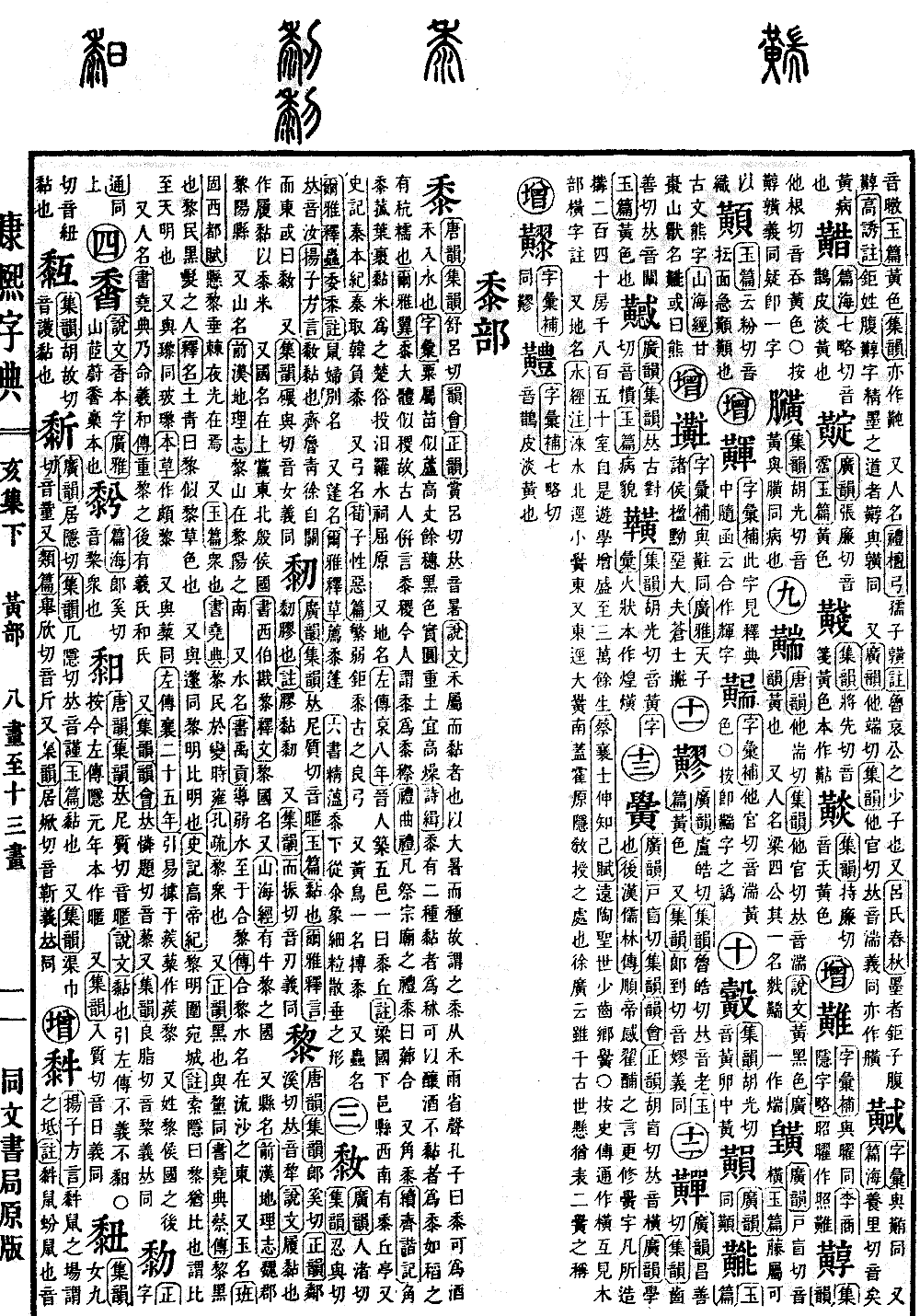
Hai Collection, Lower Volume
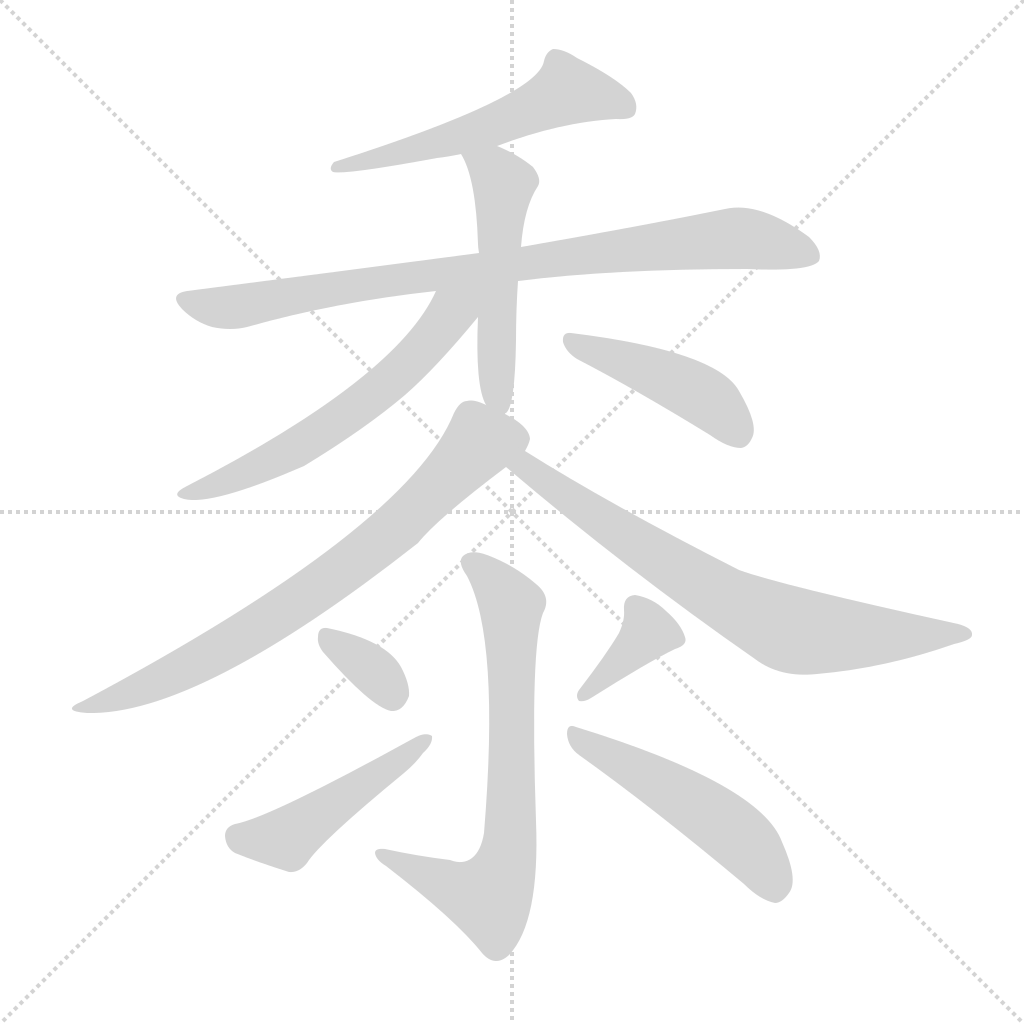
Radical: Glutinous Millet (shǔ)
Kangxi Strokes: 12
Page 1517, Entry 25
Tang Rhyme (Tangyun) and Collected Rhymes (Jiyun) state: pronounced shu (rising tone). Rhyme Compilation (Yunhui) and Correct Rhymes (Zhengyun) state: pronounced shu (rising tone).
According to Explaining Graphs and Analyzing Characters (Shuowen): A type of grain that is sticky. It is planted during the great heat (summer), which is why it is called shu. It is formed by the radical for grain, and a phonetic element derived from rain with parts omitted. Confucius said: shu can be used to make wine; it is grain that enters water.
Dictionary of Characters (Zihui): A type of millet. The seedlings resemble reeds and grow over a zhang (a measure of length) in height. The ears are black, and the grains are round and heavy. The soil should be high and dry.
Collection of Explanations of the Book of Odes (Shiji): There are two types of shu. The sticky variety is called shu (shú), which can be used to brew wine. The non-sticky variety is called shu (shǔ), similar to the difference between non-glutinous and glutinous rice.
Wings of the Erya (Eryayi): Shu is generally similar to panicled millet (ji), which is why the ancients spoke of shu and ji together. Modern people call shu by the name shuji.
Book of Rites (Liji), Songs of Propriety (Quli): In the rites for ancestral sacrifices, shu is referred to as fragrant.
Also, corner millet (jiao shu): Records of Continued Qi Harmony (Xu Xieji) states: Corner millet is sticky rice wrapped in water-wild rice leaves. The custom in Chu is to throw them into the Miluo River to make offerings to Qu Yuan.
Also, a place name: Zuo Commentary (Zuo Zhuan), seventh year of Duke Ai: The people of Song built five cities, one of which was called Shuqiu. Commentary: Southwest of Xiayi County in the state of Liang, there is a Shuqiu pavilion.
Also, Records of the Grand Historian (Shiji), Annals of Qin: Qin captured the place Fushu from the state of Han.
Also, a type of bow: Xunzi, Chapter on the Nature of Man is Evil (Xing e pian): The Fanruo and Jushu bows were the fine bows of antiquity.
Also, yellow bird: Another name is boshu.
Also, a type of insect: Erya, Explaining Insects: Weishu. Commentary: Another name for the female of the species.
Also, a type of mugwort: Erya, Explaining Plants: Jian shu peng.
Six Books, Fine Essence (Liushu Jingyun): The character for shu is formed with the radical for grain, with a component below representing the shape of fine grains scattering and hanging down.
Textual Research: Zuo Commentary, eighth year of Duke Ai: The people of Jin built five cities. Corrected according to the original text: change eighth year to seventh year; change people of Jin to people of Song.