Wu Collection, Middle Volume
Radical: Sickness (nì)
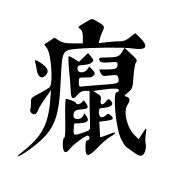
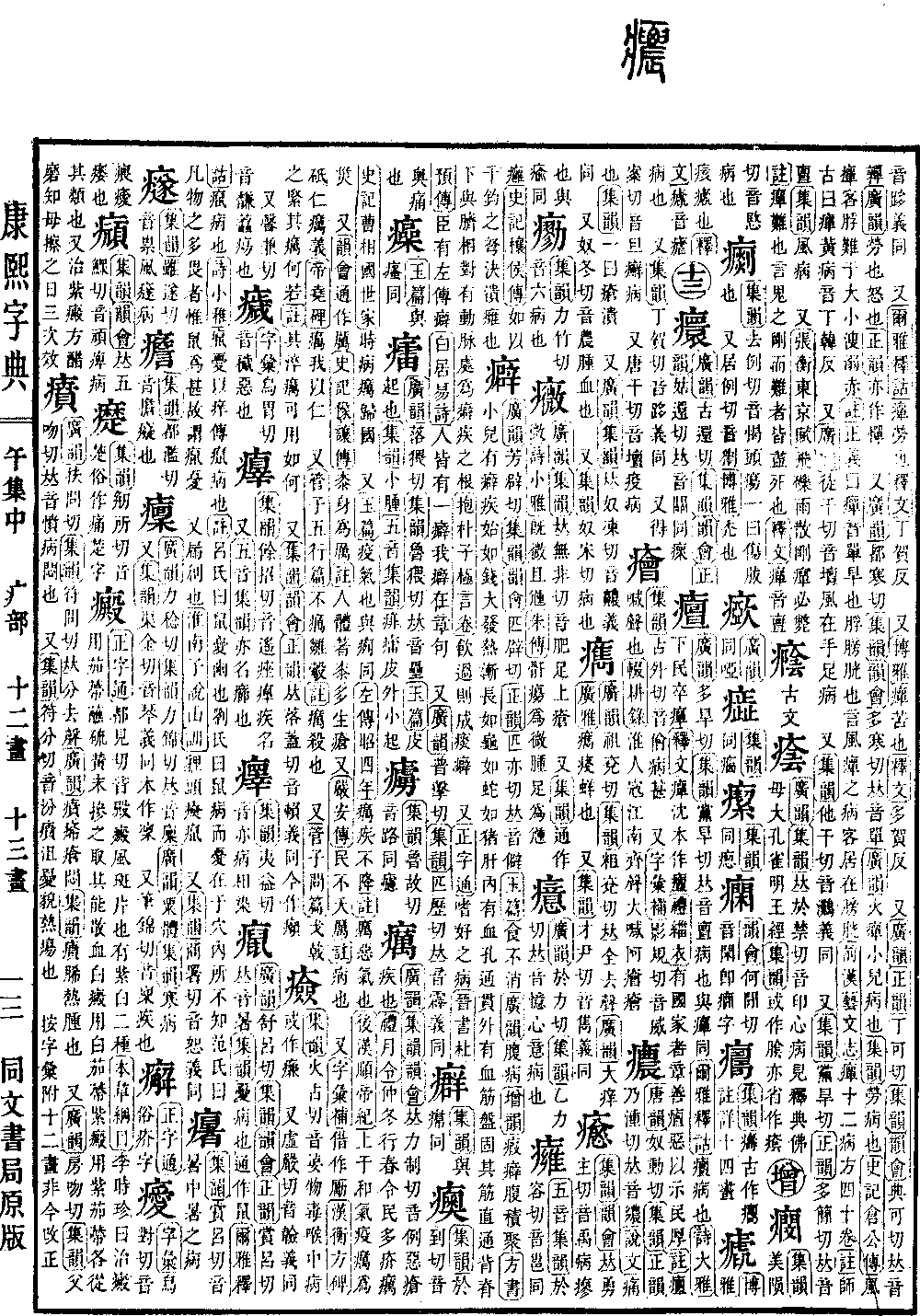
Entry: 癙
Kangxi Stroke Count: 18
Page 781, Entry 32
According to the Expanded Rhymes (Guangyun), pronounced shu. According to the Collected Rhymes (Jiyun), the Rhyme Collection (Yunhui), and the Correct Rhymes (Zhengyun), pronounced shu. According to the Collected Rhymes (Jiyun), it means sickness caused by worry. It is also written interchangeably as shu. In the Literary Expositor (Erya), in the chapter interpreting ancient terms, it states that this character refers to sickness. In the Book of Odes (Shijing), Minor Odes, it states: Suffering from worry and pain. The commentary notes that this character refers to sickness. Another note states: Master Lu says it refers to hidden worry. Master Liu says it refers to a sickness and worry located within a burrow, which is unknown. Master Fan says that among all creatures that are fearful, the mouse is the most so, hence it is used to describe fearful worry. It also refers to a draining sore or ulcer. In the Huainanzi, in the chapter discussing mountains, it mentions using the head of a leopard cat to treat this condition. According to the Collected Rhymes (Jiyun), also pronounced shu, with the same meaning.