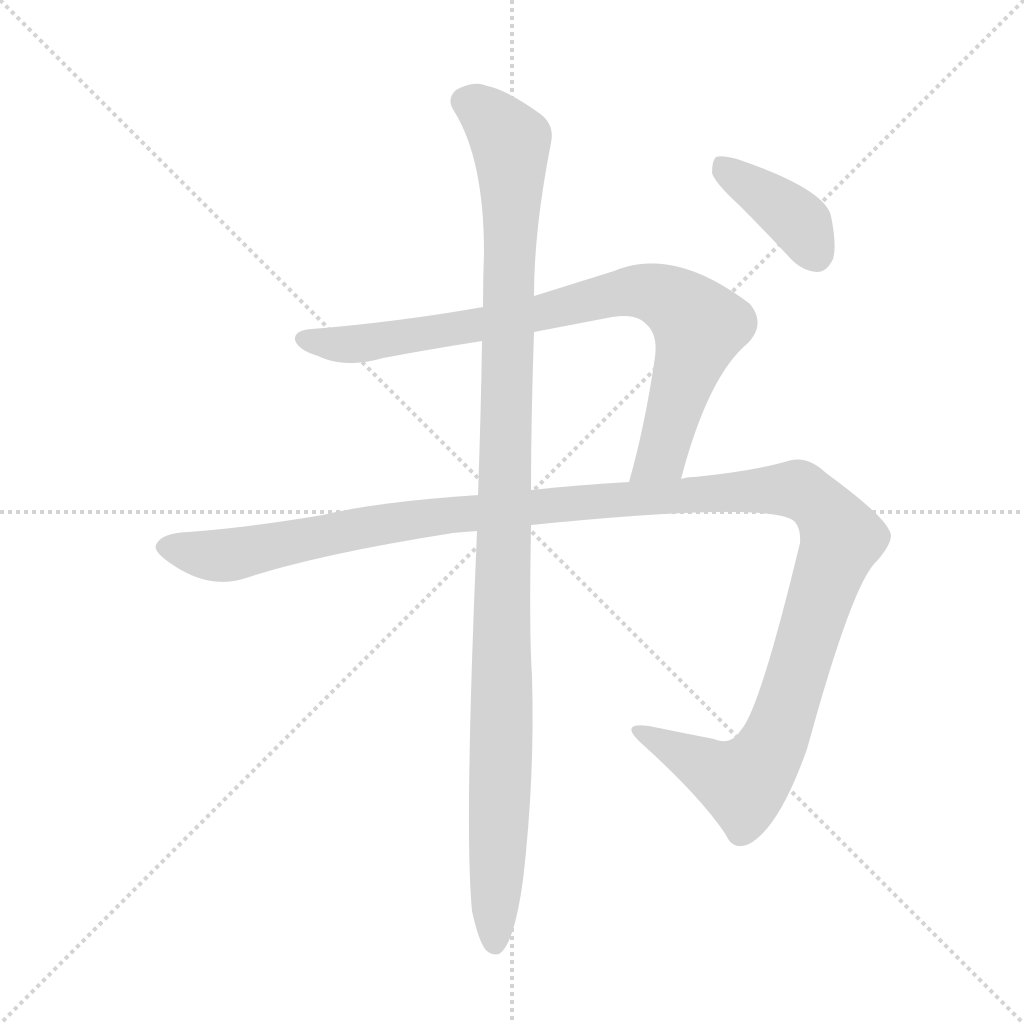
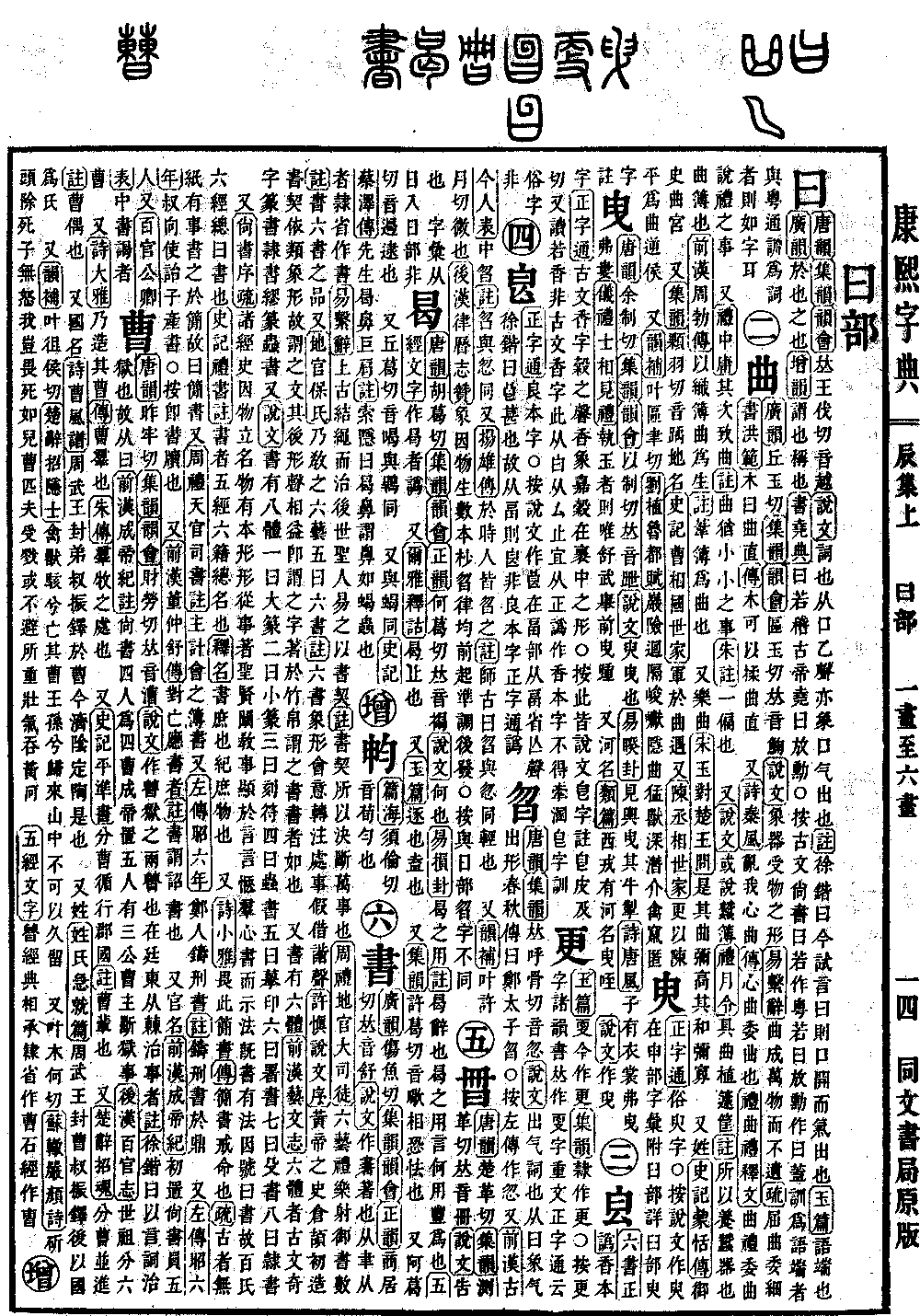
Chen Collection, Upper Volume. Radical: Say (yuē). Character: shū. Kangxi stroke count: 10. Page 502. According to the Broad Rhymes (Guangyun), the Collected Rhymes (Jiyun), the Rhyme Assembly (Yunhui), and the Correct Rhymes (Zhengyun), the pronunciation is a combination of the sounds shāng and yú, or shāng and jū, sounding like shū. The Explaining Graphs and Analyzing Characters (Shuowen Jiezi) states: To write is to manifest. It is composed of the radical for writing brush (yù) and the character for person (zhě). In the clerical script (lìshū), it was simplified to the current form. The Classic of Changes (Yijing), Appended Phrases (Xici) states: In high antiquity, people governed by knotting cords. Later sages replaced this with written records and contracts (shūqì). Commentary: Written records and contracts were used to decide all matters. The Rites of Zhou (Zhouli), Ministry of Education (Diguan) states: The six arts are rites, music, archery, charioteering, calligraphy (shū), and mathematics. Commentary: Calligraphy refers to the categories of the six principles of writing. Also, the Protector (Baoshi) section of the Ministry of Education states: He taught them the six arts, the fifth of which is the six principles of writing (liùshū). Commentary: The six principles of writing are pictograms (xiàngxíng), compound ideograms (huìyì), derivative cognates (zhuǎnzhù), simple ideograms (chùshì), phonetic loan characters (jiǎjiè), and phono-semantic compounds (xiéshēng). Xu Shen's Preface to the Explaining Graphs and Analyzing Characters states: Cangjie, the historian of the Yellow Emperor, first created written records and contracts. He drew shapes according to the categories of things, which were called graphs (wén). Later, when form and sound supplemented each other, they were called characters (zì). Writing on bamboo slips and silk is called shū. Shū means "as if" (rú). Also, there are six styles of writing. The Book of Han (Hanshu), Treatise on Literature (Yiwen Zhi) states: The six styles are ancient script (gǔwén), unusual characters (qízì), seal script (zhuànshū), clerical script (lìshū), decorative seal script (miùzhuàn), and bird-and-insect script (chóngshū). Also, the Explaining Graphs and Analyzing Characters states: There are eight styles of writing: first, large seal script (dàzhuàn); second, small seal script (xiǎozhuàn); third, tally script (kèfú); fourth, bird-and-insect script (chóngshū); fifth, seal-engraving script (mùyìn); sixth, sign-board script (shǔshū); seventh, weapon-engraving script (shūshū); and eighth, clerical script (lìshū). Also, the Sub-commentary to the Preface of the Book of Documents (Shangshu) states: Various classics and histories establish names based on things. Things have original forms, forms are manifested through events, sages clarify teachings, events are clarified through words, and words accord with the minds of the people. When written down as a law, they are called shū. Therefore, the works of the various philosophers and the Six Classics are collectively called shū. Records of the Grand Historian (Shiji), Commentary on the Book of Rites states: Shū is the general term for the Five Classics and the Six Records. The Explanation of Names (Shiming) states: Shū means "multitude" (shù), as it records a multitude of things. Also, the Classic of Odes (Shijing), Minor Odes (Xiaoya) states: Fearing this shū. The Commentary (Zhuan) states: Shū refers to an admonishing command. The Sub-commentary states: In ancient times there was no paper; matters were written on bamboo and wooden slips, so it was called shū. Also, the Rites of Zhou, Ministry of State (Tianguan), Commentary on the Controller of Records states: Accounting ledgers. Also, the Zuo Commentary (Zuozhuan), Sixth Year of Duke Zhao states: The people of Zheng cast shū. Commentary: This refers to casting legal articles onto bronze tripods. Also, the Zuo Commentary, Sixth Year of Duke Zhao states: Shuxiang sent a shū to Zichan. Note: This refers to a letter. Also, the Book of Han, Biography of Dong Zhongshu states: Those who did not respond to the shū. Commentary: Shū refers to an imperial edict (zhàoshū). Also a title of an official. The Book of Han, Annals of Emperor Cheng states: The position of Master of Writing (shàngshū) was first established with a fixed staff of five people. Also, the Table of Officials and Nobles states: Palace Secretary and Receptionist (zhōngshū yèzhě).