Wei Collection, Middle Volume
Radical: Silk (mì)
Sohu
Kangxi Stroke Count: 14
Page 927, Entry 12
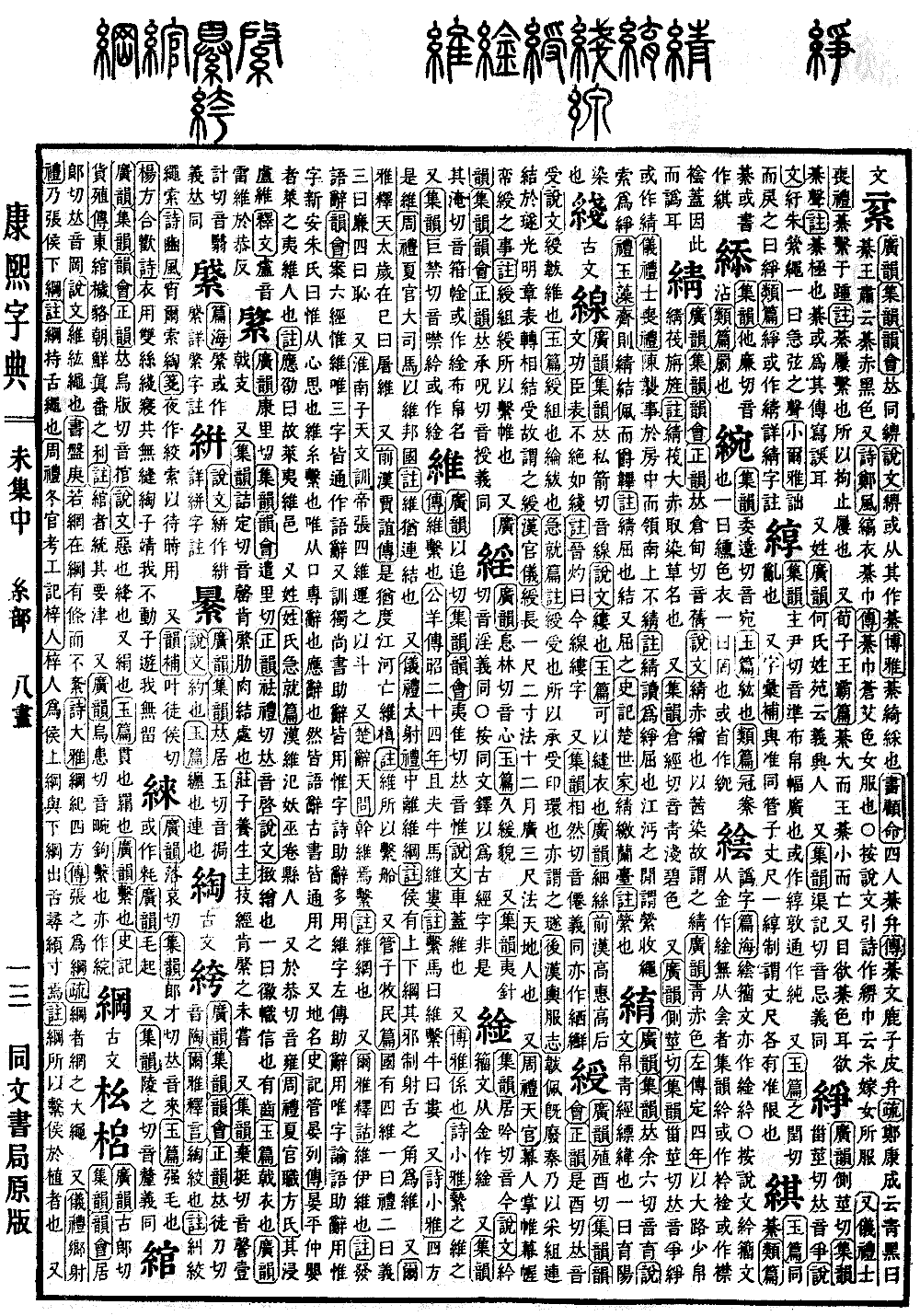
Broad Rhymes (Guangyun): Pronounced shou. Collected Rhymes (Jiyun), Rhyme Meetings (Yunhui), and Standard Rhymes (Zhengyun): Pronounced shou.
Explanation of Writing (Shuowen): A silk ribbon or sash, a binding.
Comprehensive Collection (Yupian): A ribbon, a braided band, a corded sash.
Annotation to the Urgent Learning Chapter (Jijiupian zhu): A ribbon, to receive, that which receives and holds the seal ring. Also referred to as a jade pendant.
Treatise on Carriages and Clothing in the History of the Later Han (Hou Hanshu Yufuzhi): Once the ritual apron and pendant were abolished, the Qin dynasty utilized colored bands to connect the jade pendants. They shone brightly and served as symbols of rank, linked and received in succession, hence they are called ribbons.
Han Official Rituals (Hanguanyi): A ribbon is one foot and two inches long, reflecting the twelve months, and three feet wide, reflecting heaven, earth, and humanity.
Rites of Zhou (Zhouli), Office of Heaven: The tent maker is in charge of curtains, tents, awnings, and ribbon matters.
Annotation: Ribbons, braided ribbons, used to fasten tents.
Broad Rhymes (Guangyun), Collected Rhymes (Jiyun), Rhyme Meetings (Yunhui), and Standard Rhymes (Zhengyun): Pronounced shou. Same meaning.