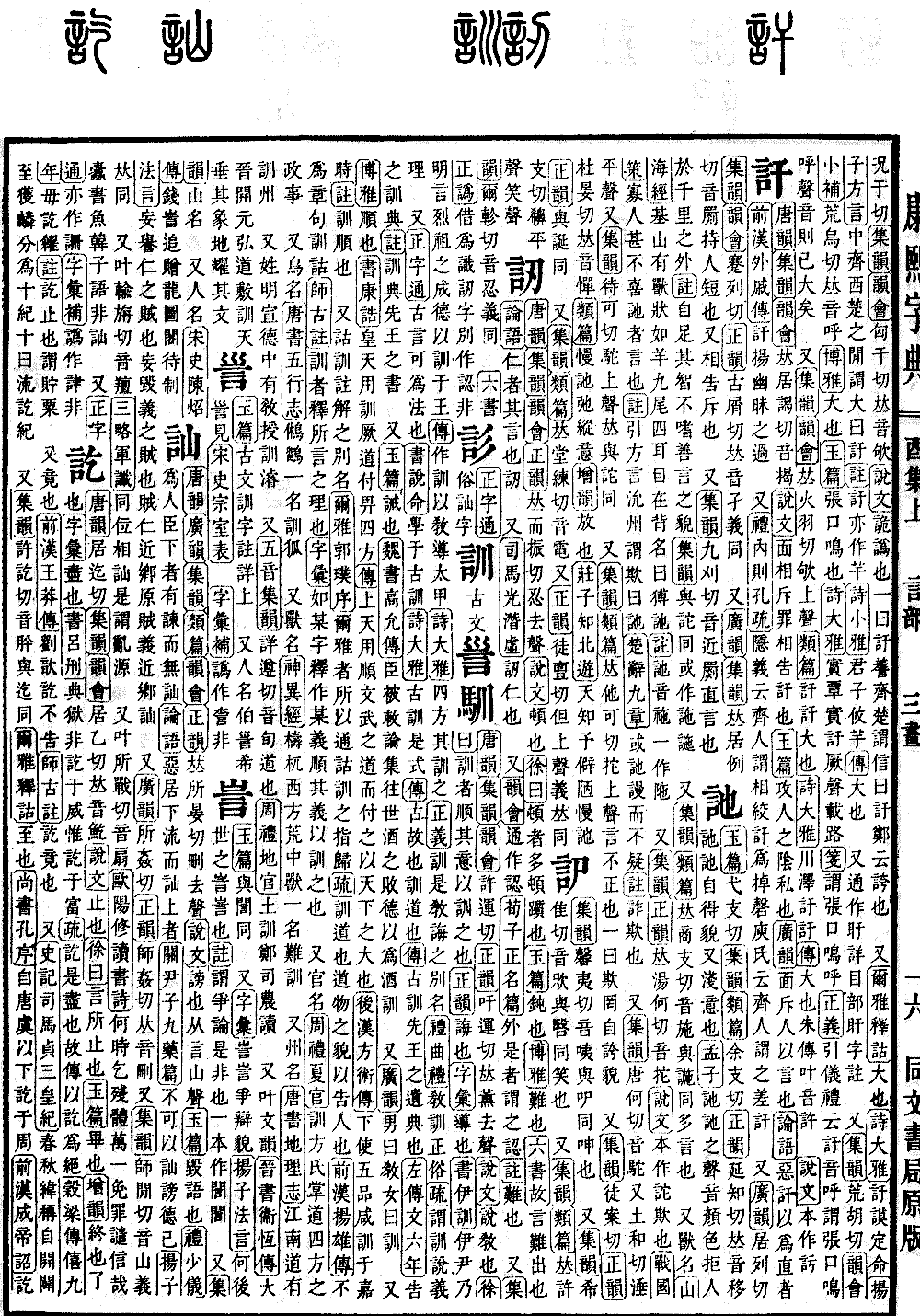
You Collection, Upper Volume
Radical: Speech (yán)
Shan
Kangxi Stroke Count: 10
Page 1148, Entry 02
Pronounced shan (falling tone).
Shuowen Jiezi (Explanation of Simple and Compound Characters): To slander or defame. Formed from the radical for speech, with shan serving as the phonetic component.
Yupian (Jade Chapters): Defamatory remarks.
Book of Rites (Liji), Shaoyi section: A subordinate may offer counsel but must not slander.
Analects (Lunyu): I detest those who occupy lower positions yet slander their superiors.
Guanyinzi, Nine Medicines section: One must not slander those who have shown kindness to oneself.
Yangzi Fayan (Model Sayings): Reckless flattery is the ruin of benevolence; reckless disparagement is the ruin of righteousness. To damage benevolence is to approach hypocrisy; to damage righteousness is to approach slander.
Also pronounced jian. Also pronounced shan. The meaning remains the same.
Also pronounced shan.
Three Strategies of Huang Shigong (Sanlue Junchan): When peers slander one another, it is the root of chaos and disorder.
Also pronounced shan.
Ouyang Xiu, Reading Poetry: When will I be able to beg for this decaying body, perhaps then I might be spared from blame and censure. The saying about bookworms is truly correct; the words of Han Yu are not slander.
Zhengzitong (Correction of Character Meanings): Also written in a variant form.
Zihuibu (Supplement to the Collection of Characters): Incorrectly written in a variant form; this is erroneous.