Chou Collection, Lower Volume
Radical: Woman (nǚ)
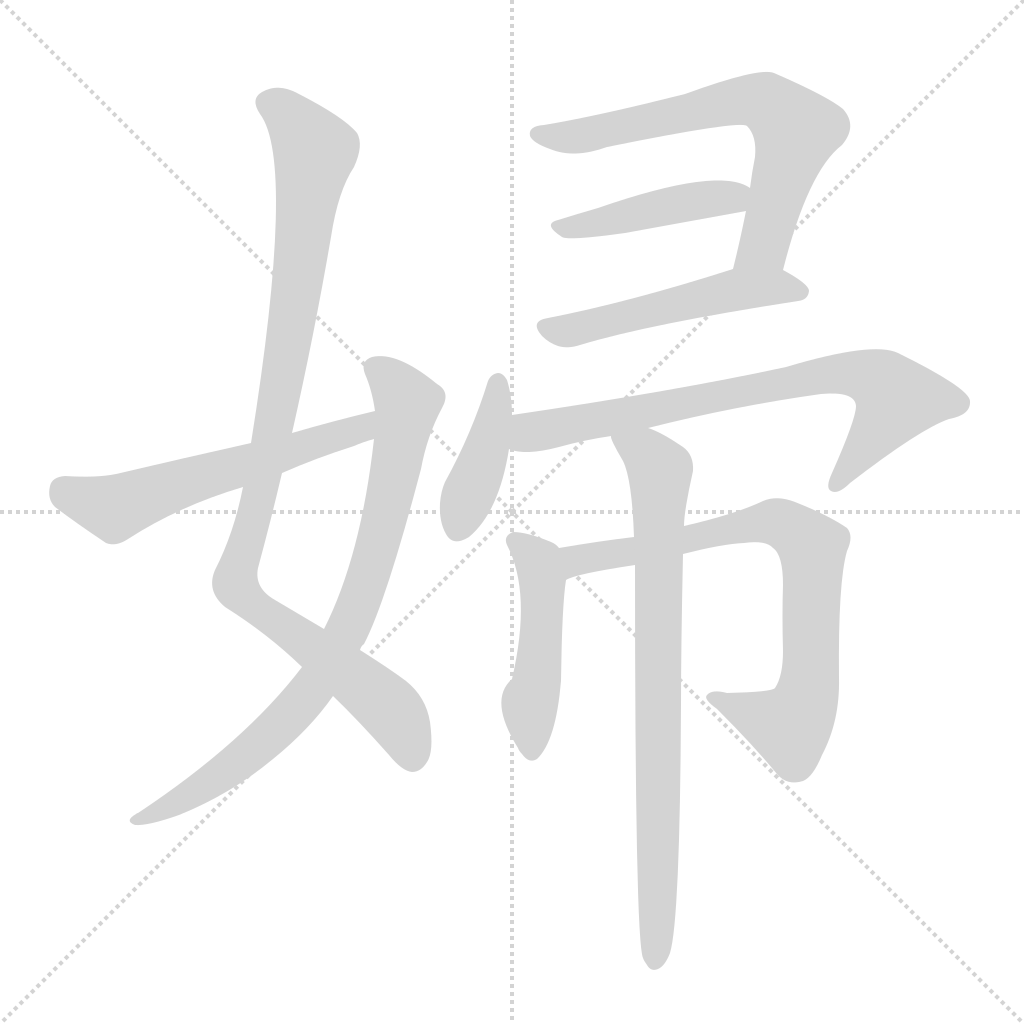
Character: Fu (Woman)
Kangxi Strokes: 11
Page 265, Entry 14
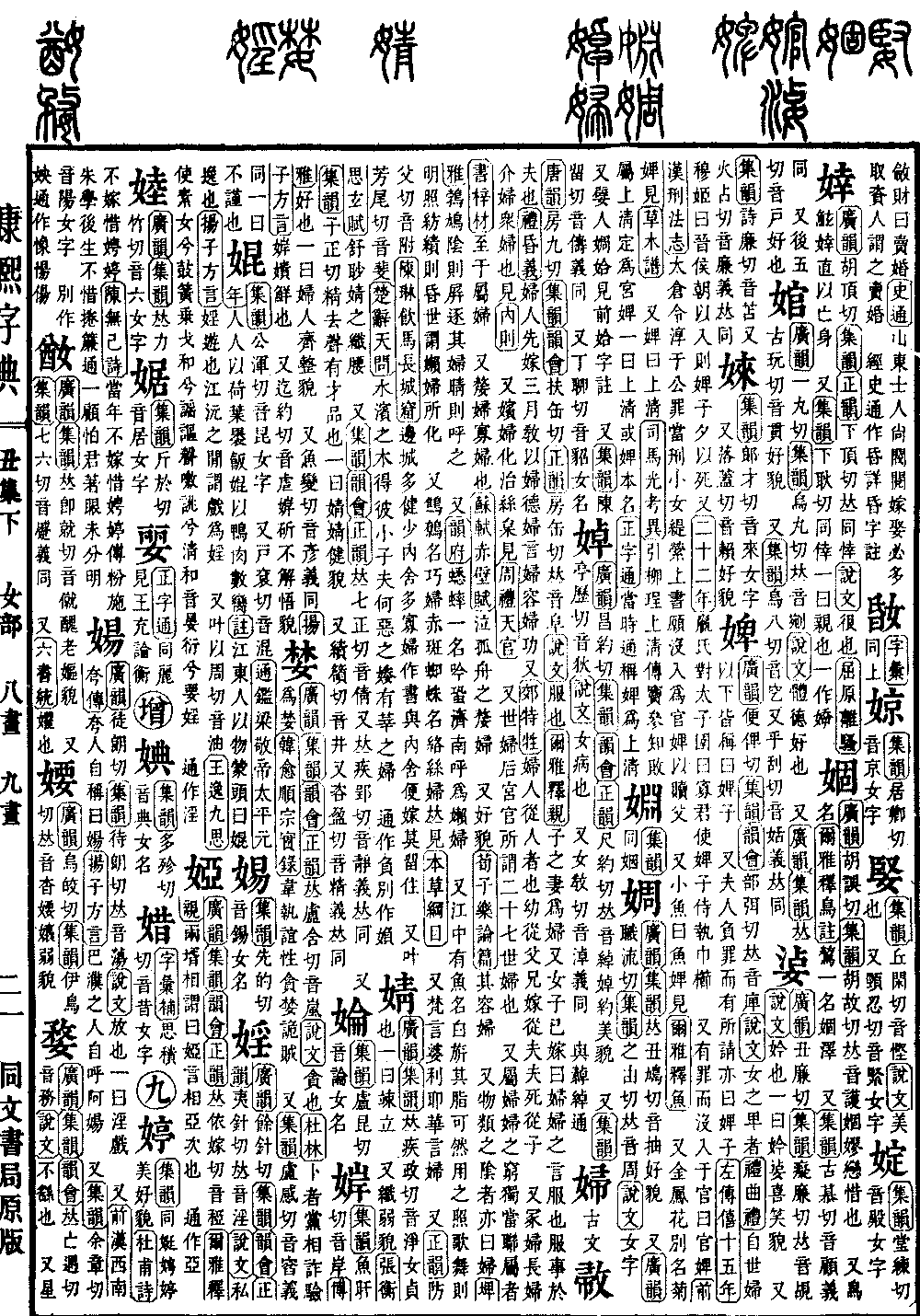
Ancient script form. Pronounced fu (falling tone). According to the Shuowen Jiezi (Explaining and Analyzing Characters), it means to serve. According to the Erya (Approaching Elegance), the wife of one's son is called fu. Furthermore, a woman who has been married is called fu. Fu implies to serve, meaning to wait upon one's husband. According to the Book of Rites (Liji), for three months prior to marriage, a woman must be instructed in female virtue, female speech, female appearance, and female work. According to the Jiao Te Sheng (Ritual Procedures at the Suburban Sacrifice), a woman is a person who follows others: in youth, she follows her father and brothers; after marriage, she follows her husband; after her husband's death, she follows her son. Also refers to the eldest wife, the senior wife, and the secondary wife among a group of women. See the Nei Ze (Inner Quarters). Also refers to pin fu, those in charge of managing silk and hemp. See the Rites of Zhou (Zhouli). Also refers to shi fu, an official title in the inner palace, specifically the twenty-seven shi fu. Also refers to shu fu, meaning women who are destitute, lonely, and deserving of aid and care. See the Book of Documents (Shangshu), chapter Zi Cai (Timber of the Catalpa). Also refers to li fu, meaning a widow. As Su Shi wrote in the Red Cliff Ode (Chibi Fu), causing the widow on the lonely boat to weep. Also refers to a beautiful appearance. In the Xunzi, chapter on Music Theory (Yuelun), it states her appearance was as soft and beautiful as a woman. Also, feminine classes of objects are called fu. According to the Pi Ya (Augmented Encyclopedia), when the weather is overcast, the turtledove drives away its female; when it is clear, it calls to her. According to the Yun Fu (Storehouse of Rhymes), the cricket is also called yin qiong, and in Jinan it is called the lazy woman. Also, there is a fish in the river called the white flag, the fat of which can be burned; it glows brightly when illuminating song and dance but becomes dim when used to illuminate spinning and weaving, which people say is the transformation of a lazy woman. Also, the wren is called the clever woman, and the red-spotted spider is called the silk-spinning woman. See the Compendium of Materia Medica (Bencao Gangmu). Also, the Sanskrit term bharya means woman in Chinese. Pronounced fu (falling tone). In the poem Drinking at the Great Wall Cave (Yinma Changcheng Ku) by Chen Lin, it says: the border towns are full of healthy young men, and the homes are full of widows; write home telling her to remarry and not remain single. Also, rhyming with wei (falling tone), pronounced fei. In the Chu Ci (Songs of Chu), chapter Heavenly Questions (Tianwen), it mentions the tree by the water, having obtained that child, why despise him, referring to the woman of the Youshen state. Commonly written as fu (to carry/bear). Also written as fu (variant).