Wei Collection, Lower Volume
Radical: Meat (ròu)
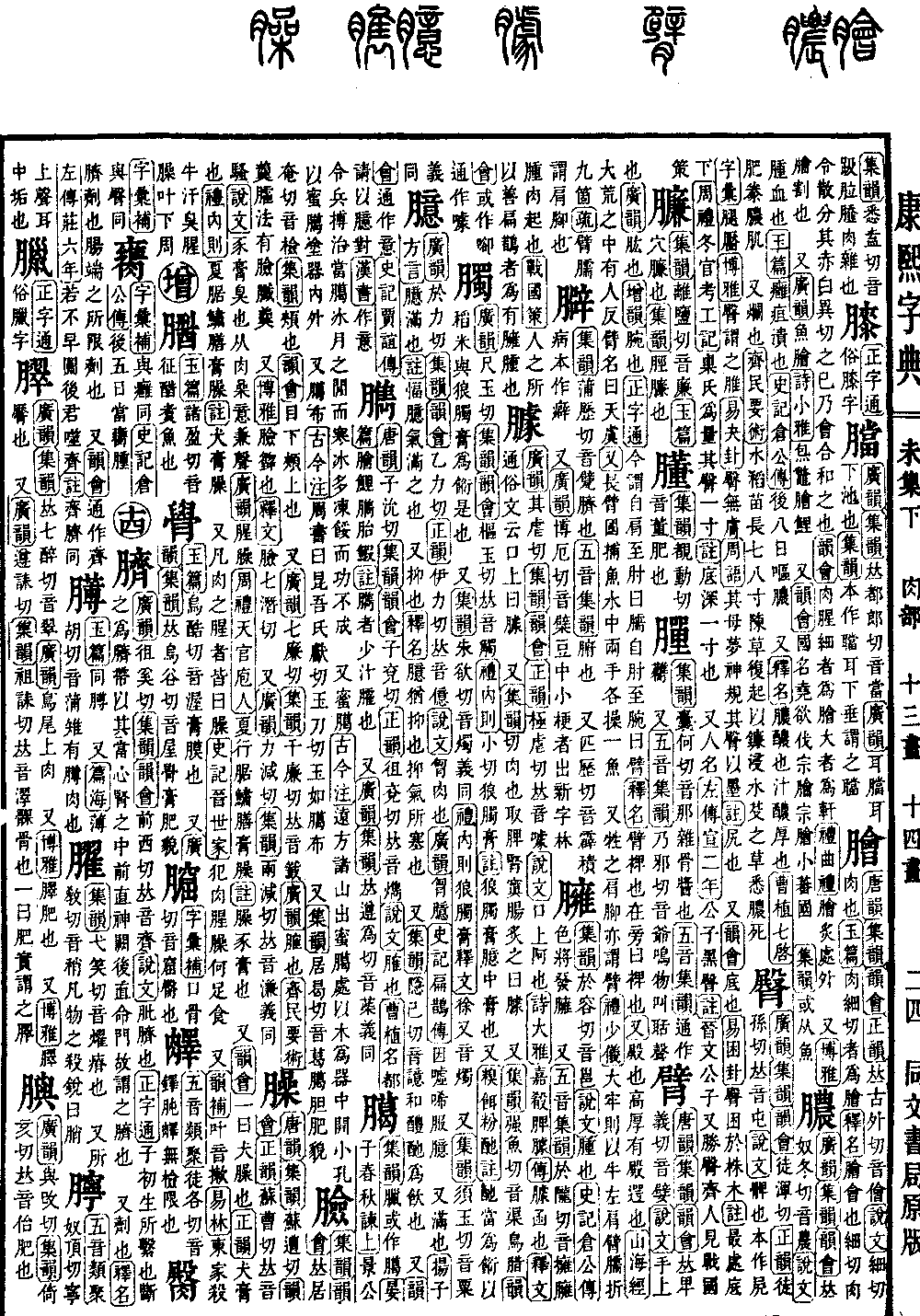
Page 996, Entry 18
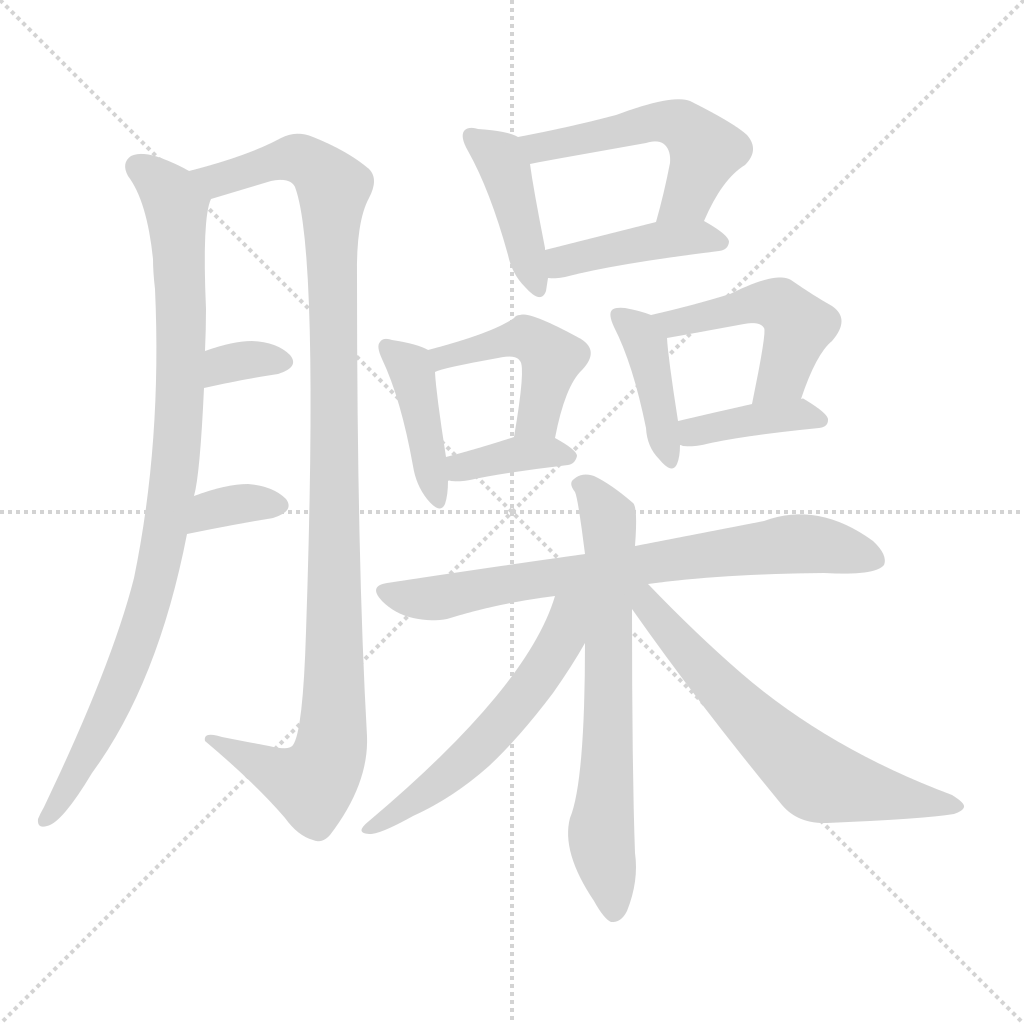
Pronounced sao.
According to the Explaining Graphs and Analyzing Characters (Shuowen Jiezi), it refers to the odor of pork fat. It is composed of the radical for meat and the element standing for sound/meaning.
According to the Broad Rhymes (Guangyun), it refers to a fishy and rancid smell.
According to the Rites of Zhou (Zhouli), Book of Heaven (Tianguan), Kitchen Master (Paoren): In summer, use dried pheasant and dried fish, prepared with pork fat. The commentary notes that this refers to the smell of pork fat.
Furthermore, the Rhyme Collection (Yunhui) suggests it can refer to the smell of a dog.
According to the Correct Rhymes (Zhengyun), it refers to dog fat.
According to the Book of Rites (Liji), Inner Rules (Neize): In summer, use dried pheasant and dried fish, prepared with dog fat. The commentary notes that dog fat has a rancid odor.
Additionally, any meat that has a fishy or rank odor may be called sao.
According to the Records of the Grand Historian (Shiji), House of Jin (Jin Shijia): The meat is both fishy and rancid; how could it be worth eating?
Also, in the Rhyme Supplement (Yunbu), it is pronounced sou.
According to the Forest of Changes (Yilin): The eastern family slaughtered an ox; the sweat smelled fishy and rancid. (The rhyme is in harmony with the character zhou).