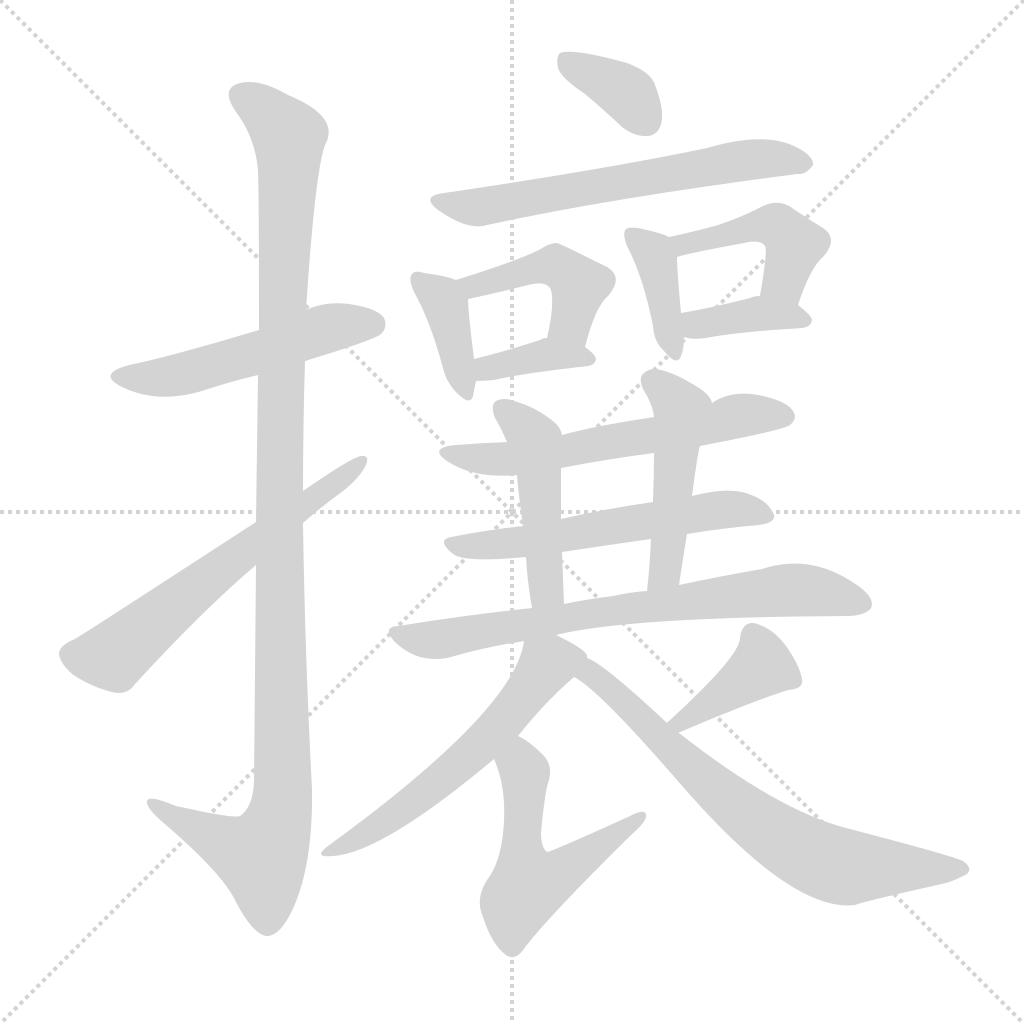
Mao Collection, Middle Volume
Radical: Hand (shǒu)
Kangxi Strokes: 21
Page 463, Entry 11
Classical citations:
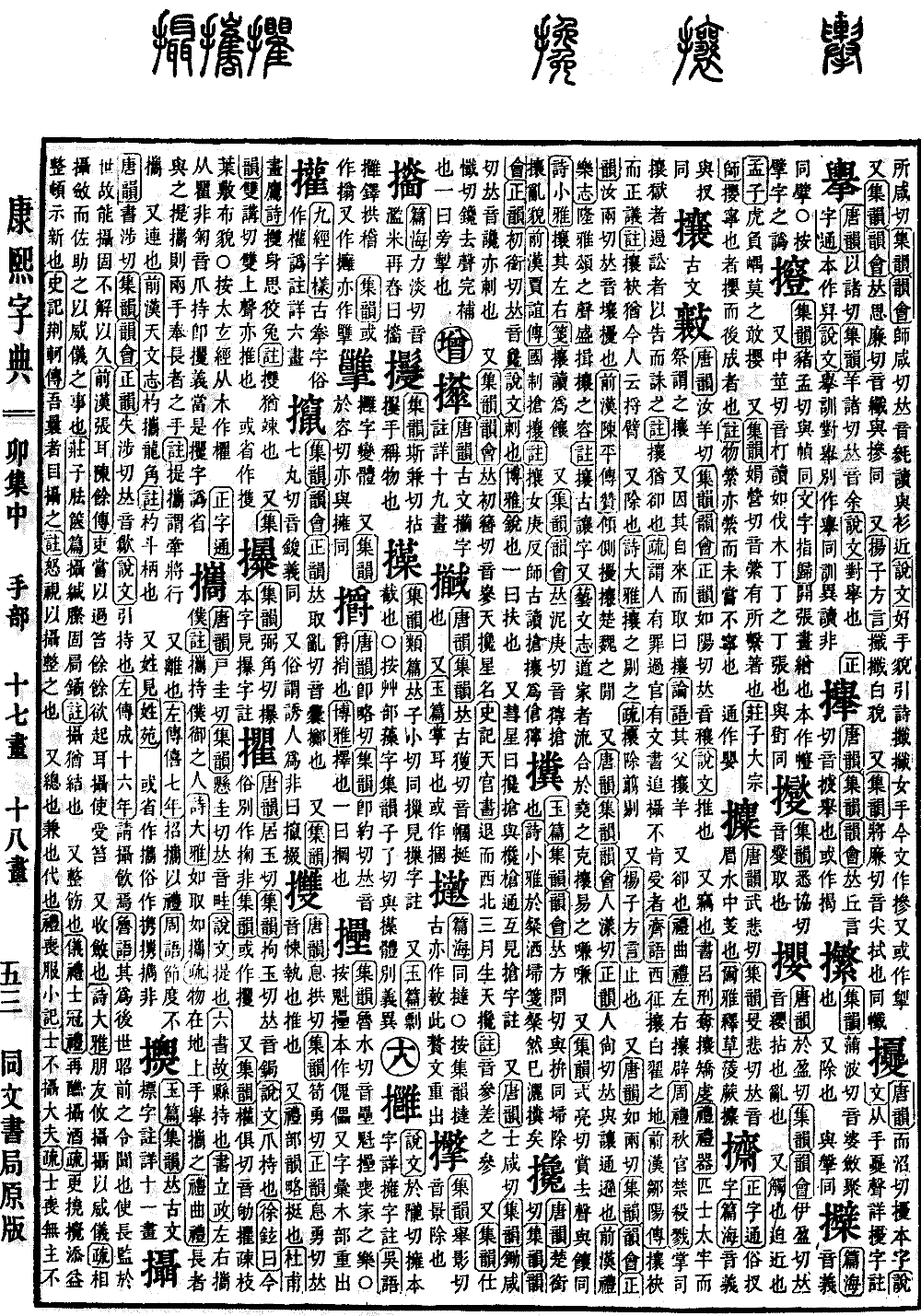
Tang Rhyme (Tangyun): Pronounced rang. Collected Rhymes (Jiyun), Rhyme Compendium (Yunhui), and Correct Rhymes (Zhengyun): Pronounced rang, sounding similar to rang. Explanatory Dictionary of Writing (Shuowen Jiezi): Defined as to push. Also means to steal. Book of Documents (Shangshu): Records acts of plundering, stealing, or taking by force under false authority of higher orders. Book of Rites (Liji): States that an ordinary scholar using the great sacrifice (tailao) is called rang. Also refers to taking something when it comes of its own accord. Analects (Lunyu): Records a father stealing a sheep. Also means to retreat or exclude. Book of Rites (Liji): Records those on the left and right retreating and making way. Rites of Zhou (Zhouli): Records the official in charge of stopping those who evade lawsuits or conflict, reporting them, and punishing them. Commentary: Rang is like the meaning of retreat. Exegesis: Explains this as someone who has committed a crime, the government has documents to arrest them, but they refuse to comply. Discourses of the States (Guoyu): Records marching west to seize the lands of the Baidi. History of the Han (Hanshu): Records baring the arm and speaking righteously. Commentary: Rangmei is like what people today call rolling up their sleeves. Also means to clear away. Book of Odes (Shijing): Records clearing it away, weeding it out. Exegesis: Explains this as to clear, prune, or weed out. Also, Yang’s Regional Dialects (Yangzi Fangyan): Defines it as to stop.
Tang Rhyme (Tangyun): Pronounced rang. Collected Rhymes (Jiyun), Rhyme Compendium (Yunhui), and Correct Rhymes (Zhengyun): Pronounced rang, sounding similar to rang. Means to disturb or cause chaos. History of the Han (Hanshu): Records upheaval and chaos between the states of Chu and Wei.
Tang Rhyme (Tangyun), Collected Rhymes (Jiyun), and Rhyme Compendium (Yunhui): Pronounced rang. Correct Rhymes (Zhengyun): Pronounced rang. Interchangeable with rang (humility). History of the Han (Hanshu): Records the promotion of the sounds of the Odes and Hymns, and the flourishing of the demeanor of bowing and yielding. Commentary: Rang is the ancient form of the character for yielding. Also, Arts and Literature Treatise (Yiwenzhi): Discusses the Daoist school, which conforms to the virtue of Yao’s ability to yield and the modesty of the Book of Changes (Zhouyi).
Collected Rhymes (Jiyun): Pronounced shang (falling tone). Interchangeable with xiang (to present a gift). Book of Odes (Shijing): Records gifting it to his attendants. Commentary: Rang is read as xiang.
Collected Rhymes (Jiyun) and Rhyme Compendium (Yunhui): Pronounced ning. Qiangrang describes a state of confusion and disorder. History of the Han (Hanshu): Records the chaos in national institutions. Commentary: Rang is pronounced as neng. Shigu reads qiangrang as cangning.