Mao Collection, Middle Volume
Radical: Hand (shǒu)
Kangxi Strokes: 13
Page 441, Entry 10
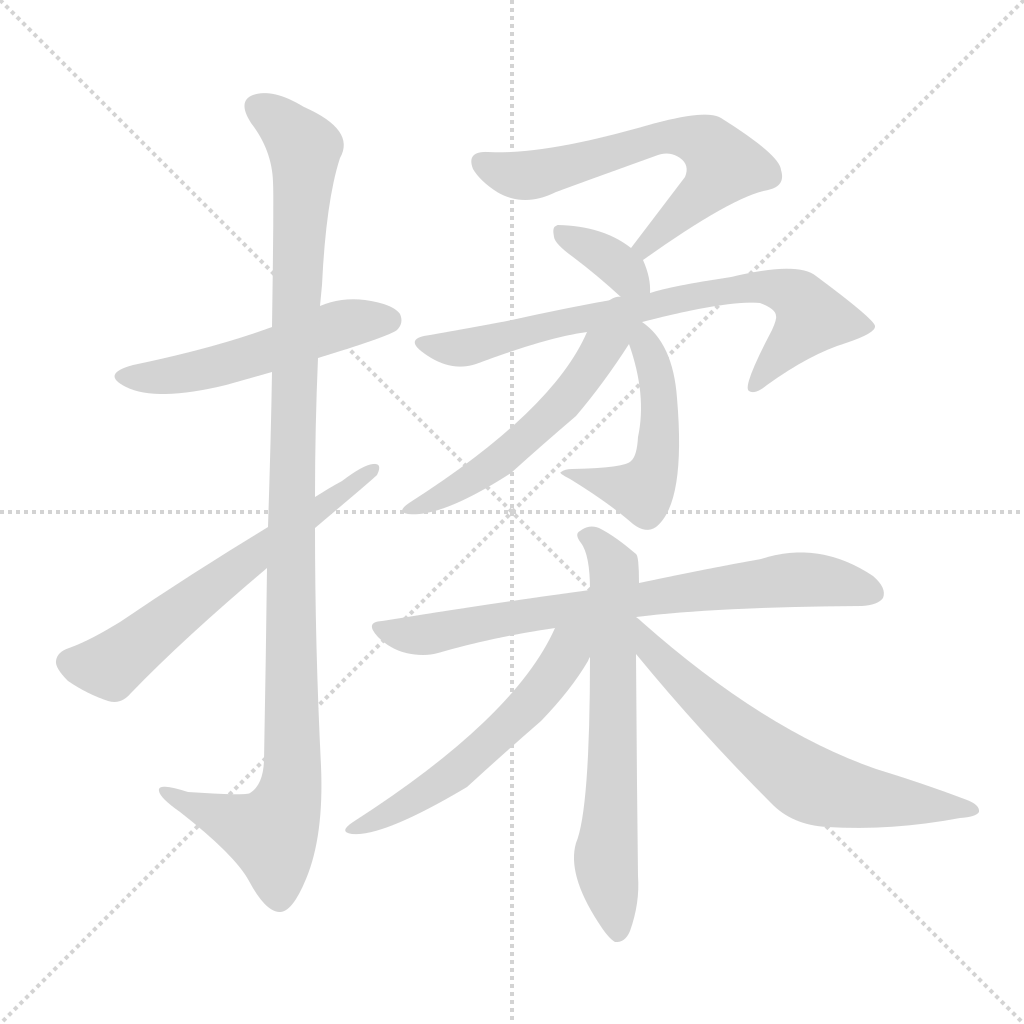
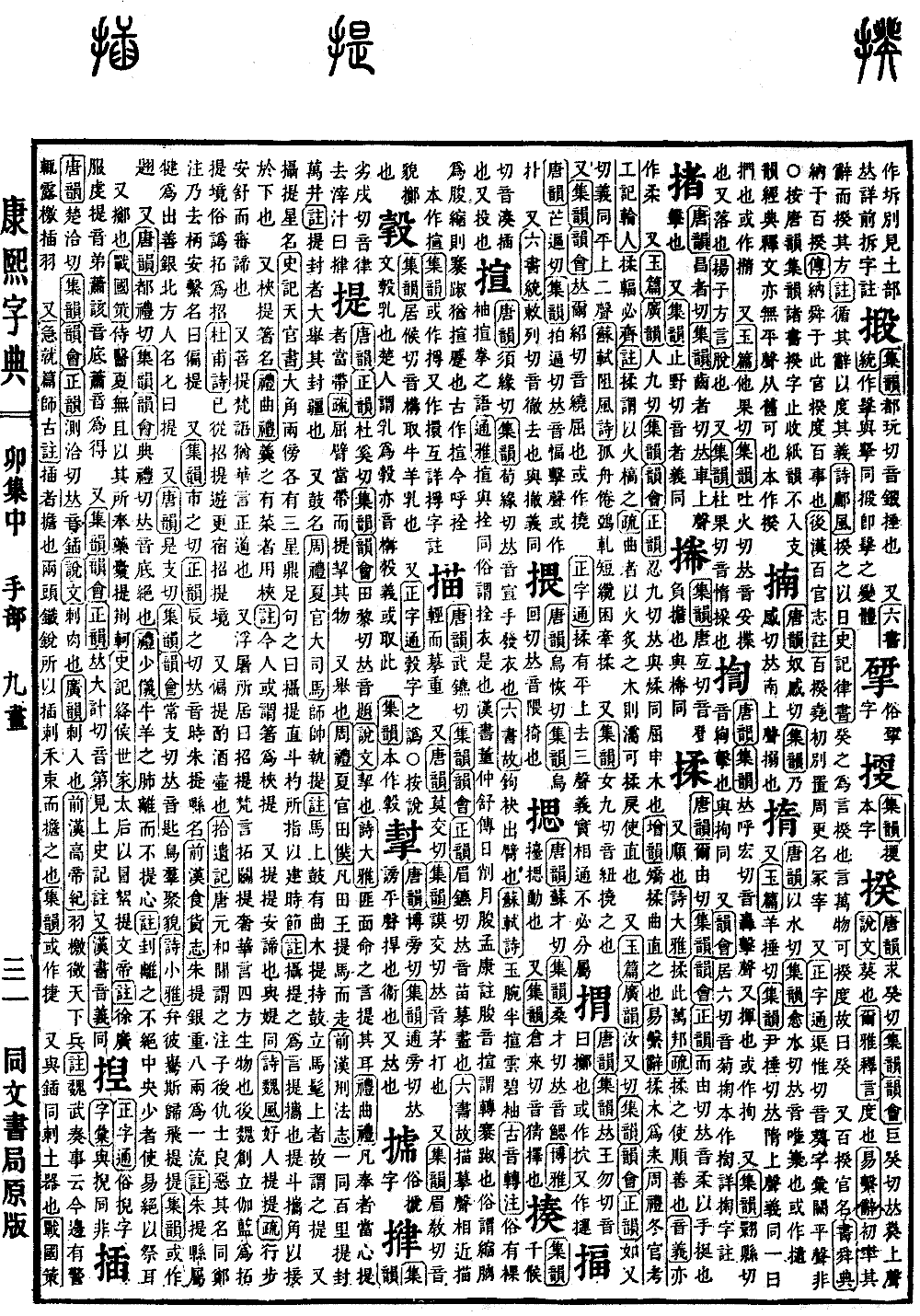
Pronounced rou. To use the hands to rub or knead back and forth. Also carries the meaning of being compliant or making something compliant. In the Book of Odes (Shijing): To make these numerous states compliant. The commentary states: It means to knead them, making them become compliant and kind. In the Pronunciation and Meaning (Yinyi), it is also written in a variant form (rou).
Also pronounced jiu. The meaning is the same as the character for heating wood (rou). It refers to using fire to bake wood to make it bend or straighten. In the Additional Rhymes (Zengyun): To rectify, meaning to make the bent straight and the straight bent. In the Book of Changes (Yijing): To bend wood and process it to make plows and hoes. In the Rites of Zhou (Zhouli), section on Winter Offices (Dongguan Kaogongji), concerning wheel-making: Use fire to bake the wheel spokes; they must be made uniform. The annotation states: The character refers to using fire to bake wood. The commentary states: By using fire to bake bent wood, the wood becomes soft and can be kneaded to bend or be straightened.
Also pronounced you. The meaning is the same. There are both level tone and rising tone pronunciations. In the poem by Su Shi, Obstructed by Wind: The solitary boat is tired of the creaking sound, the short rope is confined by being pulled and kneaded.
Also in the Collection of Rhymes (Jiyun), pronounced niu. The meaning is to disturb.
Also in the Collection of Rhymes (Jiyun) and the Rhyme Gathering (Yunhui), pronounced rao. The meaning is to bend. Sometimes written in a variant form (nao).
In the Mastery of Characters (Zhengzitong): This character has level, rising, and departing tone pronunciations, but the meanings are essentially the same; there is no need to forcefully distinguish their classifications.