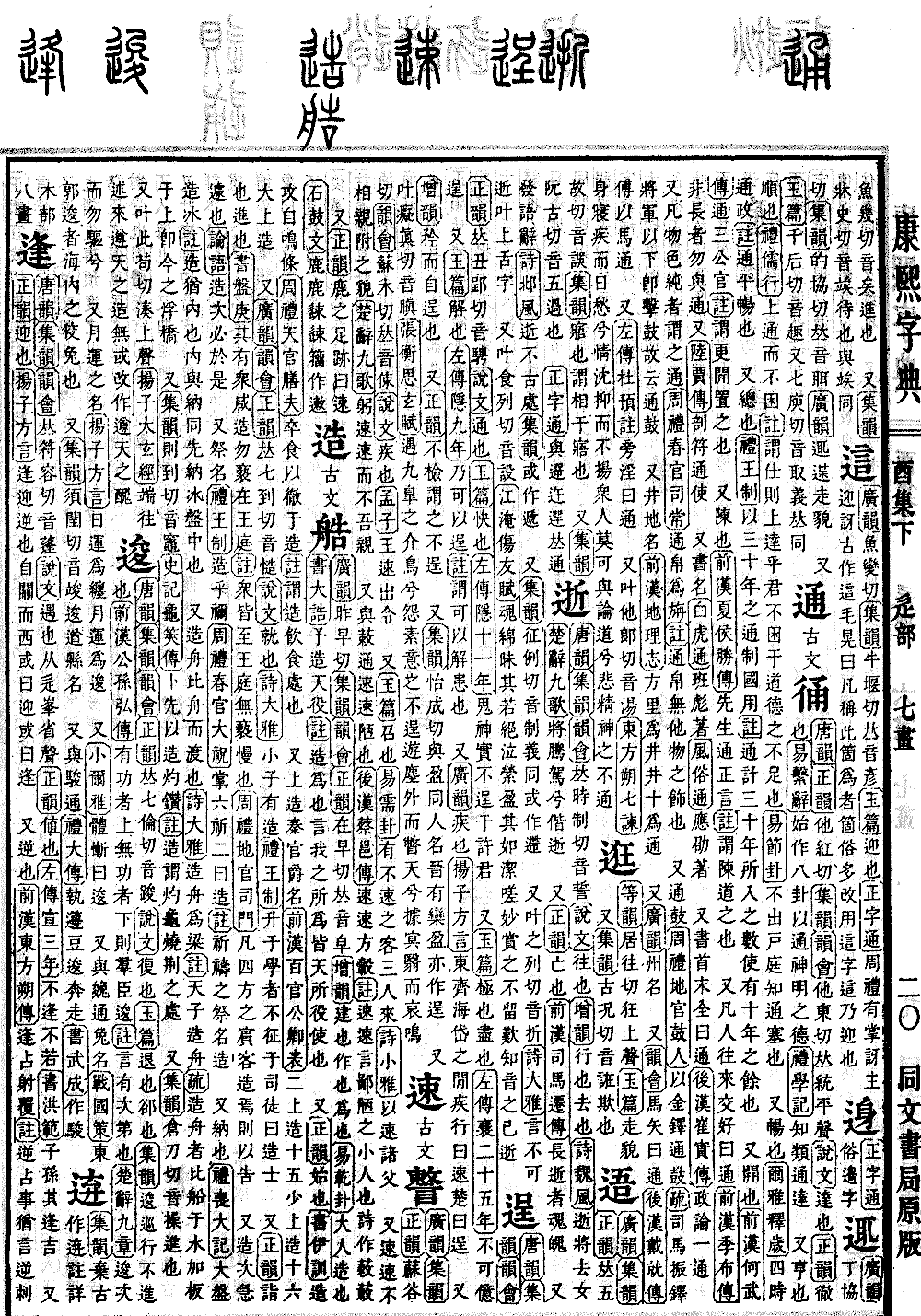
You Collection, Lower Volume
Radical: Walk (chuò)
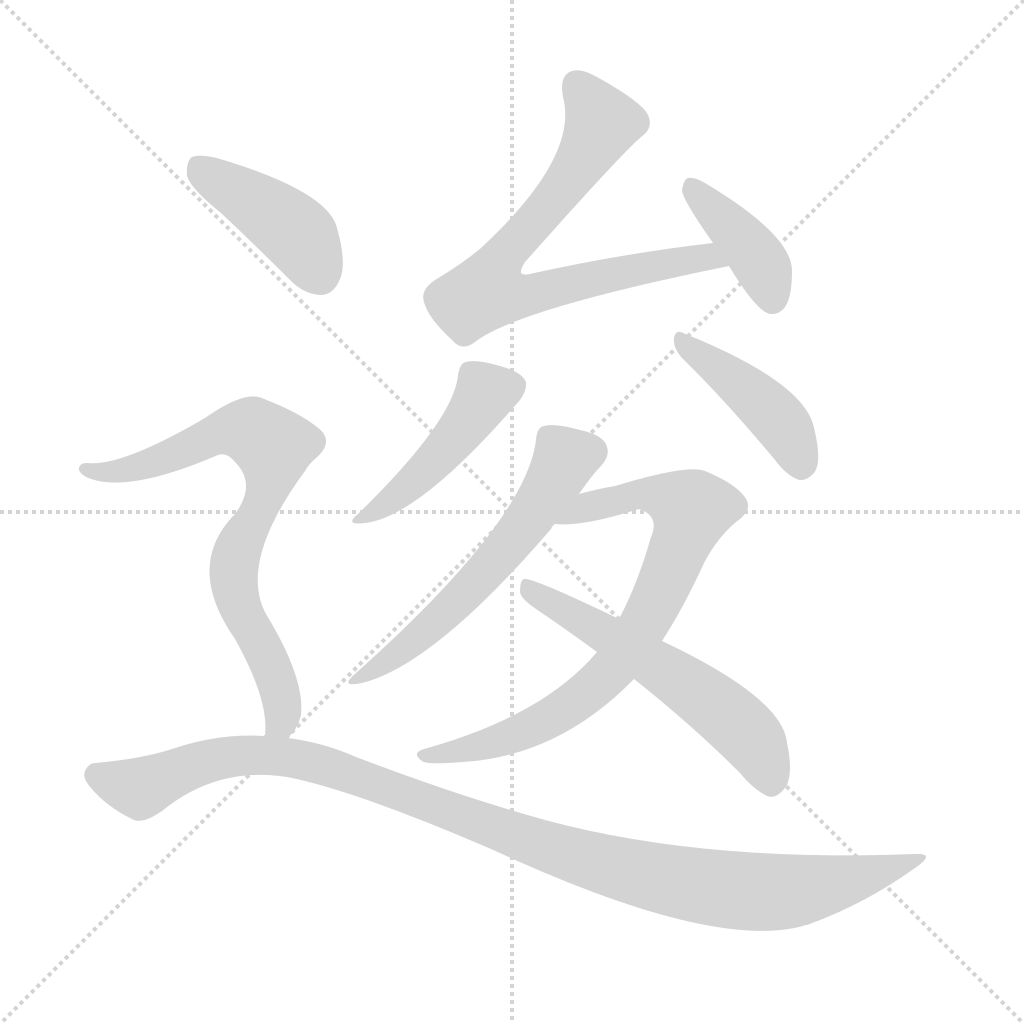
逡
Kangxi stroke count: 14
Page 1258, Entry 14
Tang Rhyme (Tangyun), Collected Rhymes (Jiyun), Dictionary of Rhymes (Yunhui), and Correct Rhymes (Zhengyun) state it is pronounced cun.
Shuowen Jiezi states it means to return.
Jade Chapters (Yupian) states it means to retreat or to step back.
Collected Rhymes (Jiyun) states that to linger (qunxun) is to walk without making progress.
Book of Han (Qianshujinongzhuan) states: Those with merit are placed above, those without are placed below, and the ministers shall retreat. The commentary notes that this refers to order.
Songs of Chu (Chuci), Nine Chapters: Hesitate and do not drive forward.
Also, a name for the movement of the moon.
Yangzi's Dialects (Fangyan) states: The movement of the sun is called chan, and the movement of the moon is called qun.
Also, according to the Lesser Erya, to feel ashamed is called qun.
Also, interchangeable with the character for hare. Strategies of the Warring States (Zhanguoce) states: The Dongguo qun is the wiliest hare within the four seas.
Also, according to Collected Rhymes (Jiyun), it is pronounced jun. Qunqiu is the name of a county.
Also, interchangeable with the character for steed. Book of Rites (Liji), Great Treatise: Holding the bamboo baskets and wooden vessels, moving in a hurried manner. In the Book of Documents (Shujing), Chapter on the Successful Completion of the War (Wucheng), it is written as jun (steed).
Textual Research:
In Songs of Chu (Chuci), Nine Chapters: The original text reads qunci, the character qian has been added before qunci according to the original text.
In Yangzi's Dialects (Fangyan): The original text read chan, it has been corrected to chan (chán) according to the original text.