Zi Collection, Middle Volume
Radical: Person (rén)
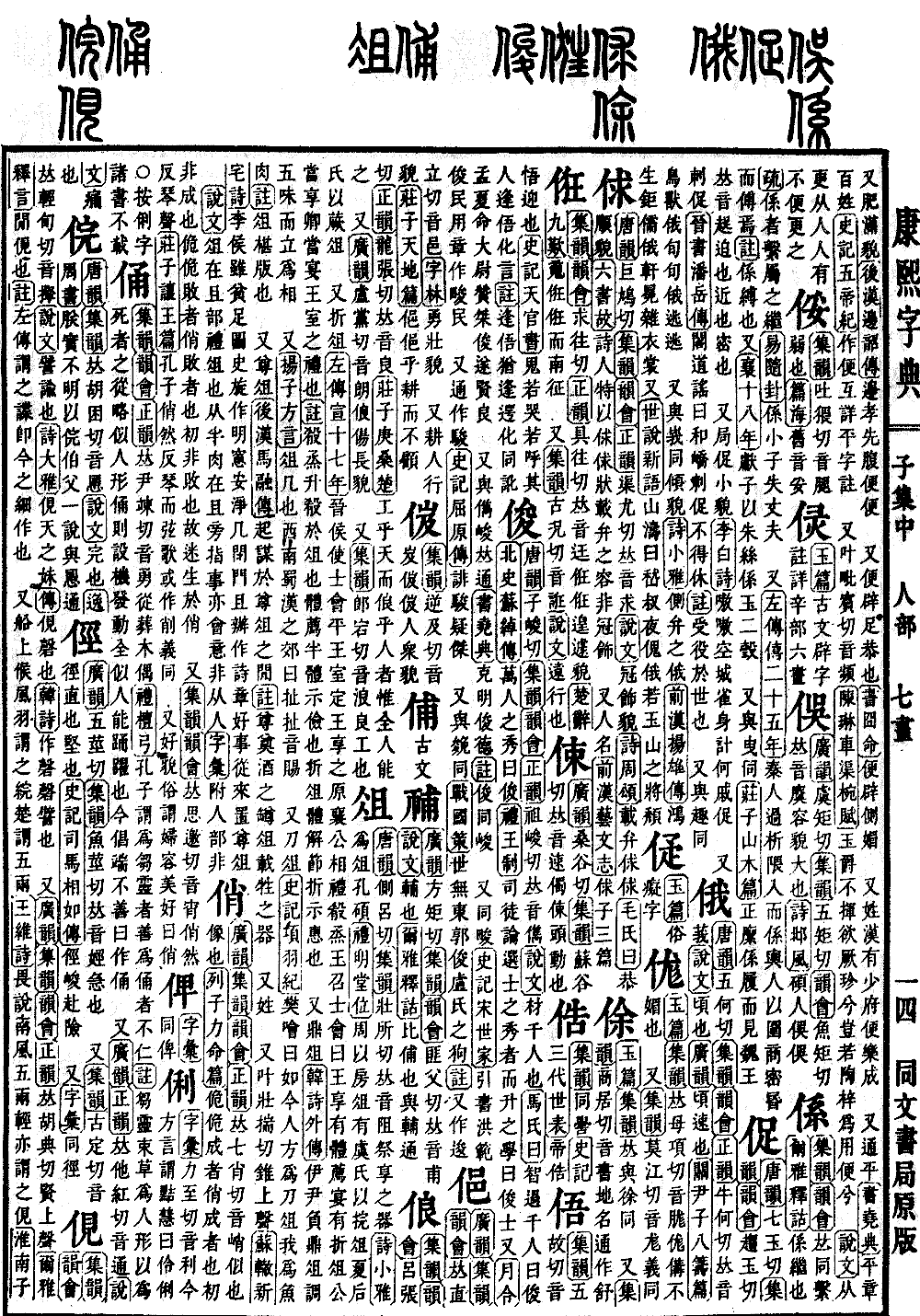
Jun; Kangxi stroke count: 9; Page 104, Entry 15
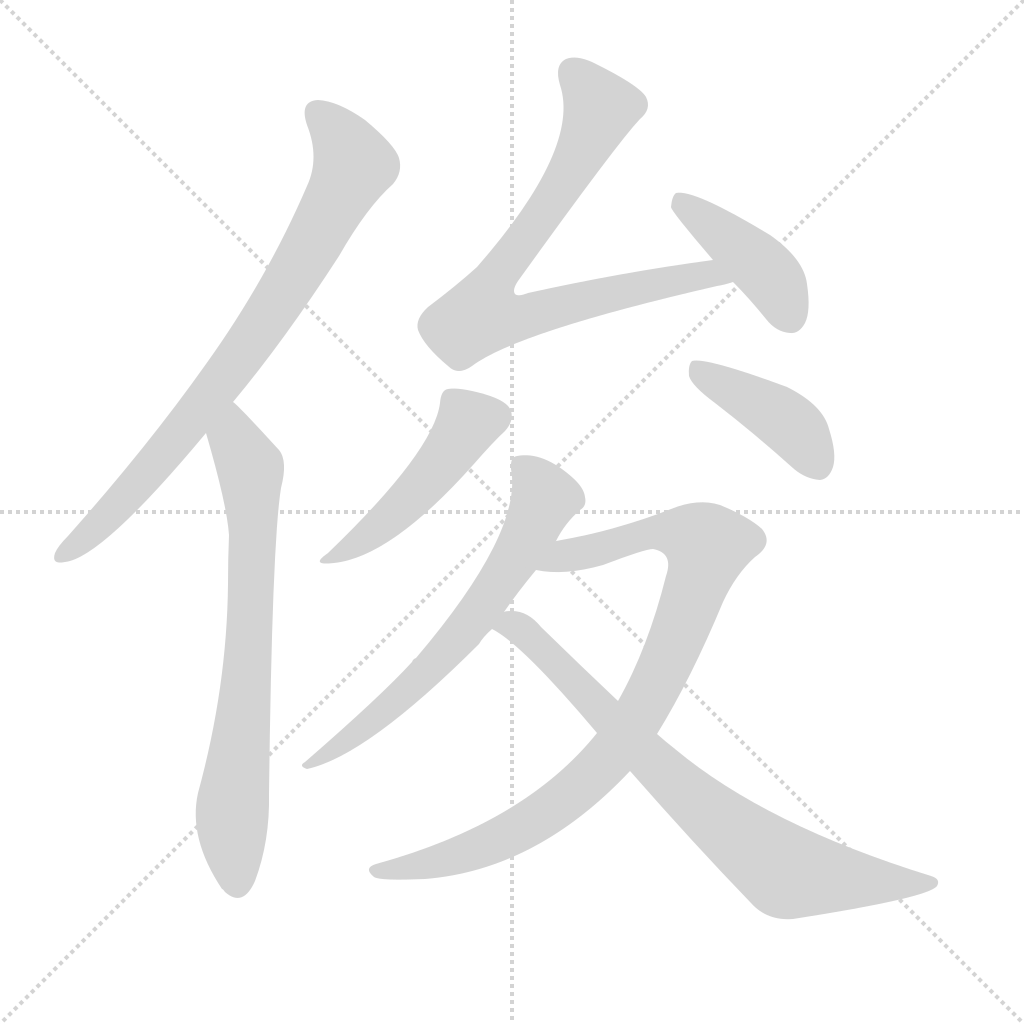
Pronounced jun (falling tone). Reading is the same as the character for outstanding talent (jun).
Shuowen Jiezi (Explanation of Writing and Analysis of Characters): Refers to a person whose talent exceeds that of a thousand others.
Ma says: A person whose wisdom exceeds that of a thousand others is called jun.
History of the Northern Dynasties (Beishi), Biography of Su Chuo: The most excellent person among ten thousand is called jun.
Book of Rites (Liji), Royal Regulations (Wangzhi): The Minister of Education evaluates the most excellent among the scholars and recommends them for entrance into schools; they are called talented scholars (junshi).
Also, in the Monthly Ordinances (Yueling): During the first month of summer, orders are given to the Minister of War to select outstanding talent and recommend virtuous and capable scholars.
Also interchangeable with the characters for outstanding talent (jun) and steep (jun).
Book of Documents (Shangshu), Canon of Yao (Yaodian): Able to manifest great virtue. Commentary: Jun is the same as steep (jun).
Also the same as the character for agricultural official (jun). Records of the Grand Historian (Shiji), House of Song: Citing the Great Plan (Hongfan) chapter of the Book of Documents, the phrase using the talented people of the populace is written with the character for agricultural official (jun).
Also used interchangeably with the character for noble steed (jun). Records of the Grand Historian (Shiji), Biography of Qu Yuan: Slandering and doubting outstanding talent.
Also the same as the character for a type of hound (jun). Strategies of the Warring States (Zhanguoce): There are no dogs in the world like Dongguo Jun or the Lu family hound. Commentary: Also written in a variant form (qun).