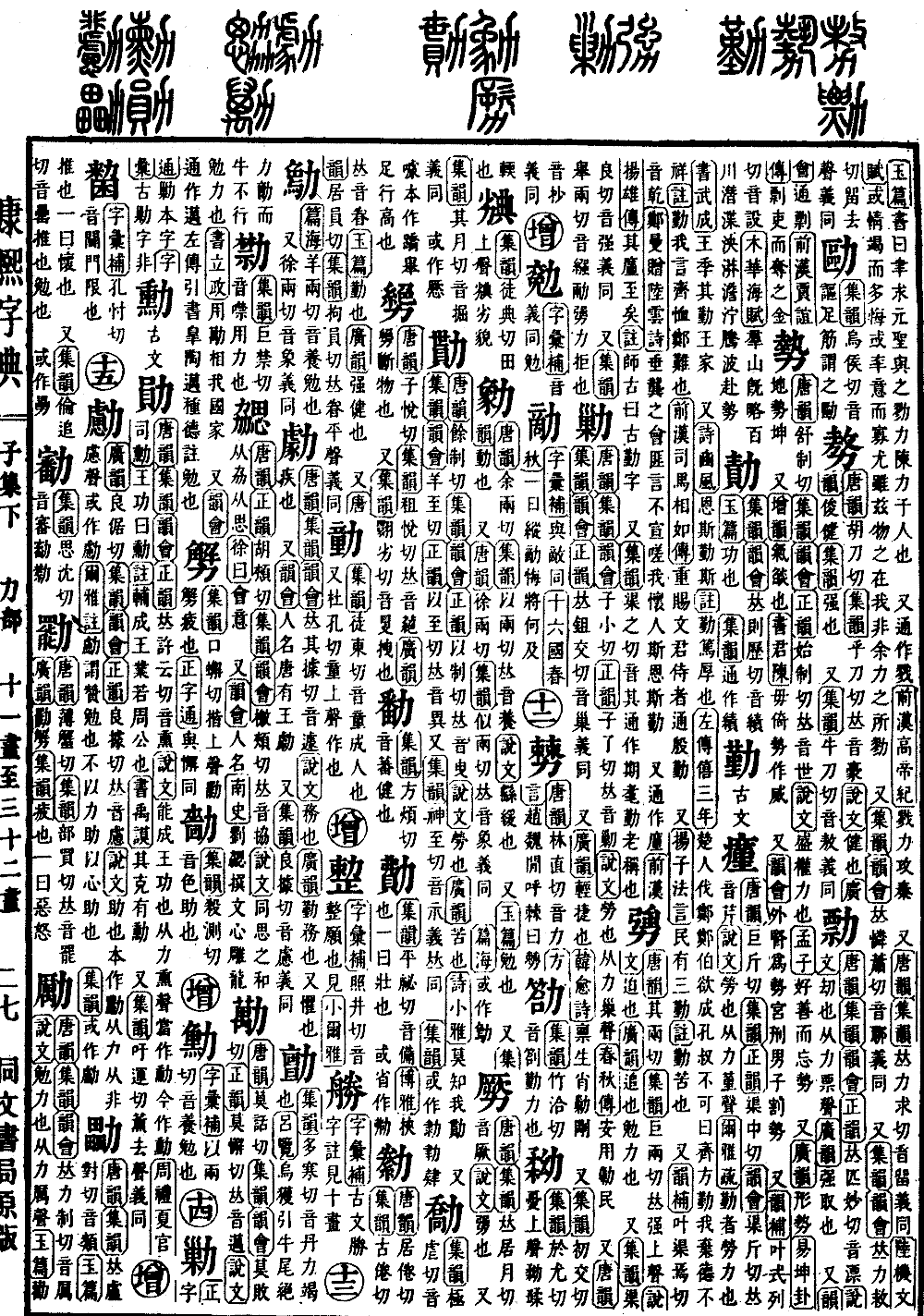
Zi Collection, Page Position: Lower
Radical: Strength (lì)
Qín; Kangxi radical strokes: 13; Page: 149, entry 06
Ancient script form: 瘽
Pronounced qín, as indicated in various rhyme dictionaries, including the Tang Rhyme (Tangyun), Collection of Rhymes (Jiyun), Zheng Rhyme (Zhengyun), and Rhyme Compendium (Yunhui).
In Explaining and Analyzing Characters (Shuowen Jiezi): Toil. Composed of the Strength (lì) radical and the sound component jǐn.
In the Annotation to the Erudition (Erya Shu): Qín means to toil with strength.
Book of Documents (Shujing), "Wu Cheng" chapter: "King Ji diligently served the royal house."
Also, in the Book of Odes (Shijing), "Bin Feng" chapter: "Loving and diligent." Note: Qín here means earnest and generous.
Zuo Commentary (Zuozhuan), Duke Xi, 3rd year: "The people of Chu attacked Zheng. The Earl of Zheng wished to make peace, but Kong Shu disagreed, saying: 'Qi is currently diligent for us; abandoning their virtue would be inauspicious.'" Note: 'Diligent for us' means Qi shows concern for Zheng's difficulties.
In the Book of Han (Hanshu), Biography of Sima Xiangru: "He heavily rewarded Wenjun's attendants, conveying earnest regards."
Also, in Exemplary Sayings (Fayan) by Yang Xiong (Yangzi): "The people have three toils." Note: Qín here means hardship.
Also, in Rhyme Supplement (Yunbu): Rhymes with words pronounced qián. In Zheng Man's poem presented to Lu Yun: "At the gathering of Chuigong, words are not spoken plainly. Alas, I miss someone, loving and diligent."
Also interchangeable with the character 廑 (jǐn). In the Book of Han (Hanshu), Biography of Yang Xiong: "His diligence reached the utmost." Note: Shi Gu said this is an ancient form of qín.
Also, in Collection of Rhymes (Jiyun): Pronounced qí. Interchangeable with the character 期 (qí). Mao qín refers to an old person.