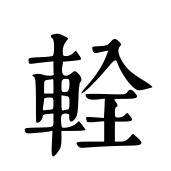
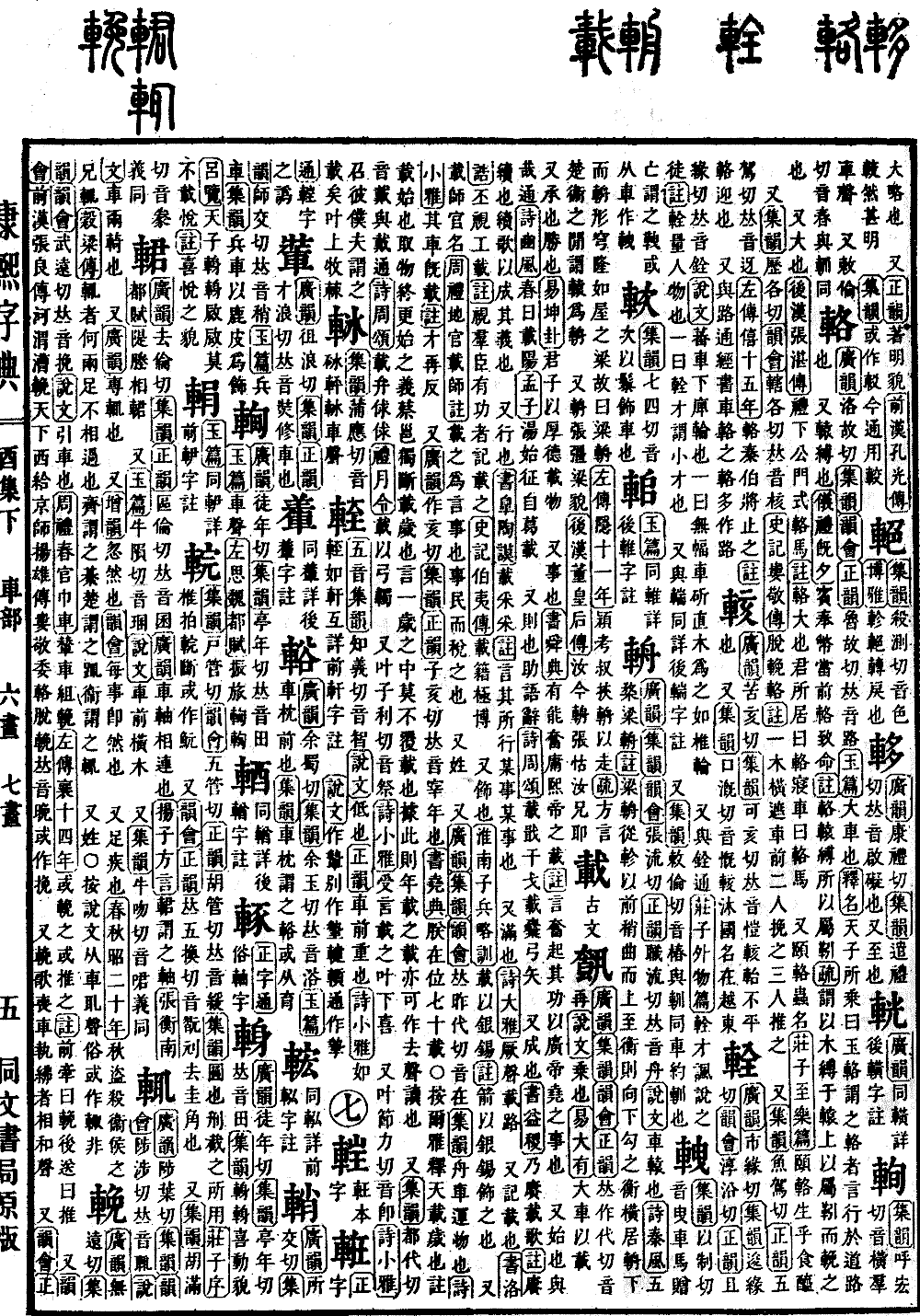
You Collection, Lower Volume
Radical: Carriage (chē)
Quan
Kangxi strokes: 13
Page 1243, Entry 07
Pronounced quan.
According to the Explanation of Simple and Compound Characters (Shuowen Jiezi), it refers to the low wheels on a carriage for transporting grass. Another definition suggests it refers to a wheel without spokes, made by hewing a straight piece of timber, similar to a mallet-shaped wheel. It is also used interchangeably with the character for weighing or measuring (quan).
In the Outer Things chapter of the Book of Zhuangzi (Zhuangzi), it mentions followers of limited talent and trivial discourse. The commentary notes that this refers to measuring the character of individuals; another interpretation suggests it refers to those with minor talent.
It is also used interchangeably with the character for a small carriage wheel (chuan). Refer to the detailed note for the character for a small carriage wheel (chuan).
Pronounced chun. Used interchangeably with the character for a carriage binding (lun).
Correction: In the Explanation of Simple and Compound Characters (Shuowen Jiezi), the text states it refers to the low wheels on a carriage for transporting grass. Another definition suggests it refers to a wheel without spokes, made by hewing a straight piece of timber, like a mallet-shaped wheel. The original text has been corrected from the phrase for a wheel without spokes to read as a wheel without spokes, and the phrase hewing straight has been corrected to straight hewing.