Shen Collection, Upper Volume
Radical: Grass (cǎo)
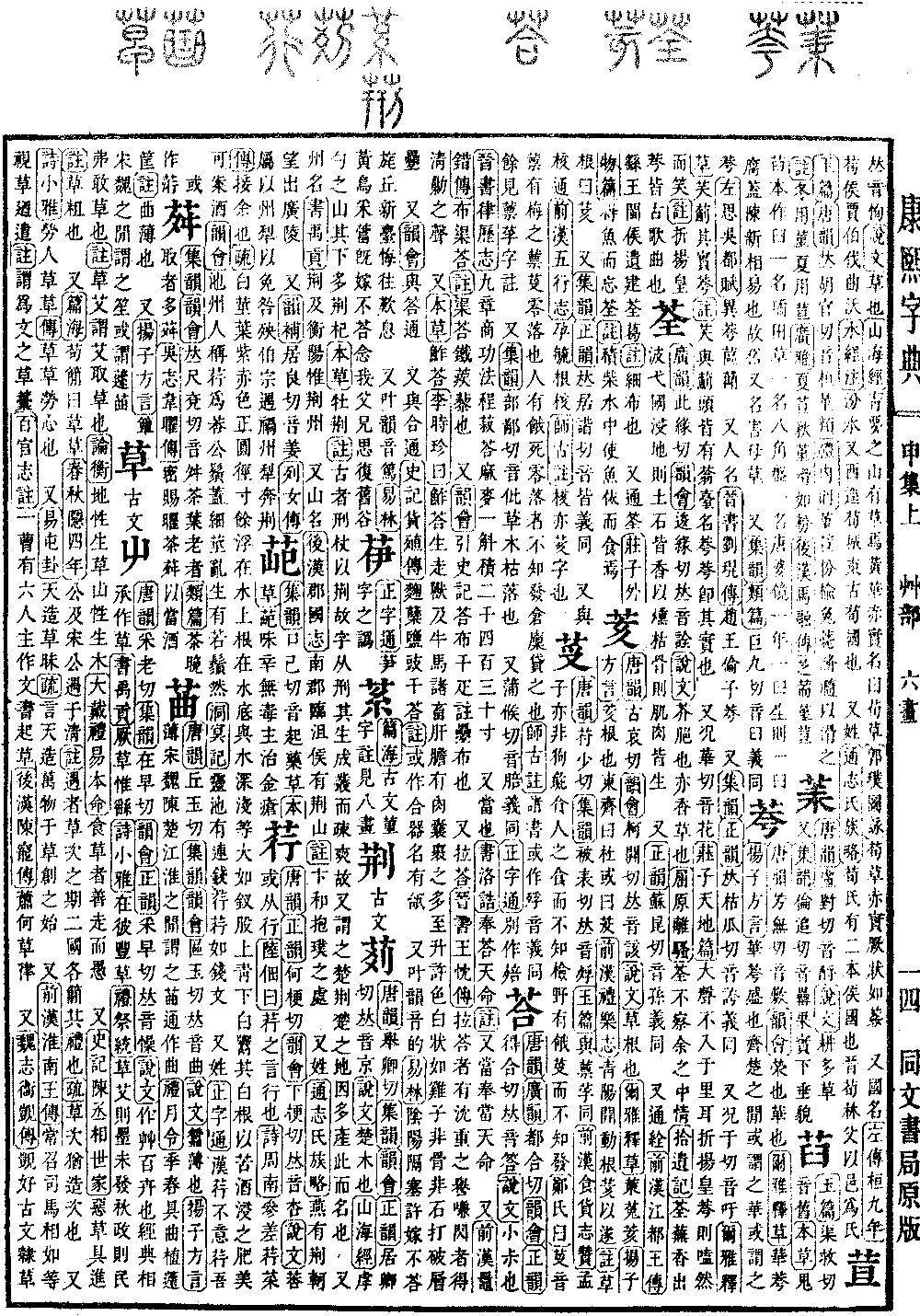
荃
Kangxi strokes: 12
Page 1030, Entry 05
Pronounced quán.
According to the Explaining Graphs and Analyzing Characters (Shuowen Jiezi), it refers to a crisp variety of mustard, and is also a type of fragrant herb. As mentioned in the Encountering Sorrow (Lisao) by Qu Yuan: The ruler does not examine my inner feelings. According to the Record of Forgotten Matters (Shiyiji), the Quanwu fragrance comes from the Boyi country; when it permeates the ground, both the earth and stones become fragrant, and when used to fumigate withered bones, flesh and muscle grow anew.
Also pronounced sūn according to the Correct Rhymes (Zhengyun). The meaning is the same.
Also written as a variant form (quán). In the Biography of the King of Jiangdu from the Former Han History (Qianhanshu), it mentions fine cloth given to King Jian by the Marquis of Wangmin.
Also used interchangeably with the character (quán). In the External Things chapter of the Zhuangzi, it states: Once the fish is caught, one forgets the fish trap. The commentary notes that this refers to stacking firewood in the water to entice fish to gather and feed.
Textual research: The original text of the Explaining Graphs and Analyzing Characters (Shuowen Jiezi) stated mustard. It has been corrected to crisp mustard in accordance with the original text.