You Collection, Upper Volume
Radical: Speech (yán)
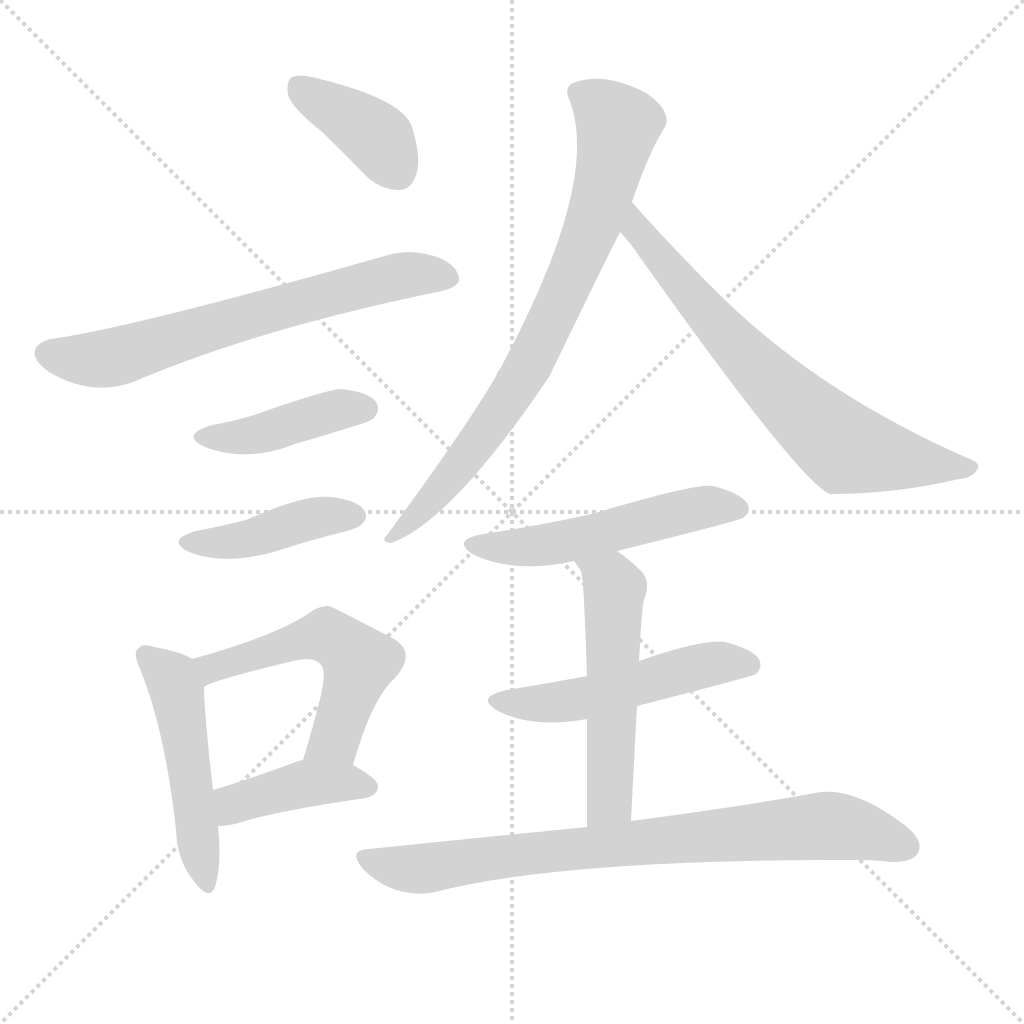
诠
Kangxi Strokes: 13
Page 1158, Entry 04
Pronounced quan (level tone).
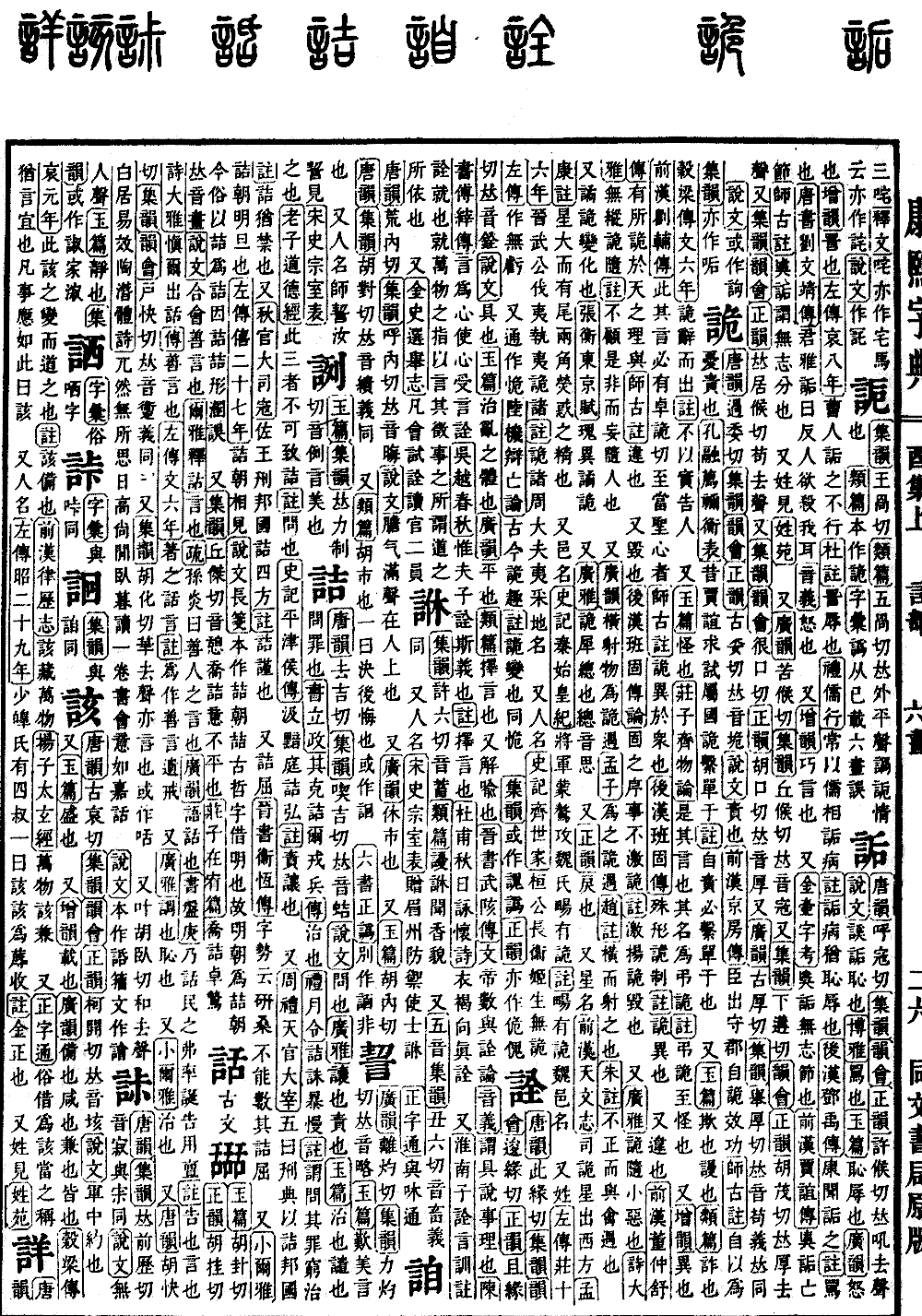
According to the Explaining Graphs (Shuowen), it means to provide or supply. According to the Jade Chapters (Yupian), it is the substance of governing disorder. According to the Broad Rhymes (Guangyun), it means to level or make even. According to the Classified Chapters (Leipian), it means to select words. It also means to explain or elucidate.
According to the Book of Jin (Jin Shu), biography of Wu Gai, the Emperor Wen frequently engaged in discourse and interpretation (quan). The Pronunciation and Meaning (Yinyi) notes that this refers to fully explaining the logic of a matter. According to the Book of Sui (Sui Shu), biography of Fu Zai, words are the servants of the heart, and the heart receives the interpretation (quan) of words. According to the Annals of Wu and Yue (Wuyue Chunqiu), only the master can explain (quan) this principle. The commentary notes this means to select words. In the poem Autumn Thoughts (Qiuri Yonghuai) by Du Fu, he writes: Wearing hempen garments while seeking the true explanation (quan).
According to the commentary on the Huainanzi, chapter Interpretation of Words (Quanyan Xun), quan means to arrive at or encompass. It signifies arriving at the essence of all things to describe their signs, the meaning of events, and the principles upon which they rely.
According to the History of Jin (Jin Shi), records on examinations, there were two officials appointed as officers of interpretation (quan) and reading for every metropolitan examination.