Si Collection, Upper Volume
Radical: Water (shuǐ)
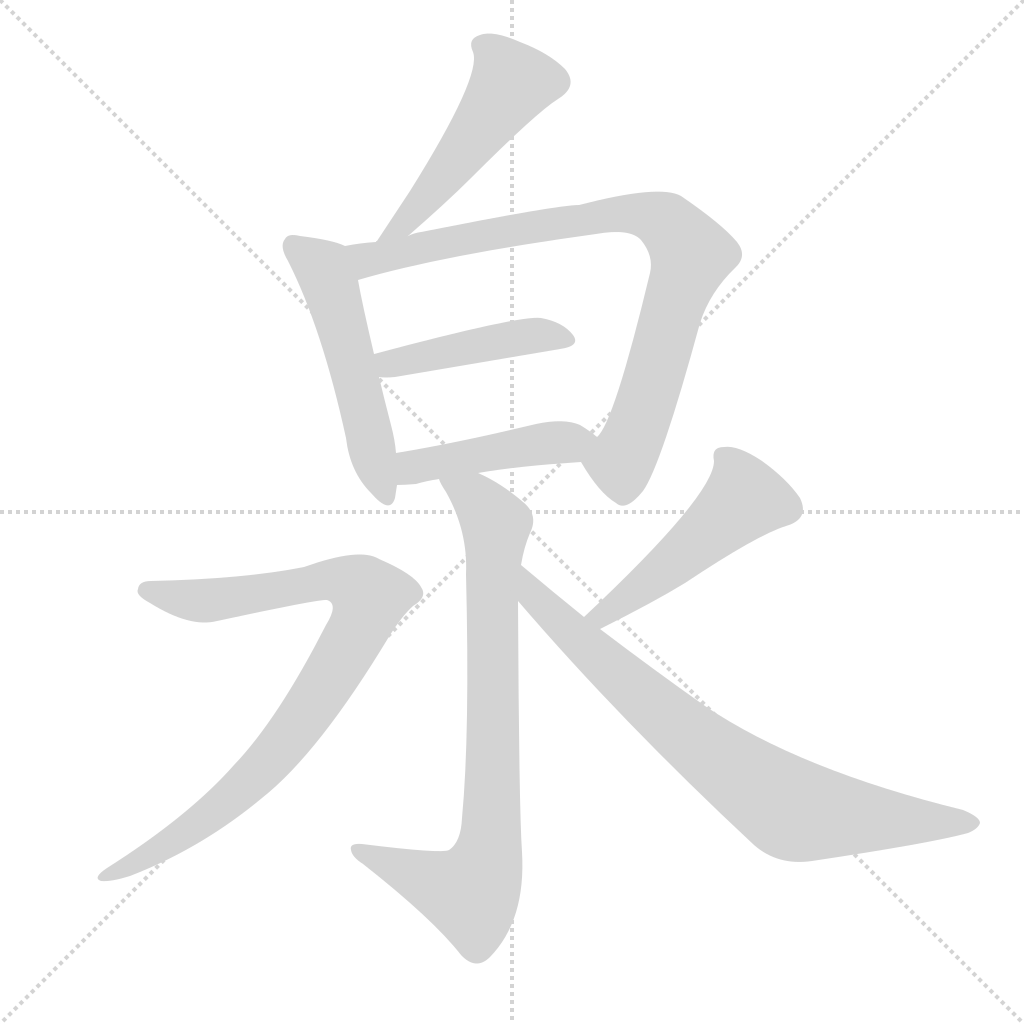
泉
Kangxi strokes: 9
Page 615, Entry 12
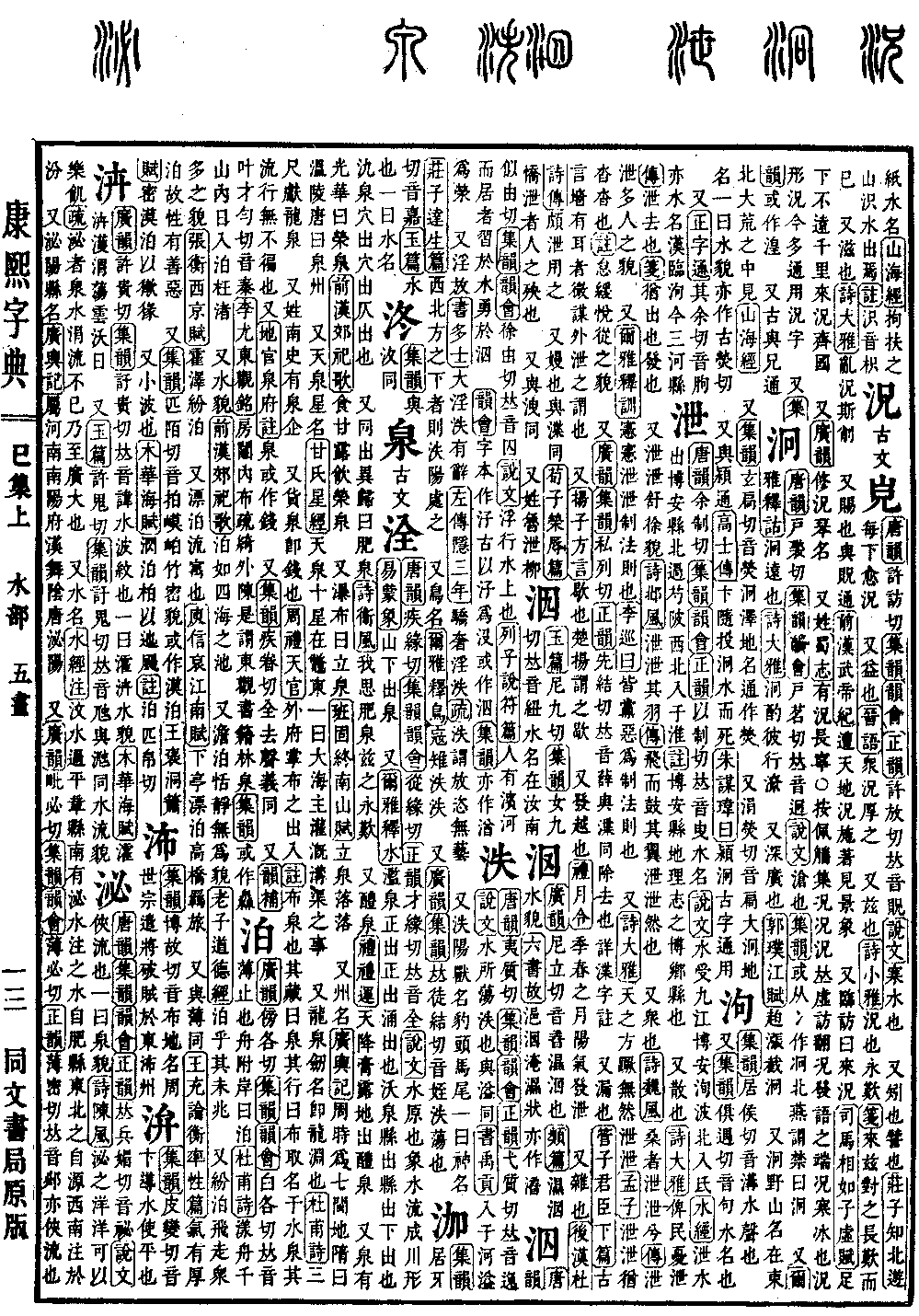
In ancient script written as 洤. According to the Tang Dynasty Rhyme Dictionary (Tangyun) pronounced quan (rising tone). According to the Collection of Rhymes (Jiyun) and the Rhyme Compendium (Yunhui) pronounced quan (rising tone). According to the Standard Rhymes (Zhengyun) pronounced quan (rising tone). Pronounced the same as quan. The Analytical Dictionary of Characters (Shuowen Jiezi) explains: the source of water. The glyph shape resembles water flowing to form a river. The Book of Changes (Yijing), Meng Hexagram Image Commentary states: a spring flows from beneath the mountain. Also, the Erya: Explanation of Water records: gushing spring water is called lanquan. When it emerges directly, it means it surges upward. Spring water flowing downward is called woquan. When it emerges laterally, it means it flows downward. Spring water flowing from the side is called jiuquan. When it emerges from a cavity, it means it flows from the side. Additionally, spring water with a common source but different outflows is called feiquan. The Book of Odes (Shijing), Wei Feng states: I yearn for that feiquan, for which I sigh long and deep. There is also liquan. The Book of Rites (Liji), Li Yun states: Heaven sends down sweet dew, the earth produces sweet liquan. Spring water with radiance is called rongquan. The History of the Former Han (Qian Hanshu), Hymns for Suburban Sacrifices sings: Eating sweet dew, drinking rongquan. A waterfall is called liquan. Ban Gu, Rhapsody on Zhongnan Mountain writes: Waterfall water drops scatter. Also a name of a prefecture. The Records of World Geography (Guangyu Ji) records: during the Zhou Dynasty it was the territory of the Seven Min, during the Sui Dynasty it was called Wenling, and during the Tang Dynasty it was called Quanzhou. There is also tianquan, which is a star name. The Star Canon of Master Gan (Gan Shi Xingjing) states: there are ten Tianquan stars, located to the east of the Bie constellation. Another name is the Great Sea star, which governs the management of irrigation channels. There is also longquan, which is the name of a precious sword. That is the Longyuan sword. Du Fu’s poetry states: a three-foot longquan sword. It is also a surname. The History of the Southern Dynasties (Nan Shi) records a person named Quan Qi. There is also huoquan, which means currency. The Rites of Zhou (Zhouli), Officers of Heaven records: the Outer Treasury manages the income and expenditure of currency. The Commentary states: bu is the same as quan. When stored it is called quan, when in circulation it is called bu, named after water springs because their flow reaches everywhere. Also, the Rites of Zhou (Zhouli), Officers of Earth, Spring Treasury Commentary states: quan is sometimes written as qian. Also, according to the Collection of Rhymes (Jiyun) pronounced quan (falling tone). The meaning is the same. Also, in the Rhyme Supplement (Yunbu) the rhyming pronunciation is qin. Li You, Inscription of the Eastern Pavilion writes: Arranged within the doors of the chambers, engraved patterns and elegant windows are displayed outward. This is the Eastern Pavilion, a place where books are like a forest and knowledge is like a spring. The Collection of Rhymes (Jiyun) records: sometimes written as 灥.