Mao Collection, Middle Volume
Radical: Hand (shǒu)
Kangxi Strokes: 10
Page 428, Entry 04
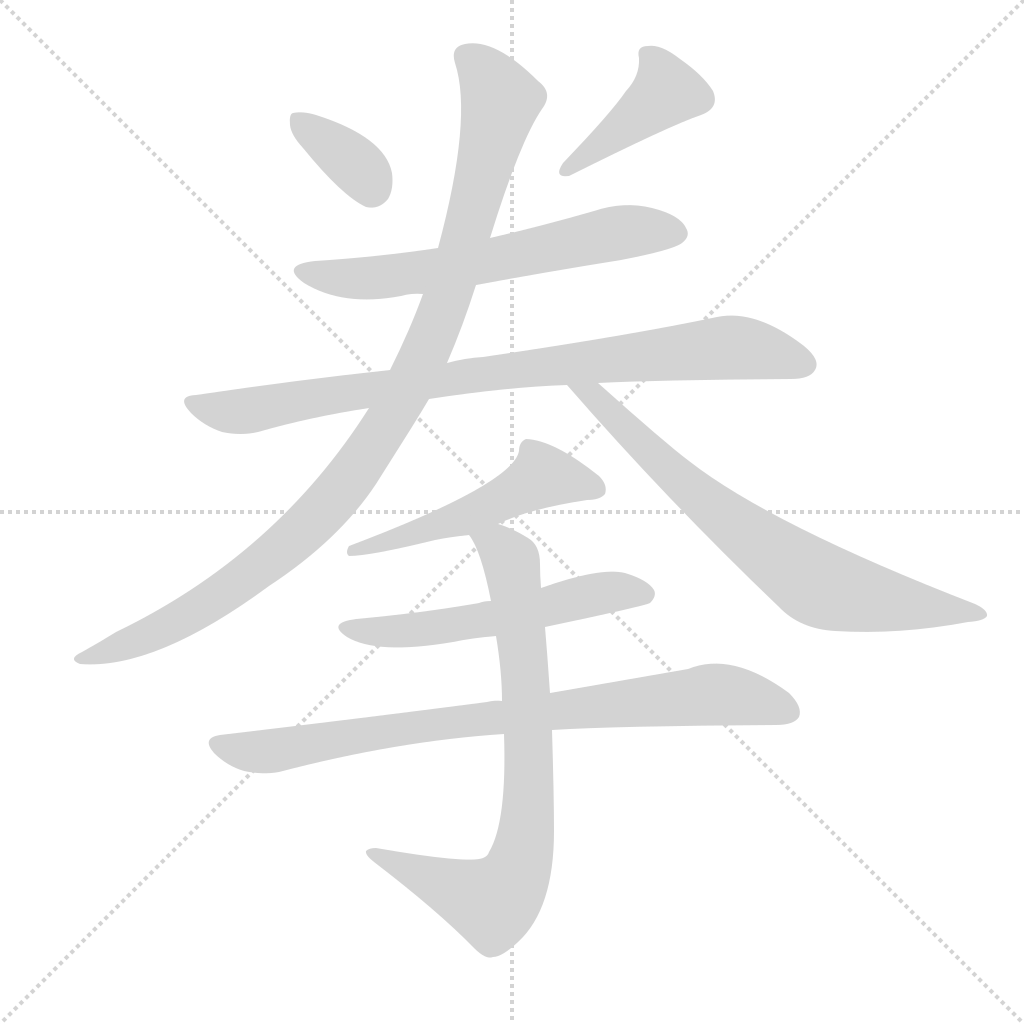
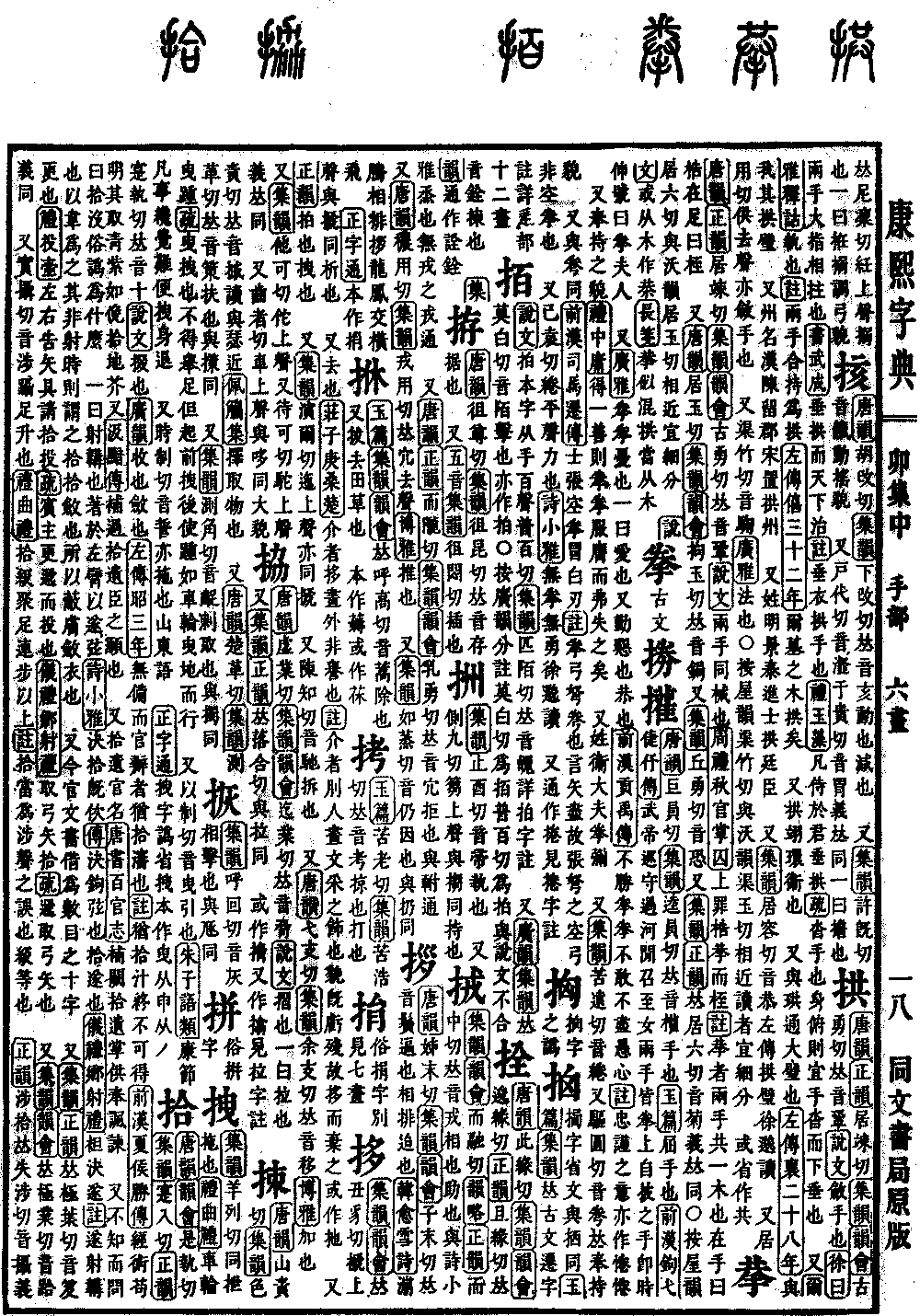
Ancient character. According to the Tang Rhyme (Tangyun) and the Collected Rhymes (Jiyun), it is pronounced quan. It refers to the hand. According to the Jade Chapter (Yupian), it refers to a curled hand. In the Biography of Lady Gouyi (Gouyi jieyu zhuan) from the History of the Former Han (Qianhan shu), it is recorded that when Emperor Wu of Han was touring Hejian, he summoned her; the woman held both hands in fists, and when the Emperor personally pried them open, they immediately extended, leading to her title as Lady Quan.
Also, according to the Elegant Refinements (Guangya), quan-quan signifies sorrow. Another interpretation suggests it signifies love.
It also refers to diligence and respect. In the Biography of Gong Yu from the History of the Former Han, it is noted as being unable to refrain from quan-quan, meaning one dares not withhold their humble thoughts; the commentary defines this as a loyal and cautious heart. It is also written in a variant form (quan).
It also refers to the manner of holding something firmly. In the Book of the Mean (Zhongyong), it says that when one attains a virtuous principle, they hold it firmly in their heart and do not let it be lost.
It is also a surname. There was an official of the State of Wei named Quan Mi.
According to the Collected Rhymes (Jiyun), it is also pronounced quan (third tone). It is also pronounced quan. Both refer to the manner of holding something firmly.
It is also identical to the character for a crossbow mechanism. In the Biography of Sima Qian from the History of the Former Han, it states that soldiers draw back empty crossbows and brave the bright blades. The commentary explains that this refers to the trigger of a crossbow, meaning that arrows were exhausted, so they pulled back empty bows rather than fighting with bare hands.
It is also pronounced quan (level tone). It refers to strength. In the Book of Odes (Shijing), it states there is neither strength nor courage. Xu Miao read it this way.
It is also used interchangeably with the character for scroll. See the entry for that character for details.