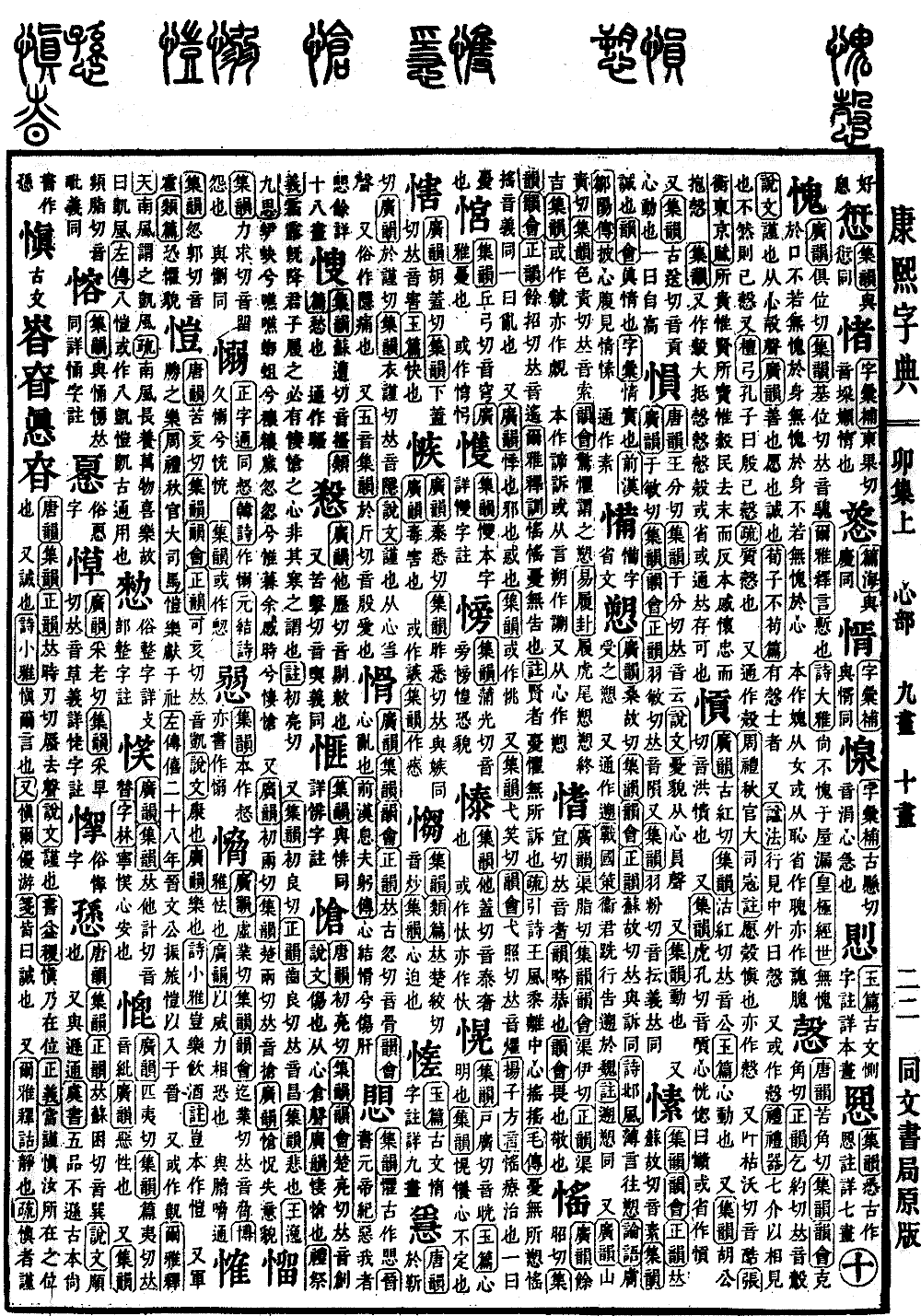
Mao Collection, Upper Volume
Radical: Heart (xīn)
Character: Que
Kangxi stroke count: 14
Page 396, Entry 01
Pronounced que.
According to the Shuowen Jiezi (Explaining Graphs and Analyzing Characters), it means cautious. It is composed of the heart radical with a phonetic component. According to the Guangyun (Broad Rimes), it means good, willing, and sincere. According to the Xunzi (Master Xun), Not Careless Chapter: There are sincere scholars. According to the Posthumous Titles Law, one whose conduct is consistent internally and externally is called que.
Also written as que. According to the Book of Rites (Liji), Ritual Vessels Chapter: Use seven items to meet. If not, then be sincere. According to the Tan Gong Chapter: Confucius said, The Yin dynasty was already sincere. The commentary states, It means honest and sincere. It is also used interchangeably with another form. According to the Tan Gong Chapter, the Yin dynasty was already sincere. Lu Deming states in his interpretation that the character que was originally also written as a variant form.
Also rhymes with ku (falling tone). According to Zhang Heng, Eastern Capital Rhapsody (Dongjing Fu): What is valued is only virtue; what is treasured is only grain. The people abandon the trivial and return to the fundamental, all holding loyalty and embracing sincerity. According to the Jiyun (Collected Rimes), it is also written in other forms. In general, these various forms are interchangeable, and it is acceptable to retain them.
Textual research: It is also written interchangeably with another form. According to the Rites of Zhou (Zhouli), Autumn Office, Grand Minister commentary: Willing and cautious. Also written as que. We note that the Rites of Zhou commentary does not use the alternate form, but the interpretation of the Tan Gong chapter does contain the alternate form. We have revised the reference regarding the interchangeability with the alternate form, changing the text regarding the Rites of Zhou to refer to the Tan Gong chapter passage on the Yin dynasty being sincere, noting Lu Deming's interpretation that the character que was originally written as a variant. We have also corrected the quotation from Zhang Heng's Eastern Capital Rhapsody to read all instead of moved.