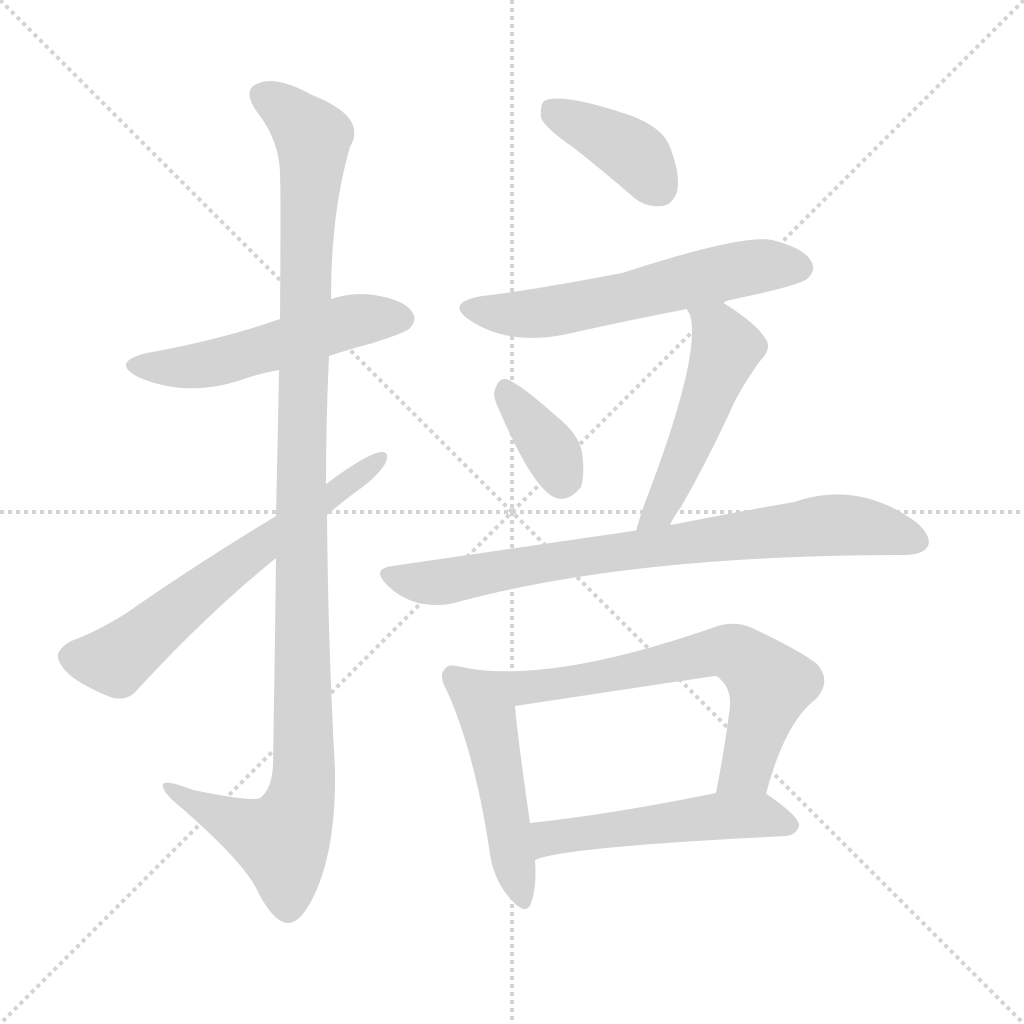
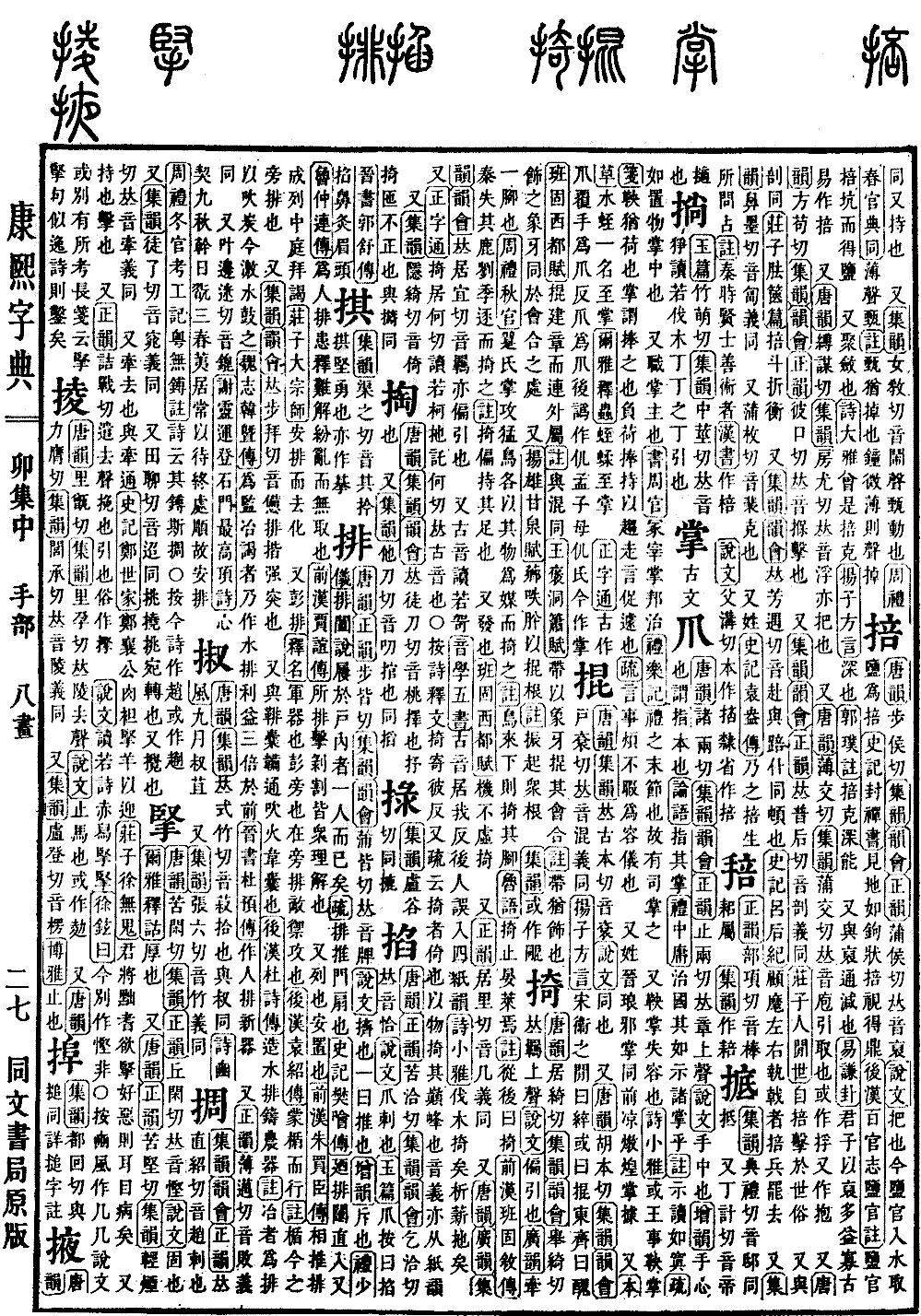
Mao Collection, Middle Volume. Radical: Hand (shǒu). Kangxi strokes: 12. Page 437, Entry 01.
Pronounced pou. According to the Explaining Graphs and Analyzing Characters (Shuowen Jiezi), it means to grasp. Nowadays, salt officials go into the water to collect salt, which is called pou. In the Records of the Grand Historian (Shiji), Book of the Feng and Shan Sacrifices, it is written: saw a shape like a hook on the ground, grasped and examined it to find a cauldron. In the Book of Later Han (Hou Hanshu), Notes on the Offices of Salt Officials, it says: salt officials scrape the pits to obtain salt. Also means to gather and hoard. In the Book of Odes (Shijing), Greater Odes, it says: they are indeed hoarders. In the Dialect (Fangyan) by Yang Xiong, it means deep. Guo Pu notes: the hoarders are deep and capable. Also interchangeable with pou (to reduce). In the Book of Changes (Yijing), Humility Hexagram, it says: the noble man reduces the much and adds to the few. In ancient versions of the Book of Changes, it is written as pou.
Pronounced fu. Also means to grasp.
Pronounced pao. Means to pull and take. Sometimes written as fou. Also written as bao.
Pronounced pou. Means to strike.
Pronounced pou. The meaning is the same. In the Zhuangzi, In the World of Men, it says: striking oneself against the customs of the world. Also interchangeable with pou (to split). In the Zhuangzi, Opening Trunks, it says: split the bushels and break the scales.
Pronounced fu. Interchangeable with bu (to fall) and pu (to stumble). Means to collapse. In the Records of the Grand Historian (Shiji), Annals of Empress Lu, it says: he looked back and signaled to his attendants; the halberd-bearers dropped their weapons and left.
Pronounced fu. The meaning is the same.
Pronounced pei. Means to overcome.
Also a surname. In the Records of the Grand Historian (Shiji), Biography of Yuan Ang, it says: then went to the place of Pousheng to ask for divination. The commentary notes: a wise man of the Qin dynasty who was skilled in the arts. In the Book of Han (Hanshu), it is written as bang. According to the Explaining Graphs and Analyzing Characters (Shuowen Jiezi), it was originally written as long. This is the clerical simplified form.