You Collection, Upper Volume
Radical: Speech (yán)
Ou
Kangxi strokes: 18
Page 1178, Entry 09
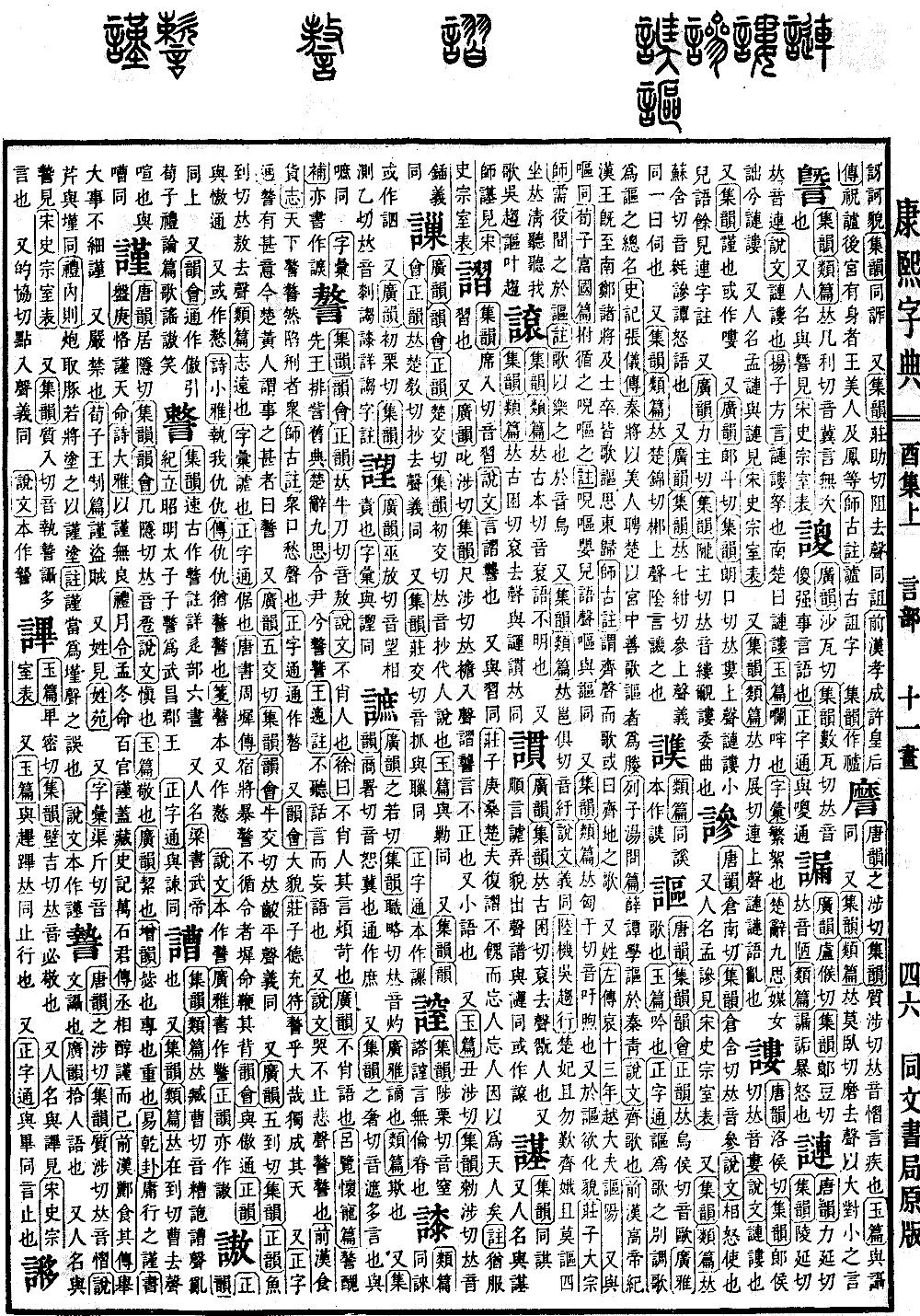
Pronounced ou.
Guangya (Encyclopedia of Refined Words): To sing.
Yupian (Jade Chapters): To chant.
Zhengzitong (Comprehensive Dictionary of Characters): Ou is a specific style of singing, while ge is the general term for singing.
Records of the Grand Historian (Shiji): Qin intends to employ beauties to engage with Chu, sending those in the palace skilled at singing ou as marriage accompaniments.
Liezi: Xue Tan studied ou under Qin Qing.
Shuowen (Explaining Graphs and Analyzing Characters): A song from the State of Qi.
Book of Han (Hanshu): Once the King of Han arrived in Nanzheng, the generals and soldiers all sang ou, longing to return to the east.
Shigu Commentary: Refers to singing in unison. Others say it is a song from the Qi region.
Also a surname.
Zuo Tradition (Zuo Zhuan): Yue official Ou Yang.
Also written as the variant form ou.
Xunzi: Comfort them and soothe them (er ou).
Commentary: Er ou refers to the sounds made by an infant. Ou is the same as ou.
Also pronounced xu.
To warm. Also, yu ou, the appearance of wanting to undergo transformation.
Zhuangzi: Xu Yi heard it from yu ou.
Commentary: To sing in order to provide joy. The syllable yu is pronounced wu.
Also pronounced yu.
Shuowen (Explaining Graphs and Analyzing Characters): Meaning is the same.
Lu Ji, Wu Qu Xing (Song of Wu Qu): Consort of Chu, do not sigh; Maiden of Qi, do not ou. Let the gathering listen clearly, listen to my singing of the Wu Qu. Ou rhymes with qu.