Chou Collection, Upper Volume
Radical: Mouth (kǒu)
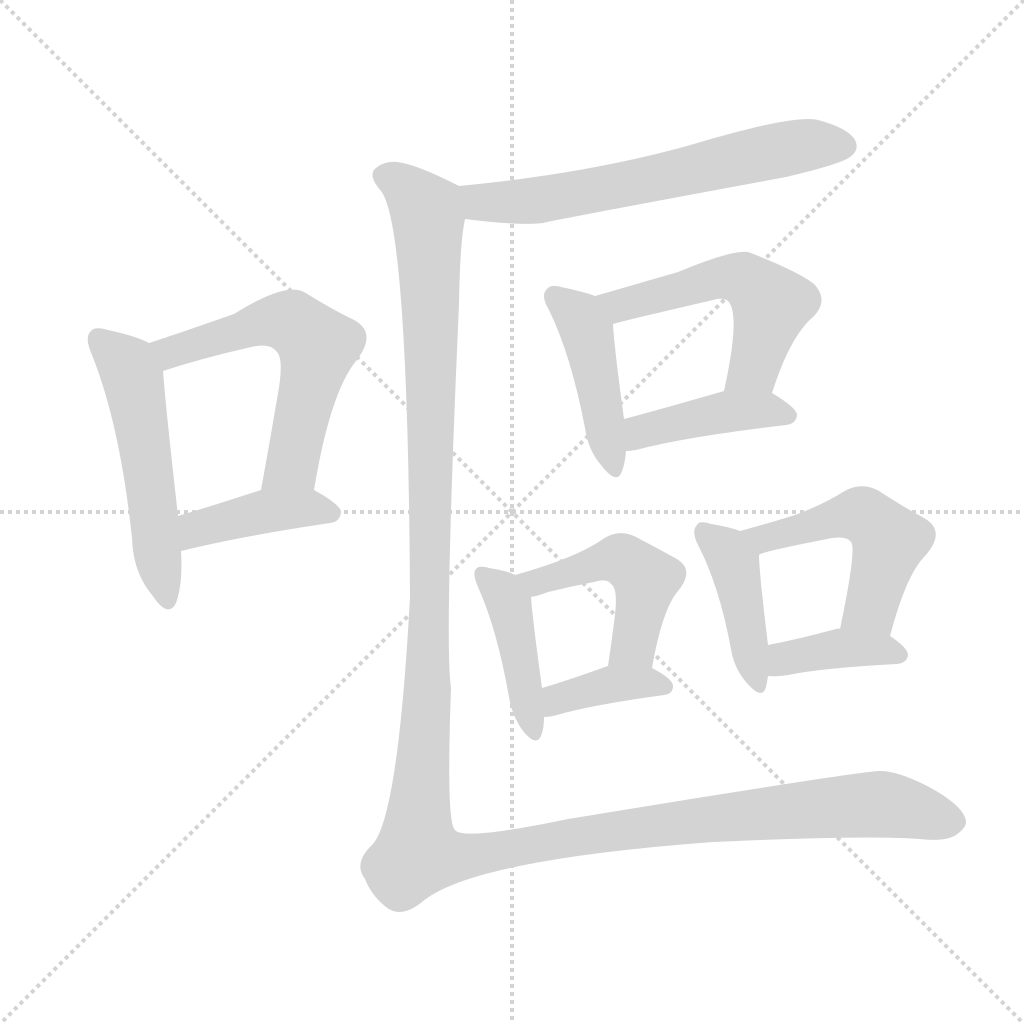
Character: 嘔
Kangxi strokes: 14
Page 206, Entry 04
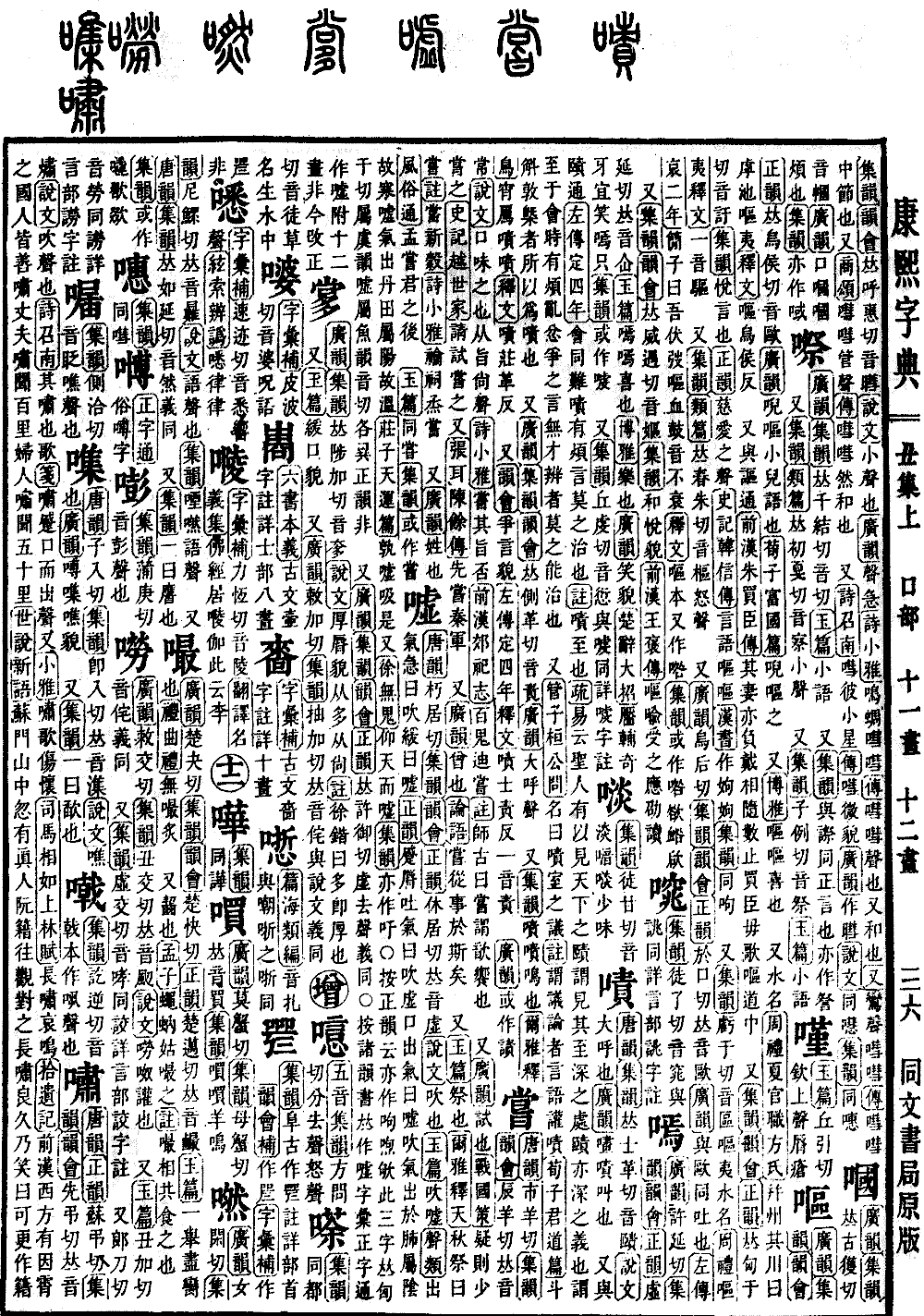
Pronounced ou. According to the Extensive Rhymes (Guangyun), the Combined Rhymes (Jiyun), the Rhyme Assembly (Yunhui), and the Correct Rhymes (Zhengyun), it is pronounced ou.
According to the Extensive Rhymes (Guangyun), the term er-ou refers to the speech of a young child. According to the Discourses of Master Xun (Xunzi), Rich State Chapter: Being like a prattling child. Also, according to the Erudite Refinements (Boya), ou-ou means to be happy.
Also, a river name. According to the Rites of Zhou (Zhouli), Summer Offices, Officials of Provinces: In Bing Province, the rivers are the Hu-Chi and Ou-Yi. According to the Explanatory Text (Shiwen), Ou is pronounced ou.
Also used interchangeably with ou (to sing). According to the History of the Former Han (Qianhan Shu), Biography of Zhu Maichen: His wife also followed him, carrying burdens, and often asked Maichen to stop singing on the road.
Also, according to the Combined Rhymes (Jiyun), the Rhyme Assembly (Yunhui), and the Correct Rhymes (Zhengyun), it is pronounced xu. According to the Combined Rhymes (Jiyun), it means pleasant speech. According to the Correct Rhymes (Zhengyun), it is the sound of affection. According to the Records of the Grand Historian (Shiji), Biography of Han Xin: Words were spoken with affection. The History of the Han (Hanshu) writes this as xu-xu. According to the Combined Rhymes (Jiyun), it is the same as xu (to warm/breathe upon).
Also, according to the Combined Rhymes (Jiyun), it is pronounced qu. Ou-Yi is a river name. In the Explanatory Text for the Rites of Zhou (Zhouli) concerning Ou-Yi, one pronunciation is qu.
Also, according to the Combined Rhymes (Jiyun) and the Classified Chapters (Leipian), it is pronounced shu. The sound of anger.
Also, according to the Extensive Rhymes (Guangyun), it is pronounced ou. According to the Combined Rhymes (Jiyun), the Rhyme Assembly (Yunhui), and the Correct Rhymes (Zhengyun), it is pronounced ou. According to the Extensive Rhymes (Guangyun), it is the same as ou (to vomit). According to the Zuo Commentary (Zuo Zhuan), Second Year of Duke Ai: The Master said: I hid my bow and vomited blood, yet the sound of my drums did not wane. According to the Explanatory Text (Shiwen), the original text of Ou was written as an alternate form. According to the Combined Rhymes (Jiyun), it is sometimes written as an alternate form.
Also, according to the Combined Rhymes (Jiyun) and the Rhyme Assembly (Yunhui), it is pronounced yu. According to the Combined Rhymes (Jiyun), it refers to a harmonious and pleasant appearance. According to the History of the Former Han (Qianhan Shu), Biography of Wang Bao: Received them with harmonious affection. Ying Shao reads it as such.