Si Collection, Upper Volume
Radical: Water (shuǐ)
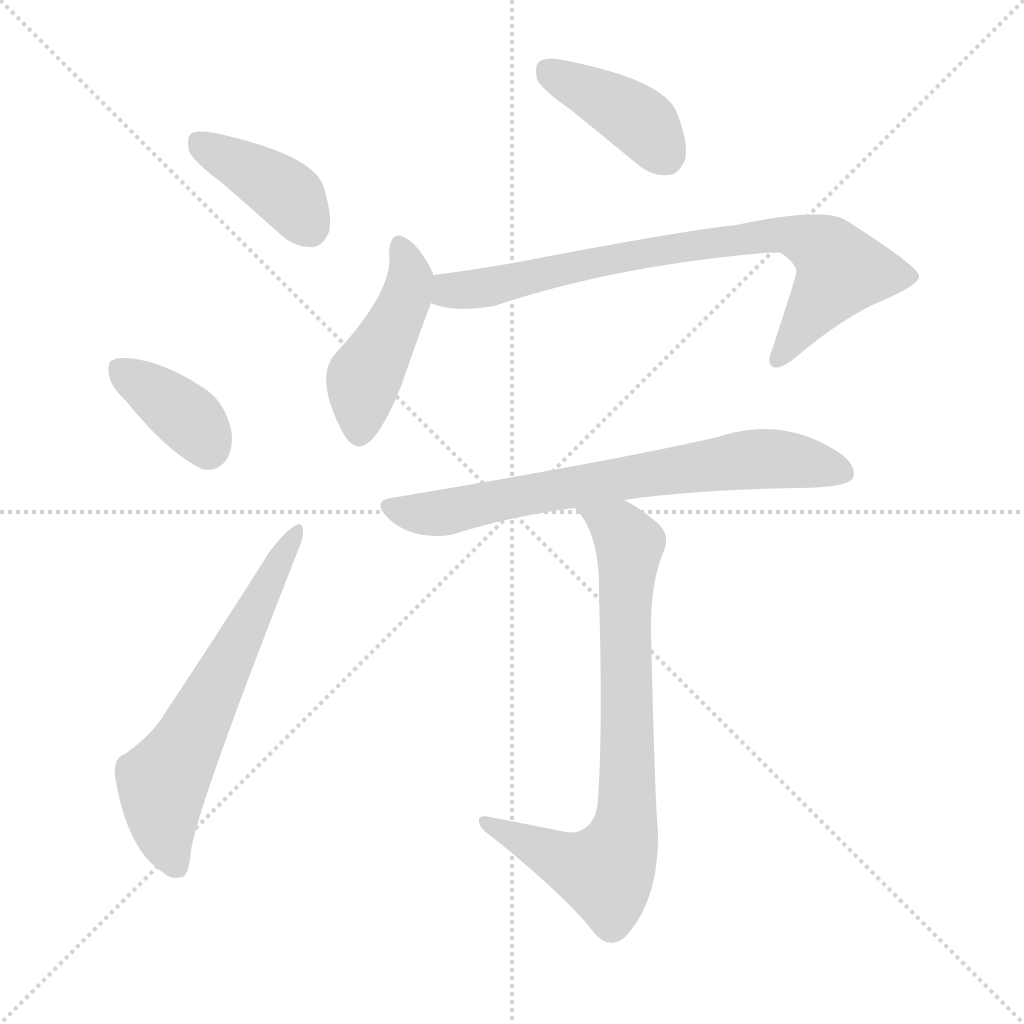
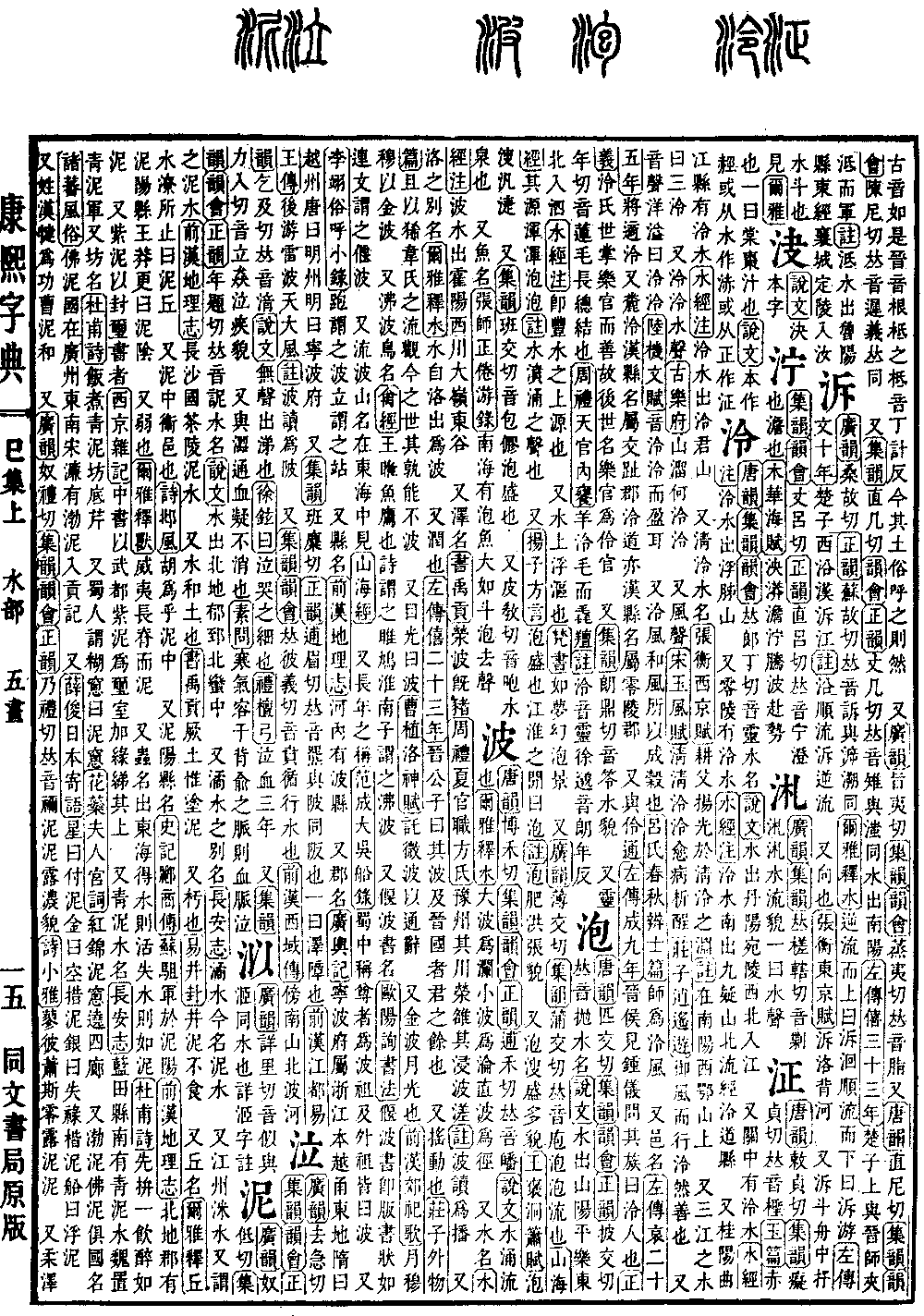
Ning; Kangxi stroke count: 18; Page 617, Entry 03
According to Compendium of Rhymes (Jiyun) and Rhyme Collection (Yunhui), the pronunciation is zhang-lv, and according to Corrected Rhymes (Zhengyun), it is zhi-lv; pronounced ning. It refers to water that is clear and calm.
Mu Hua, Sea Rhapsody (Haifu): Describes water bodies as vast and calm, with waves rising and falling as they flow into the distance.
Ning
According to Tang Rhymes (Tangyun), Compendium of Rhymes (Jiyun), Rhyme Collection (Yunhui), and Corrected Rhymes (Zhengyun), the pronunciation is nai-ding; pronounced ning. It refers to a swamp or mud.
Zuo Si, Rhapsody on the Capital of Wu (Wudu Fu): Sweat dripped like light rain, and the middle of the road was filled with mud.
Additionally, according to Compendium of Rhymes (Jiyun), one source defines it as clear.
Furthermore, according to Tang Rhymes (Tangyun), Compendium of Rhymes (Jiyun), and Corrected Rhymes (Zhengyun), the pronunciation is nai-ting, and according to Rhyme Collection (Yunhui), it is nai-qing; pronounced ning (rising tone). The meaning is the same.
Also, it refers to the appearance of boiling water.
Also, ting-ning refers to a small stream.
Zhang Xie, Seven Commands (Qiming): How is this different from fish swimming in a small puddle?
Also, according to Compendium of Rhymes (Jiyun), the pronunciation is nang-ding; pronounced ning. This also refers to a small stream.
Also, the pronunciation is nai-ji; pronounced ni (falling tone). It means to contain or include.