Zi Collection, Middle Volume
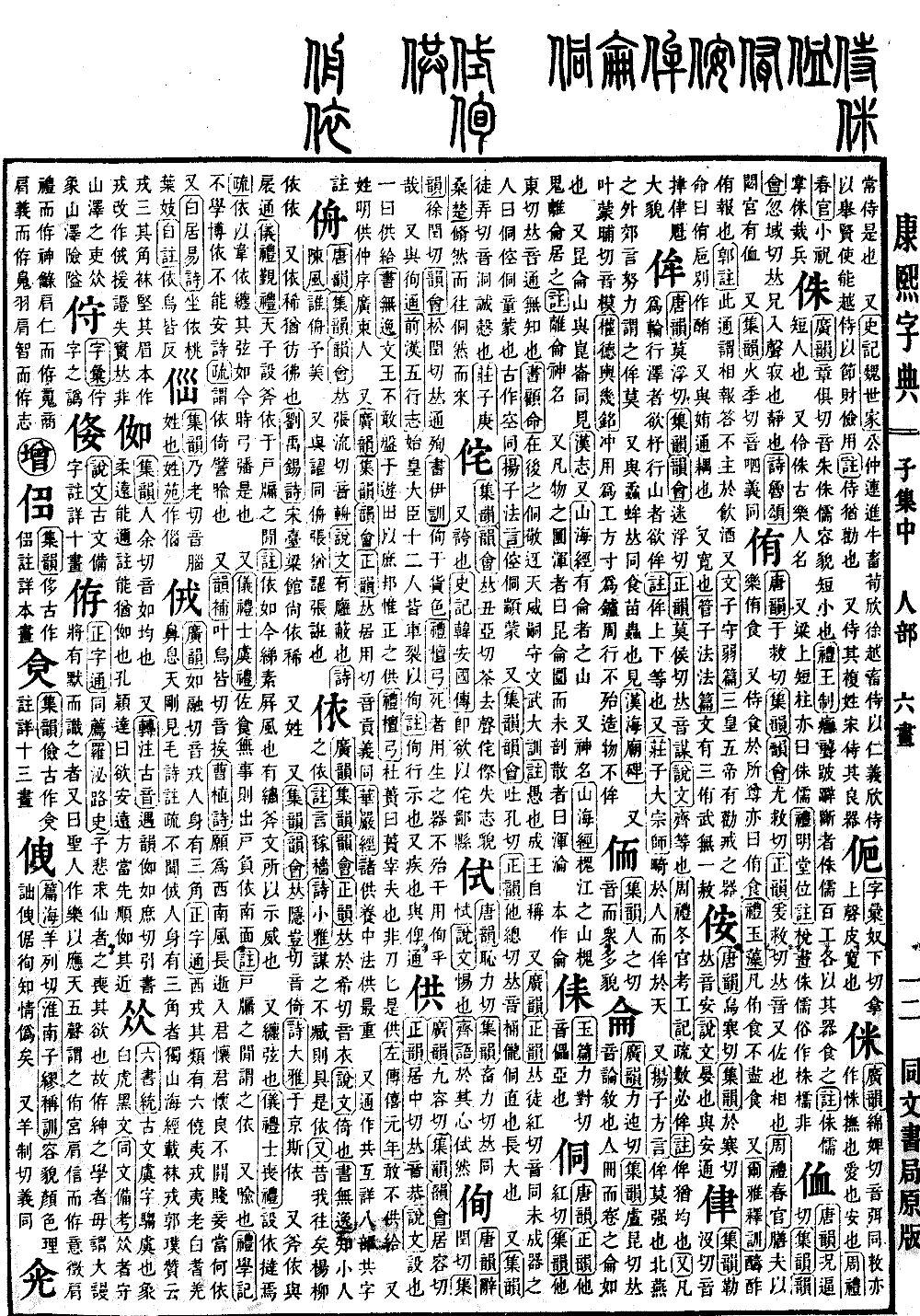
Radical: Person (rén)
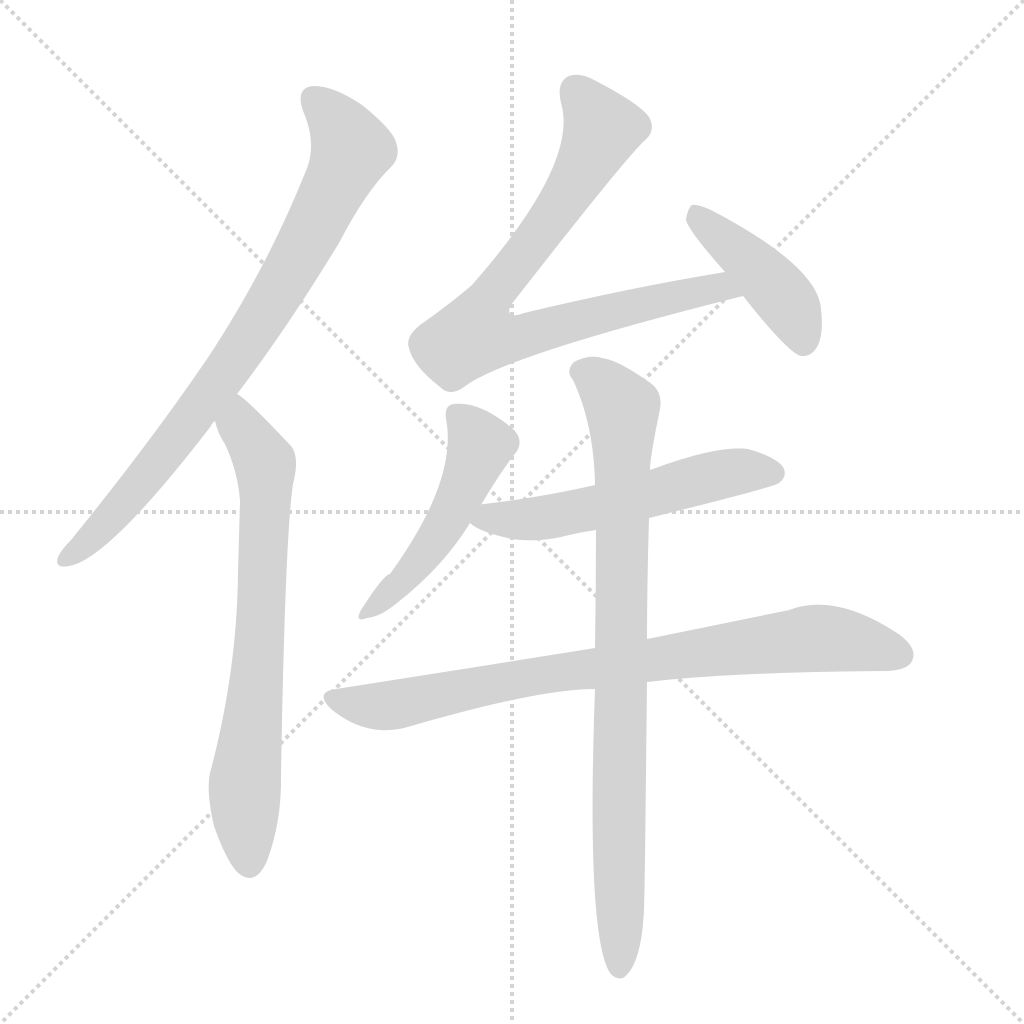
Character: Mou
Kangxi Stroke Count: 8
Page Number: Page 102, Number 08
According to the Tang Dynasty Rhymes (Tangyun), the fanqie is mo-fu. In the Collected Rhymes (Jiyun) and the Rhyme Assembly (Yunhui), the fanqie is mi-fu. In the Correct Rhymes (Zhengyun), the fanqie is mo-hou. The pronunciation is the same as mou.
The Analytical Dictionary of Characters (Shuowen Jiezi) explains the meaning as equal or identical.
The Rites of Zhou (Zhouli) in the Artificers' Record (Kaogongji) records: Density and sparseness must be equal.
Note: Mou means to be even or uniform.
Also: In all cases of making wheels, those used for travel in marshlands should be thinned, while those used for travel in mountains should have equal thickness at the top and bottom.
Note: Mou refers to being the same above and below.
Also, the Zhuangzi in the chapter Great and Venerable Teacher (Dazongshi) records: To be different from common people and equal with Heaven.
Also, Yangzi's Dialects (Fangyan) records: Mou has the meaning of striving. In the outskirts of the Northern Yan region, to exert effort is called mou mo.
Also the same as the characters mao or mou, referring to pests that eat grain seedlings. This is seen in the Hanhaimiao inscription.
Also pronounced similarly to the fanqie meng-bu, with the same sound as mu.
The Table Inscription (Jiming) by Quan Deyu: Take emptiness and stillness as the function, and the mind as the furnace. It circulates everywhere without stopping, creating the ten thousand things without seeking equality.