You Collection, Middle Volume
Radical: Badger (zhì)
Kangxi Strokes: 13
Page 1201, Entry 14
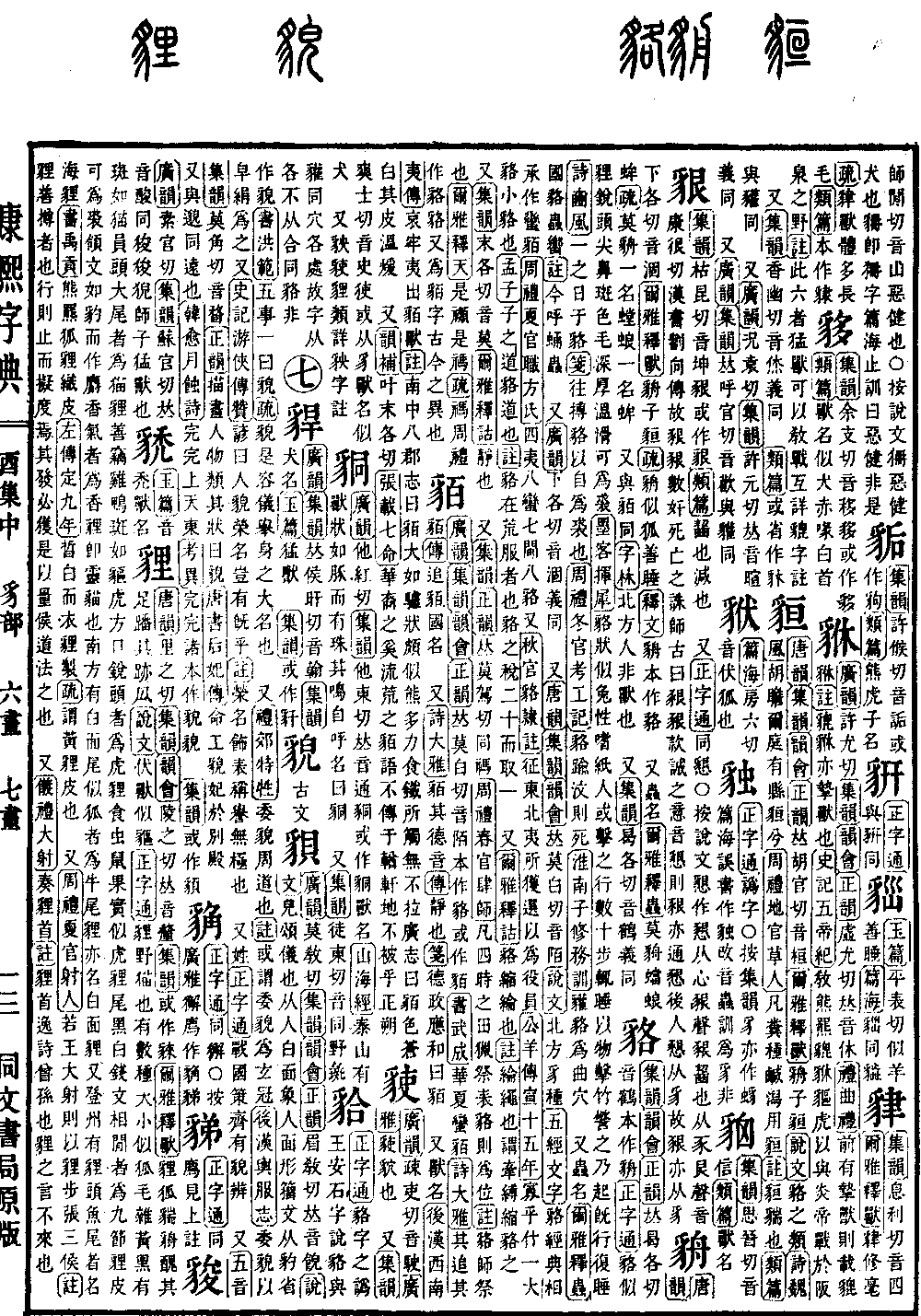
Guangyun (Broad Rimes), Jiyun (Collected Rimes), Yunhui (Collection of Rimes), Zhengyun (Correct Rimes) provide the pronunciation as mo (entering tone). Originally written as he. Sometimes also written in a variant form (mo).
Book of Documents (Shangshu): The Huaxia and the Man and Mo peoples.
Book of Odes (Shijing): Following the Zhui and the Mo.
Commentary: Zhui and Mo are both names of states.
Also Book of Odes (Shijing): Mo is their virtuous fame.
Commentary: The meaning is quiet.
Annotation: Virtue and governance harmoniously responding is called mo.
Also the name of a wild beast.
History of the Later Han (Hou Hanshu): The Ailao Yi people produce the mo beast.
Annotation: The Records of the Eight Commanderies of the South (Nanzhong Bajun Zhi) states: The mo beast is the size of a donkey, resembles a bear in appearance, possesses great strength, and is capable of eating iron; whatever it touches is inevitably destroyed. The Records of Diverse Matters (Guangzhi) states: The fur of the mo beast is pale, and its hide is very warm.
Also, as supplemented in the Rimes (Yunbu), pronounced mo (entering tone).
Zhang Zai: The Xi tribe of the remote Huaxia borderlands, and the Mo tribe dwelling in the desolate wilderness. Their languages have not been collected and recorded by envoys, and the places they inhabit have not received the orthodox calendar.