Chou Collection, Upper Volume
Radical: Mouth (kǒu)
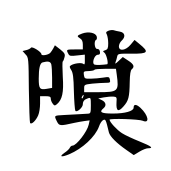
Character: mo
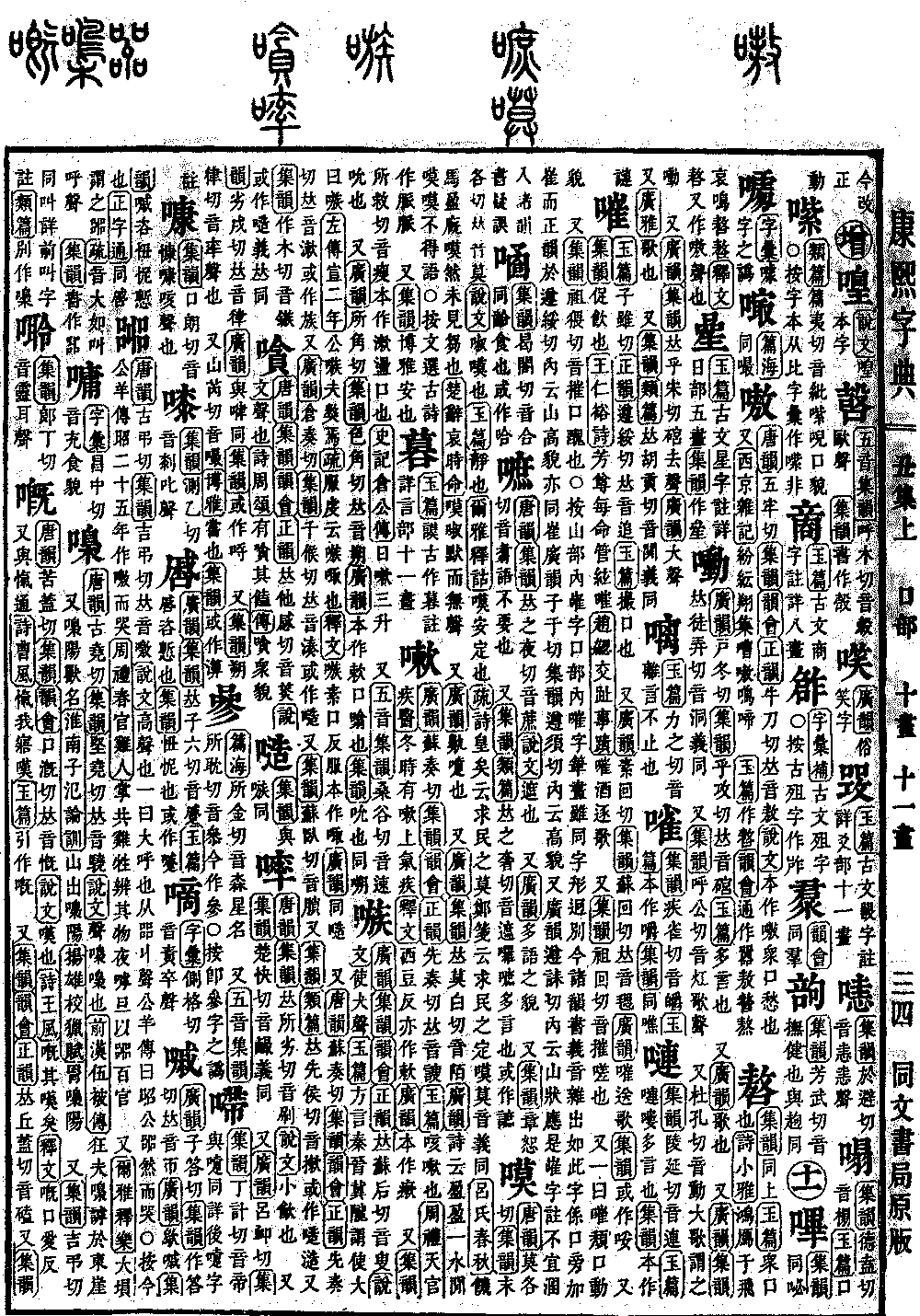
Kangxi stroke count: 14
Page 204, Entry 25
Pronounced mo.
According to the Explaining Graphs and Analyzing Characters (Shuowen Jiezi), it means quiet.
According to the Jade Chapters (Yupian), it means still.
According to the Erya (Er ya), in the chapter interpreting ancient terms, it states that mo means peaceful and settled.
The sub-commentary to the Book of Odes (Shijing) cites the line: Seeking the settlement of the people. The commentary by Zheng Xuan states: seeking the stability of the people. The sounds and meanings of mo and mo are identical.
In the Master Lu’s Spring and Autumn Annals (Lüshi Chunqiu), it says: The hungry horses fill the stable, quiet and not seeing any fodder.
In the Chu Elegies (Chu ci), in the chapter Lamenting the Times, it says: Silent and still, without a sound.
Also, according to the Guangyun, it means to sneeze.
Also, pronounced mo.
According to the Guangyun, it says: The poem states, overflowing is the expanse of the river, silent and still, unable to speak. Note that in the Selections of Refined Literature (Wenxuan), the ancient poem uses a different character variant (maimai).
Also, according to the Collection of Rhymes (Jiyun) and the Guangya (Guang ya), it means peaceful.