You Collection, Lower Volume
Radical: Carriage (chē)
Kangxi Strokes: 15
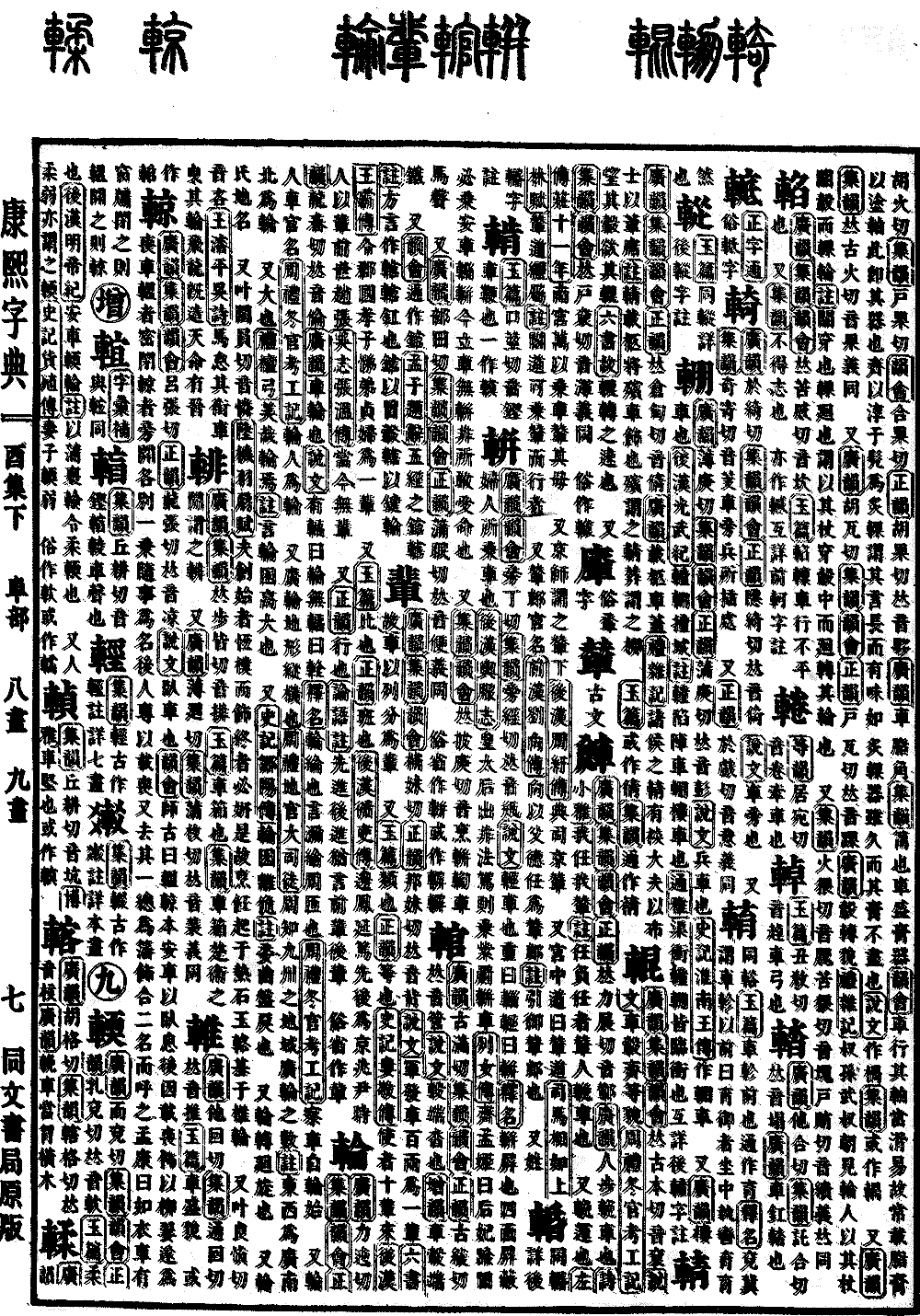
Page 1245, Entry 01
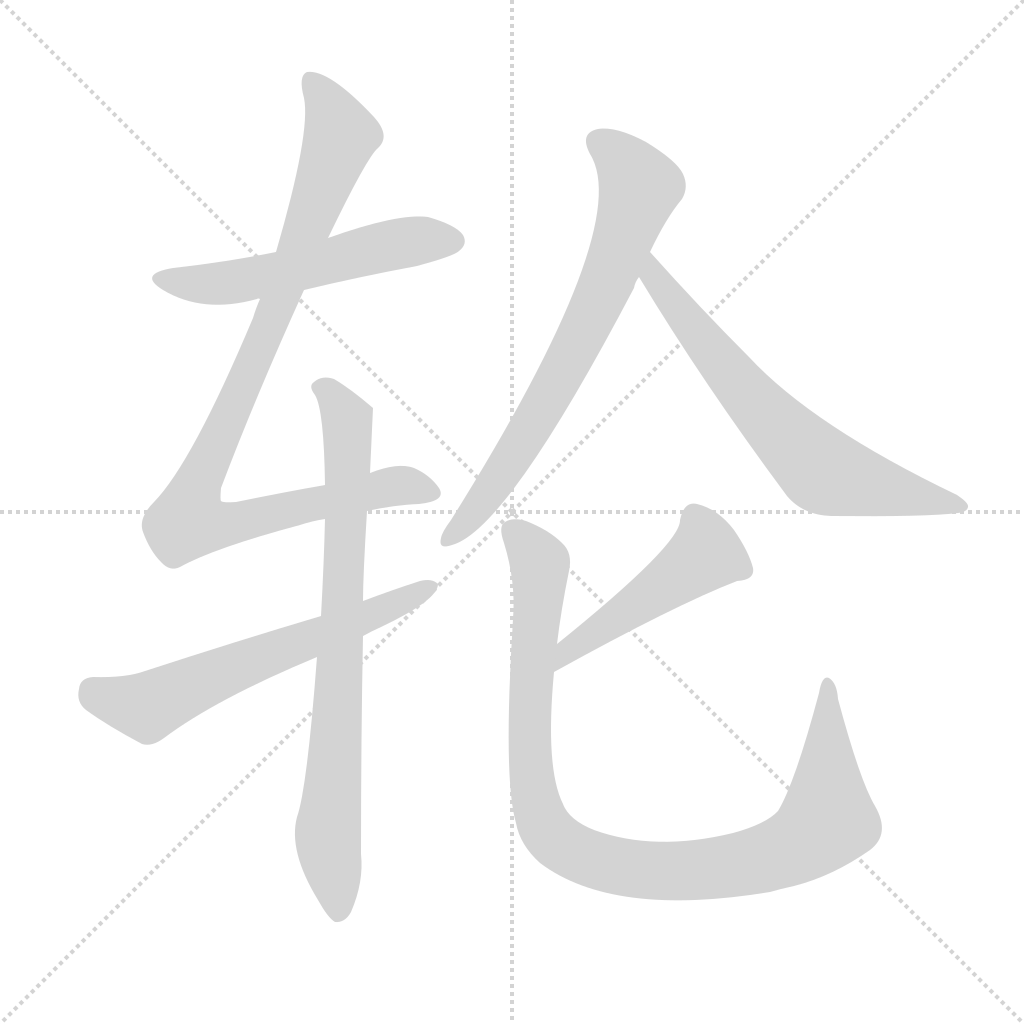
Pronounced lun.
According to the Book of Broad Rhymes (Guangyun), it refers to the wheel of a carriage.
The Analytical Dictionary of Characters (Shuowen) states that a wheel with spokes is called lun, while one without spokes is called quan.
Explanations of Names (Shiming) states that lun means to encompass, signifying that it rotates in a continuous circle.
The Rites of Zhou (Zhouli), section Winter Officers, Record of Tradesmen, states: When examining a carriage, begin with the wheels. It also mentions the Wheel Maker, a title for a carriage official. The Rites of Zhou, Record of Tradesmen, states: The Wheel Maker makes the wheels.
It also refers to width and length, describing the longitudinal and latitudinal measurements of terrain. The Rites of Zhou, Earth Officers, Great Superintendent, states: To know the full extent of the terrain of the nine provinces, including their width and length. The commentary notes: East-west is called width, north-south is called length.
It also means large. The Book of Rites (Liji), section Tan Gong, states: How grand and large it is. The commentary notes: This describes its towering and expansive nature.
The Records of the Grand Historian (Shiji), Biography of Zou Yang, mentions the term lunqun. The commentary notes: This refers to something winding, coiled, and twisted.
It also refers to rotation or spinning.
It is also a place name, Lunshi.
It is also used in a rhyming variant, pronounced lian. Lu Ji, Rhapsody on the Feather Fan, states: Those who create something initially are always simple and unadorned, while those who finish it must make it beautiful. Therefore, cooking began with hot stones, and the jade chariot was based on a primitive wheel.
It is also used in a rhyming variant, pronounced lin. Wang Jun, Poem on the Pacification of Wu, states: The horses tire of their bits, and the carriage drags its wheels. The flying dragon has already been created, and heaven has bestowed the mandate upon the Jin.