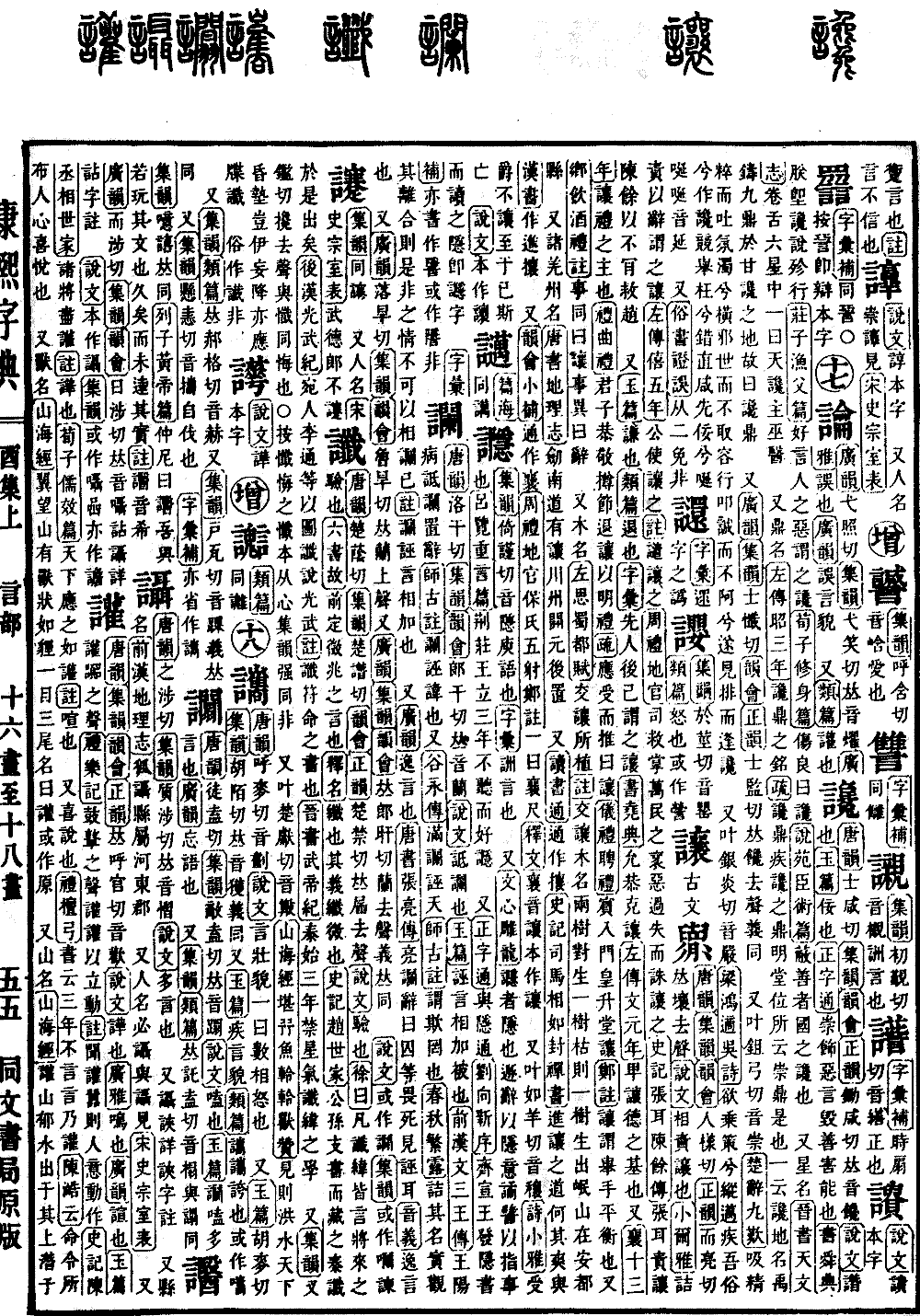
You Collection, Upper Volume
Radical: Speech (yán)
Lan
Kangxi Stroke Count: 24
Page 1187, Entry 16
Pronounced lan
Shuowen Jiezi (Shuowen): To slander or to deny.
Yupian: To use slanderous language against another person.
History of the Former Han (Qianhan Shu), Biography of the Three Kings of Emperor Wen: Wang Yang, while ill, continued to use evasive and denying language to shirk responsibility.
Commentary by Shigu: Lan means to slander and conceal.
Also, in the Biography of Gu Yong: Full of lies and deceit toward Heaven.
Commentary by Shigu: Refers to deception and concealment.
Luxuriant Gems of the Spring and Autumn (Chunqiu Fanlu): Investigate names and realities, observe their separation and conjunction, then the truth of right and wrong cannot be obscured by slanderous language.
Commentary: Lan means to use slanderous language against another person.
Also, Guangyun: Unfounded or extravagant speech.
History of the Tang (Tang Shu), Biography of Zhang Liang: Zhang Liang used unfounded rhetoric to say: The prisoners were framed only because they feared death.
Sound and Meaning: Unfounded or extravagant speech.
Also, pronounced lan (rising tone)
Also, pronounced lan (departing tone)
Meaning is the same.
Shuowen Jiezi (Shuowen): Sometimes also written in a variant form (chàn).
Jiyun: Sometimes also written in a variant form (jiàn).