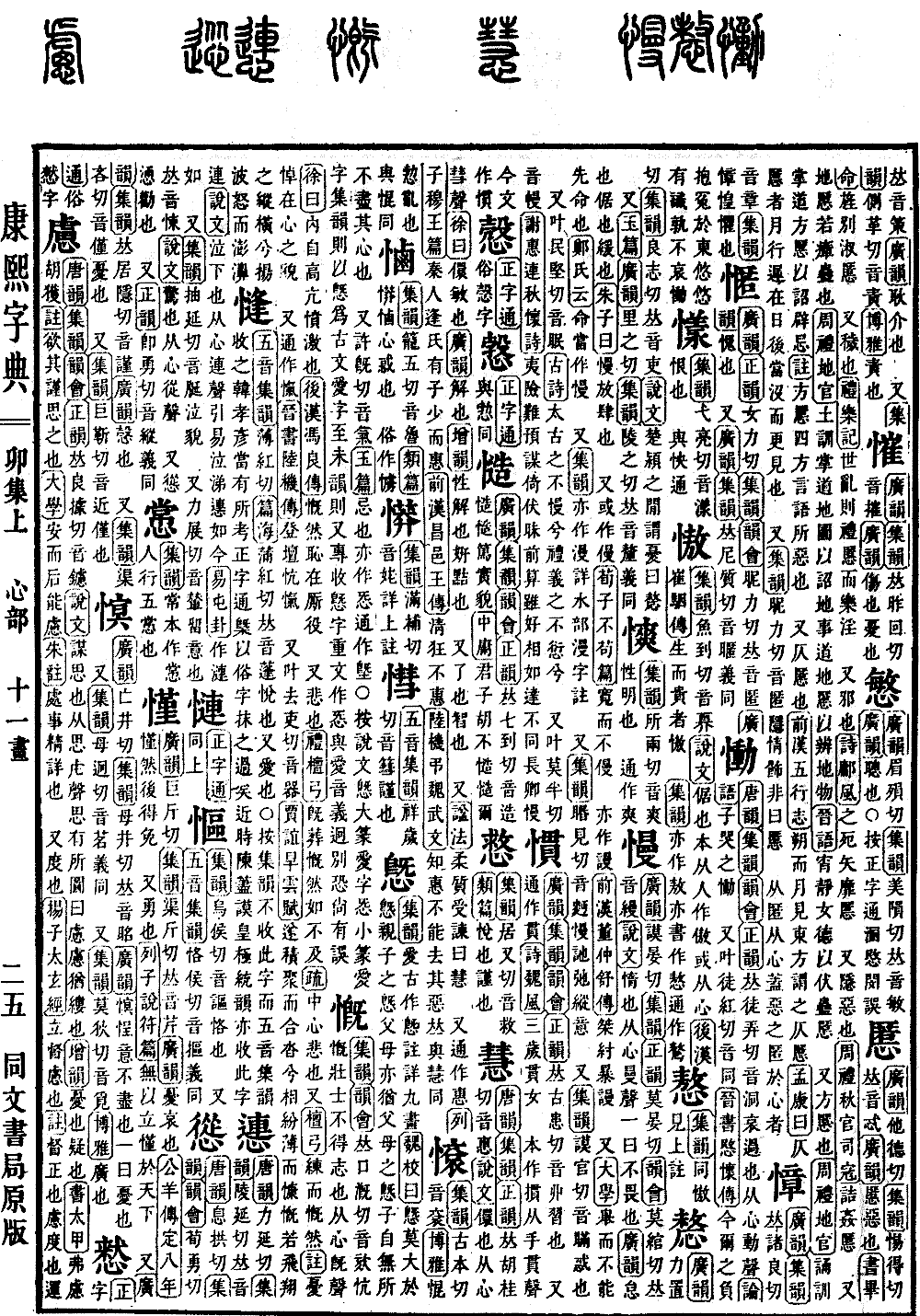
Mao Collection, Upper Volume
Radical: Heart (xīn)
K, 15 strokes
Page 399, Entry 24
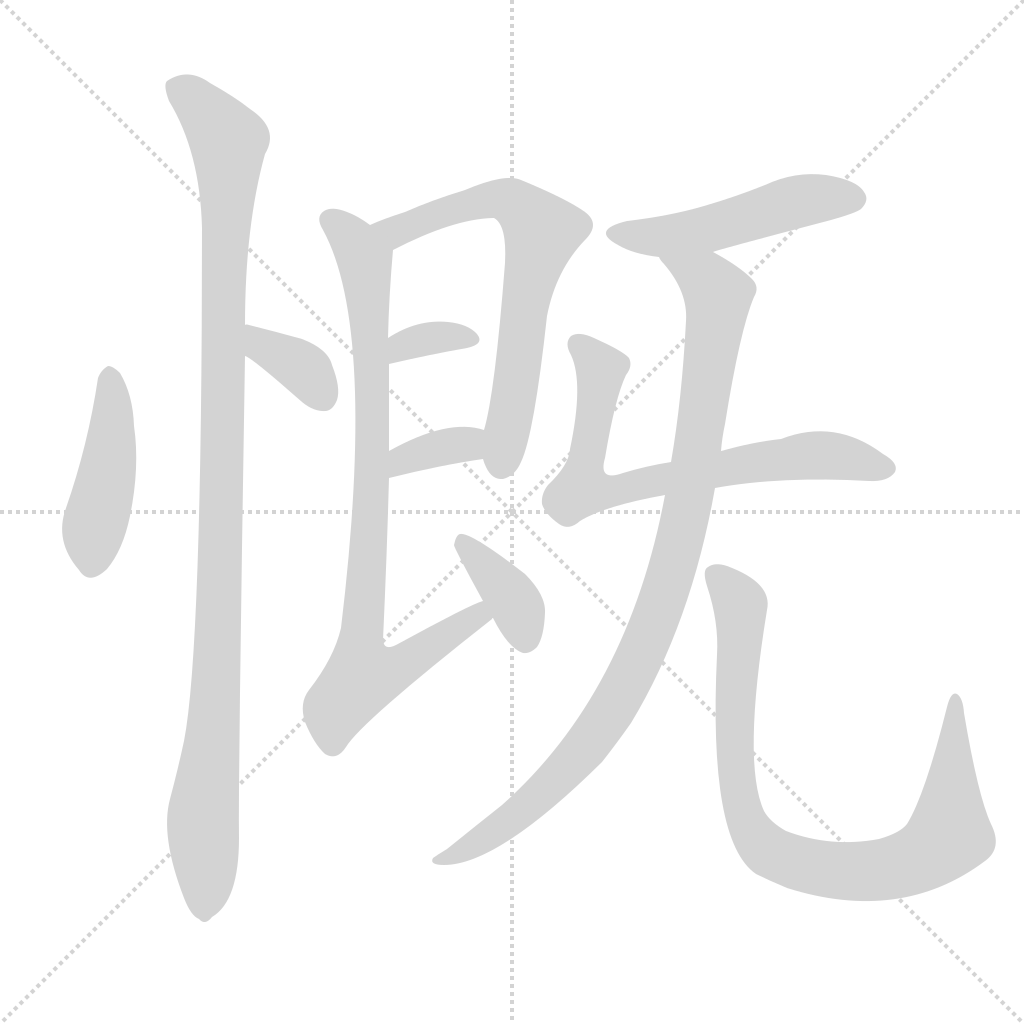
Pronounced kai. Kang-kai, a brave warrior who has not attained his ambitions. Formed from the radical Heart and the phonetic element ji. Xu states: it refers to an inner state of being lofty, indignant, and agitated. In the Biography of Feng Liang in the Book of the Later Han (Hou Hanshu), it is written: feeling indignant and ashamed to be in servitude. It also means to be sad. In the Book of Rites (Liji), specifically the Tan Gong chapter: After the burial, one feels a sighing sense of unfulfillment. The commentary explains: inner sorrow and grief. It also appears in the Tan Gong chapter: After the small mourning period, one feels a sense of sighing. The commentary notes: the appearance of worry and mourning held within the heart. It is also used interchangeably with the variant form kai. In the Book of Jin (Jinshu), the Biography of Lu Ji: mounting the altar with heroic indignation. It is also read as qi. In the Rhyme Prose on Drought Clouds (Han Yun Fu) by Jia Yi: Then they accumulated and gathered together, jostling and pressing with heroic indignation. As if flying in all directions, tossing waves in a raging, surging display.
Textual research: In the Book of Rites (Liji), the Tan Gong chapter, the text reads as if one feels a sighing sense of unfulfillment. Following the original text, the phrasing has been corrected to reflect the sighing sense.