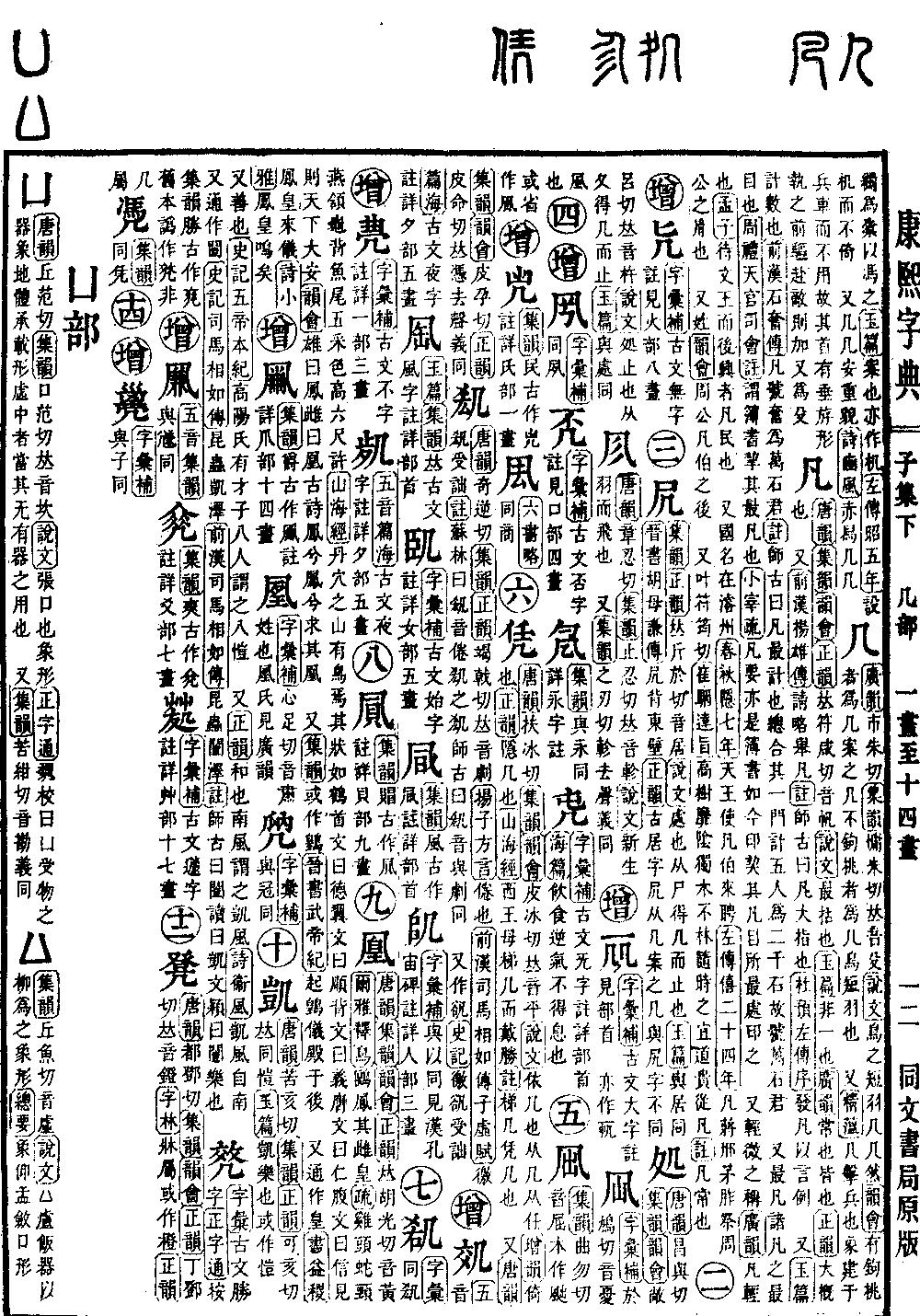
Zi Collection, Page Position: Lower
Radical: Small Table (jī)
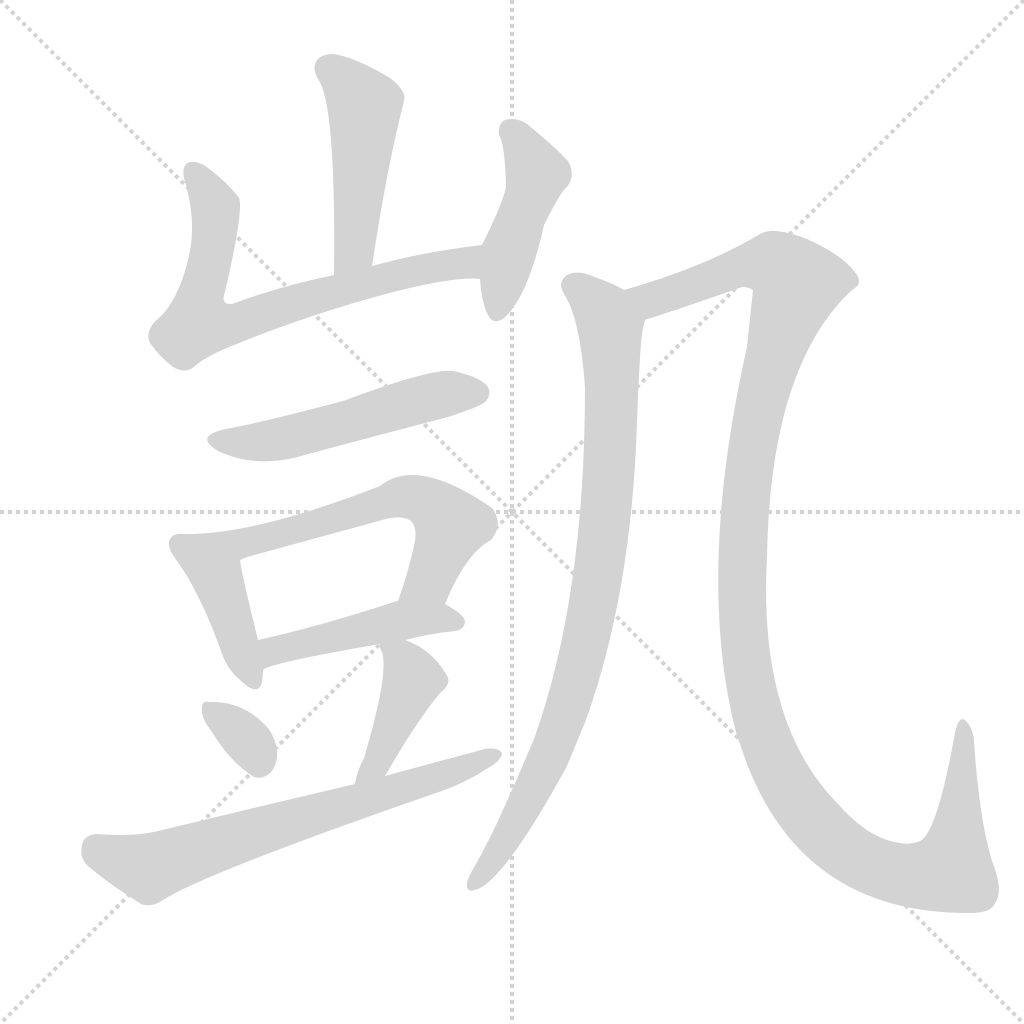
Kai
Kangxi Stroke Count: 12
Page 134, Entry 31
Pronounced kai (falling tone)
According to the Tang Rhyme (Tangyun), Collection Rhyme (Jiyun), and Correct Rhyme (Zhengyun), it is the same as kai (joyful).
According to the Jade Chapters (Yupian), kai means joy. Sometimes written in a variant form (kai). It also means good.
Records of the Grand Historian (Shiji), Basic Annals of the Five Emperors: The Gaoyang clan had eight talented sons, known as the Eight Kai.
According to the Correct Rhyme (Zhengyun), it also means harmony. The south wind is called the kai wind.
Book of Odes (Shijing), Odes of Wei: The south wind (kai wind) comes from the south.
Also used interchangeably with kai (to open or joyful).
Records of the Grand Historian (Shiji), Biography of Sima Xiangru: Insects and reptiles receive the favor (kai) of the marsh.
Book of Han (Qianhan), Biography of Sima Xiangru: Insects and reptiles receive the favor (kai) of the marsh.
Annotation: Shigu says: Kai is read as kai. Wen Ying says: Kai means joy.