Wu Collection, Lower Volume
Radical: Grain (hé)
Kangxi Strokes: 16
Page 859, Entry 02
Pronounced kang. Pronounced kang. Pronounced kang. The pronunciation is the same as kang.
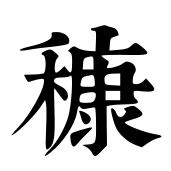
According to the Explaining Graphs and Analyzing Characters (Shuowen Jiezi), it refers to the husks of grain. The character is composed of the radical for grain and the character for rice, with the character for gēng acting as the phonetic component.
History of the Former Han Dynasty (Qianhan Shu), Biography of Gong Yu: Wives and children could not even get enough grain husks and beans to eat.
Zhuangzi, Chapter on the Revolutions of Heaven (Tianyun): If grain husks rise and blur the eyes, one feels as though the heavens and the earth have shifted their positions.
Also, in the Rules of Posthumous Titles (Shifa): Being fond of pleasure and neglecting affairs of state is termed kang.
History of the Former Han Dynasty (Qianhan Shu), Table of Feudal Kings: Contains the entry for King Kang of Zhongshan.
Also refers to a type of musical instrument. Book of Rites (Liji), Record of Music (Yueji): Use the xiang to regulate the sounds of order and chaos. Note: This explains that the xiang is the fu, which is also used to regulate music. The fu is made with a leather exterior and filled with grain husks inside. The character kang is also known as xiang, hence its name. Sometimes written in a simplified variant form (kang).
Approaching Classics (Erya), Explanation of Vessels (Shiqi): Kang is called gu. Note: This explains that kang is the skin of the rice.
Collected Rimes (Jiyun): Sometimes written as a variant form (hang), and also written as (kang).