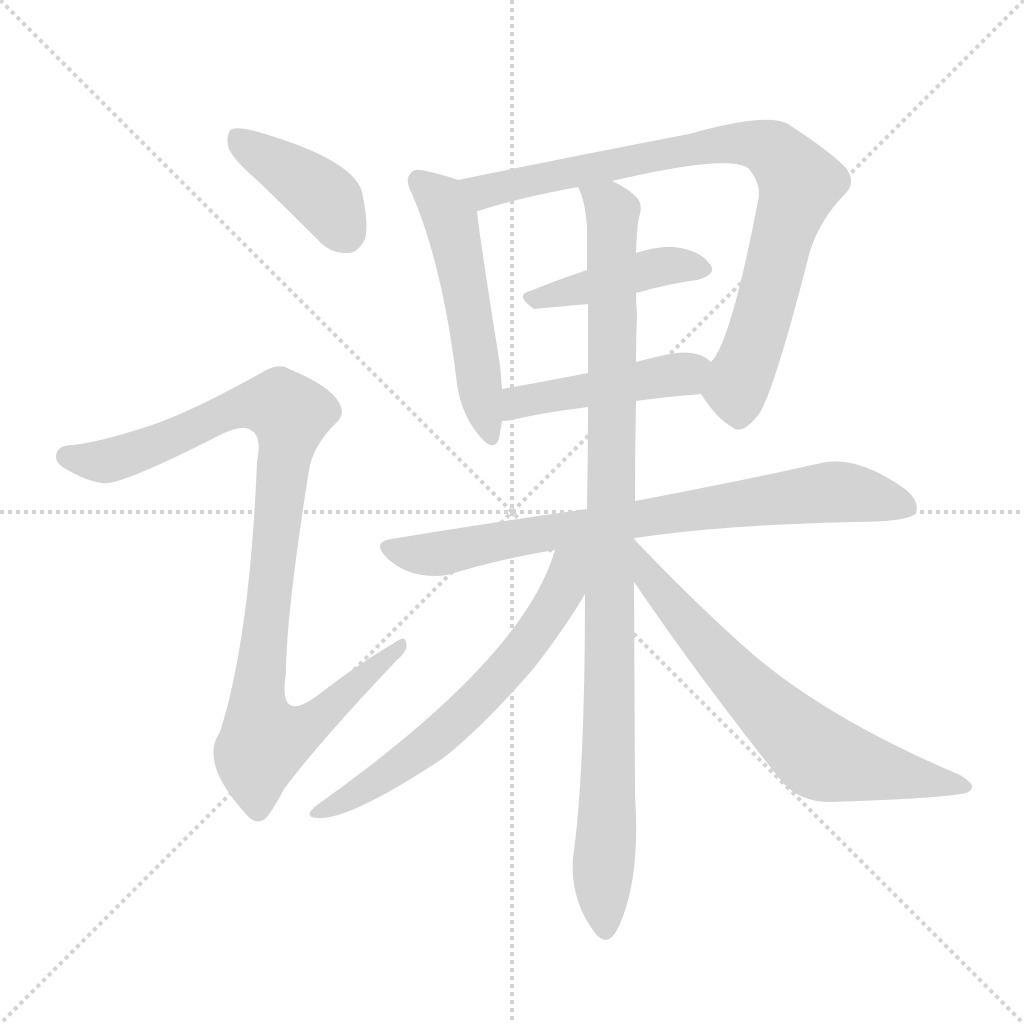
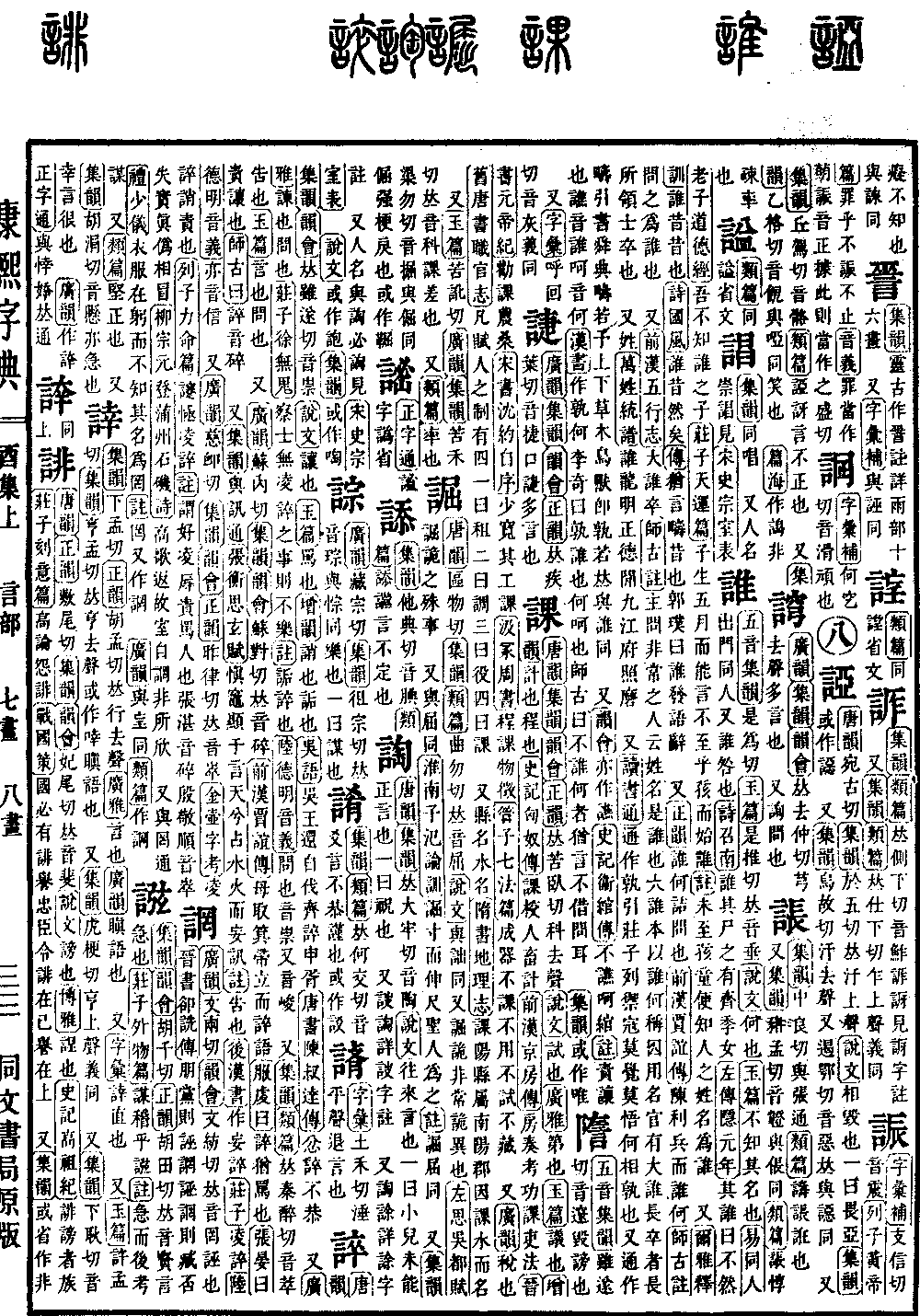
You Collection, Upper Volume
Radical: Speech (yán)
Kangxi Strokes: 15
Page 1165, Entry 01
Tang Rhyme (Tangyun), Collection Rhymes (Jiyun), Rhyme Compendium (Yunhui), Correct Rhymes (Zhengyun): Pronounced kè.
Shuowen Jiezi (Dictionary of Characters): To test.
Guangya (Broad Encyclopedia): To evaluate.
Yupian (Jade Chapters): To discuss.
Zengyun (Augmented Rhymes): To calculate; to measure.
Records of the Grand Historian (Shiji): In the Biography of the Xiongnu, it refers to calculating and checking people and livestock.
Book of Han (Hanshu): In the Biography of Jing Fang, he submitted a method for evaluating officials.
Book of Jin (Jinshu): In the Annals of Emperor Yuan, it refers to encouraging agriculture and sericulture.
Book of Song (Songshu): In the Autobiography of Shen Yue, it refers to reducing his work tasks slightly.
Jizhong Zhoushu (Zhou Documents from the Jizhong Tomb): To measure and assess taxes on goods.
Guanzi (The Book of Master Guan): In the Chapter on Seven Methods, it states that if finished implements are not evaluated, they are not used, and if they are not tested, they are not stored.
Also, Guangyun (Broad Rhymes): A tax.
Old Book of Tang (Jiu Tangshu): In the Treatise on Official Posts, it states that there were four systems for taxing the people: first, rent; second, silk levies; third, labor service; and fourth, taxes.
Also, the name of a county and a river.
Book of Sui (Suishu): In the Treatise on Geography, Keyang County belonged to Nanyang Commandery, and it was named after the Ke River.
Also, Yupian (Jade Chapters): Pronounced kuo; Guangyun (Broad Rhymes) and Collection Rhymes (Jiyun): Pronounced kē. Meaning to be inferior or disparate.
Also, Leipian (Classified Chapters): A rate or ratio.