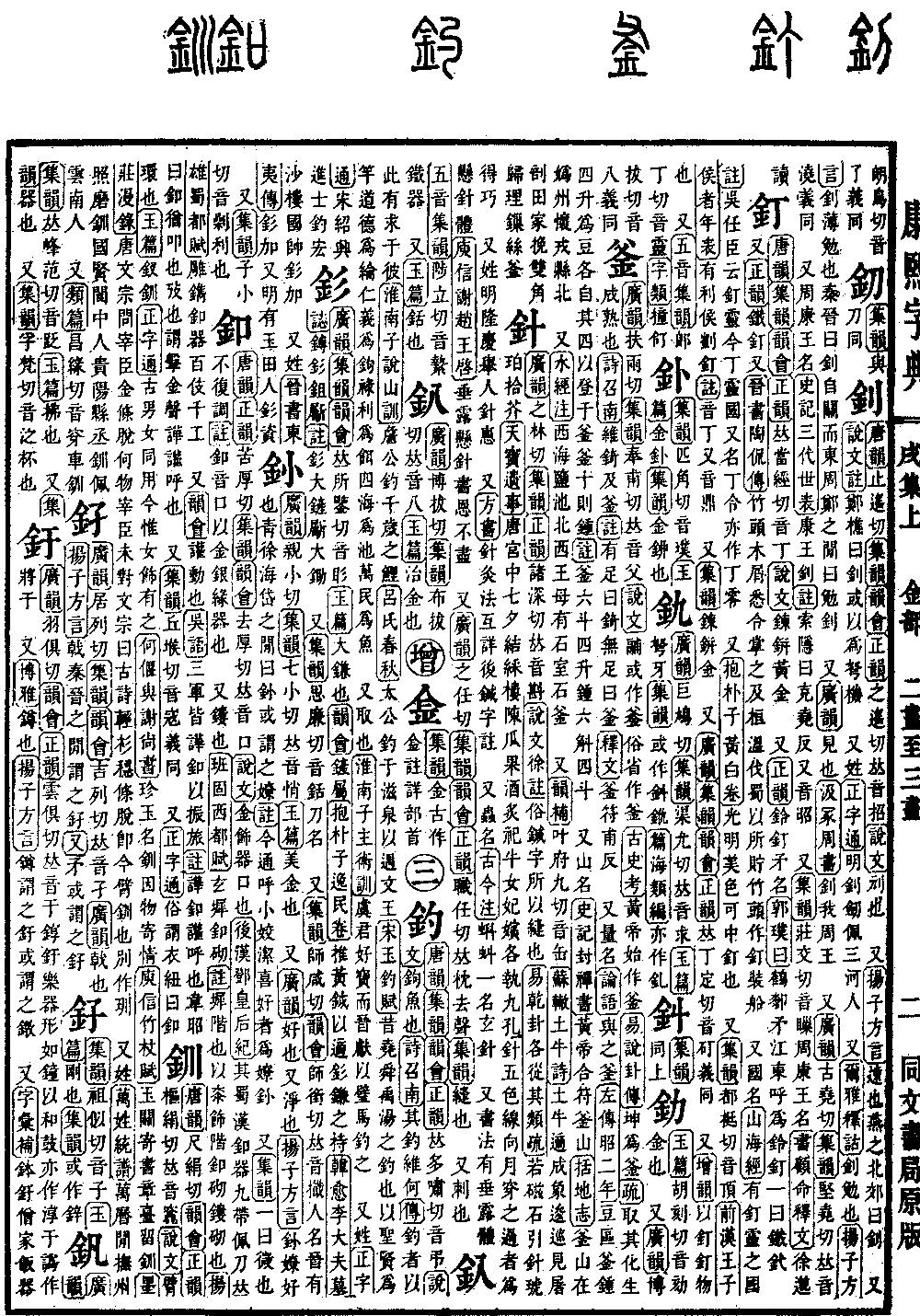
Xu Collection, Upper Volume
Radical: Metal (jīn)
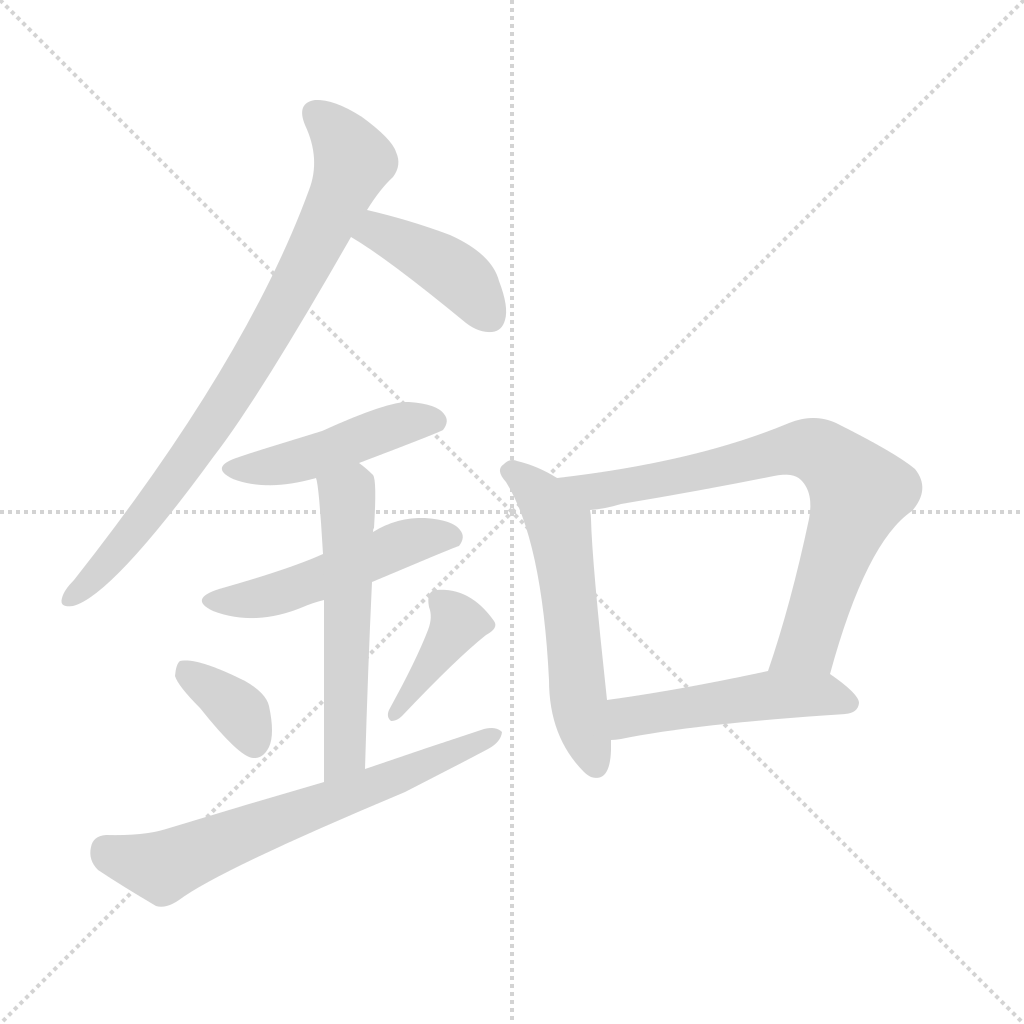
Kou
Kangxi strokes: 11
Page 1296, Entry 16
According to the Tang Rhyme (Tangyun) and Correct Rhymes (Zhengyun), it is pronounced kou (falling tone). According to the Collection of Rhymes (Jiyun) and Rhyme Assembly (Yunhui), it is pronounced kou (falling tone).
The Explanation of Writing and Analysis of Characters (Shuowen Jiezi) defines this as using metal to decorate the rim or opening of an object.
History of the Later Han (Hou Hanshu), Biography of Empress Deng: Vessels decorated with metal from the Shu and Han regions, as well as nine-section belts and ornamental swords, were no longer conscripted.
Commentary: Kou, pronounced kou. It refers to inlaying or decorating the edge of a vessel with gold or silver. It also refers to carving or engraving.
Ban Gu, Western Capital Rhapsody (Xidu Fu): The terrace steps were finished with lacquer, while kou qi refers to carved and engraved steps.
Commentary: Chi refers to terrace steps. The steps were finished with lacquer. Kou qi refers to the carved and engraved steps.
Yang Xiong, Shu Capital Rhapsody (Shudu Fu): Carved and engraved metal-rimmed vessels require numerous artisans and refined skills.
Also in the Rhyme Assembly (Yunhui), it refers to boisterous or clamorous noise.
Discourses of the States (Guoyu), Wu Section: The three armies all shouted and made noise to boost the morale of the troops.
Commentary: Hua kou refers to shouting and cheering. Wei Zhao states: Kou is similar in meaning to knocking or striking; it refers to the sound of metal being struck. Hua refers to cheering.
Also in the Collection of Rhymes (Jiyun), it is pronounced qiu, with the same meaning.
Also in the Correct Meaning Guide (Zhengzitong), it is the common term for a button on clothing.