Chen Collection, Middle Volume
Radical: Tree (mù)
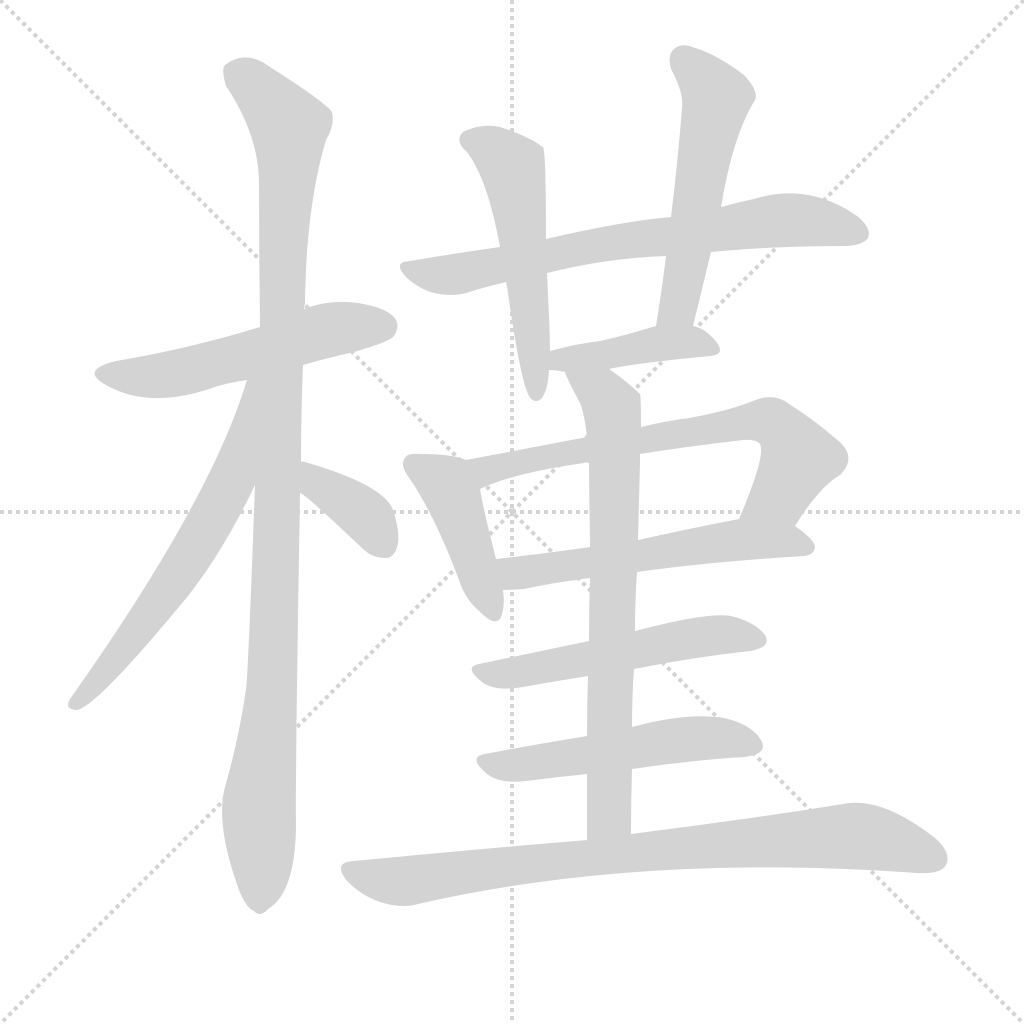
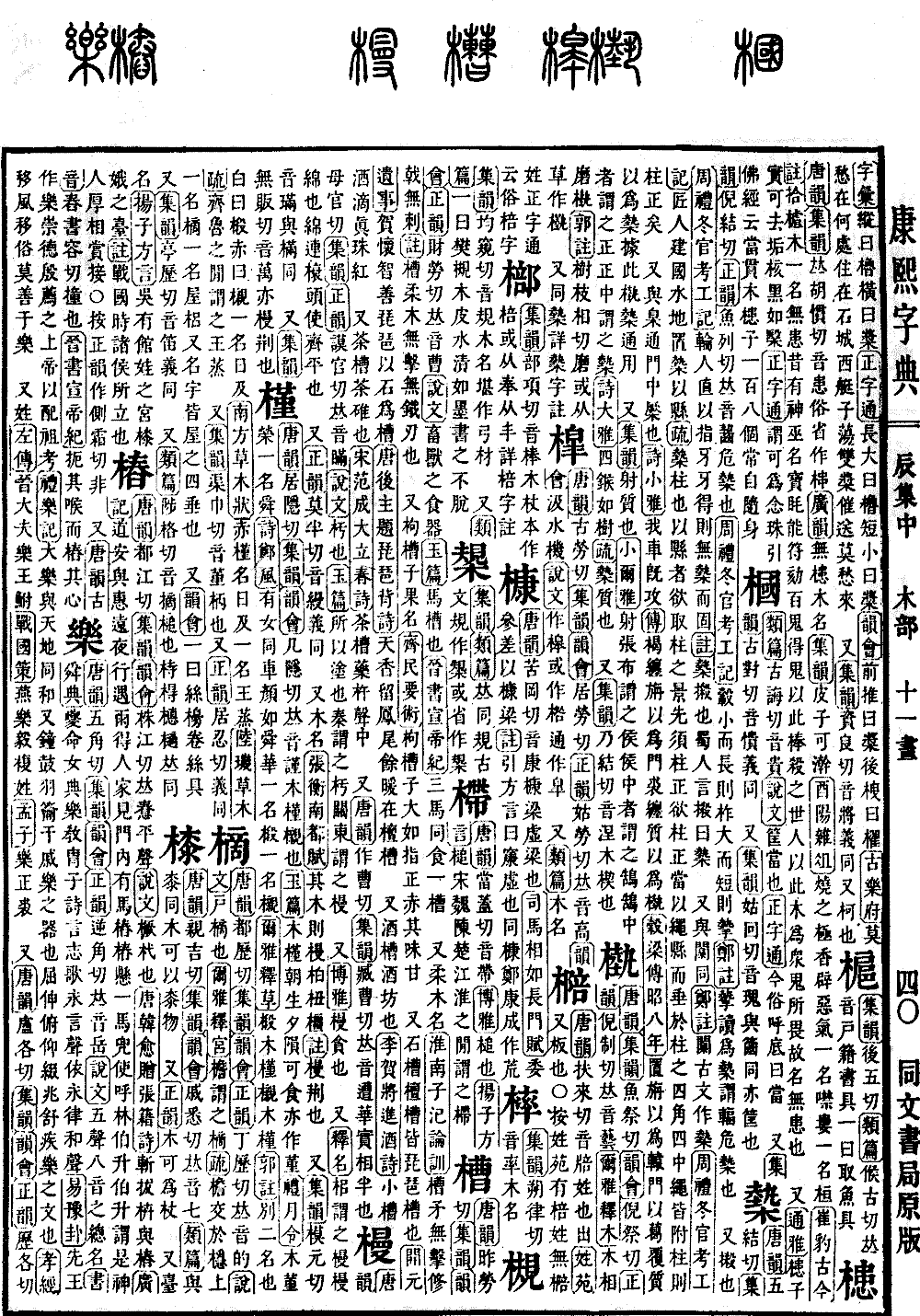
槿
Kangxi Strokes: 15
Page 548, Entry 16
Pronounced jin (falling tone). The rose of Sharon (mùjǐn), also known as the hibiscus (chèn).
Jade Chapters (Yùpiān): The rose of Sharon blooms in the morning and falls by evening; it is edible. Also written as a variant form (jǐn).
Book of Rites (Liji), Monthly Ordinances (Yuèlìng): The rose of Sharon (mùjǐn) blooms.
Also known as the shuttlecock flower (shùn).
Book of Odes (Shijing), Zheng Winds (Zhèngfēng): A young woman shares a carriage, her face like the hibiscus flower (shùnhuá).
Also known as the duan (duàn) and the chen (chèn).
Literary Expositor (Ěryǎ), Explanation of Plants (Shìcǎo): The duan is the rose of Sharon. The chen is the rose of Sharon.
Guo Commentary (Guōzhù): These are two separate names. The white variety is called duan; the red variety is called chen.
Also known as the daily achiever (rìjí).
Plants and Trees of the South (Nánfāng Cǎomù Zhuàng): The red rose of Sharon is called the daily achiever.
Also known as the royal steamer (wángzhēng).
Lu Ji, Commentary on Plants and Trees (Cǎomù Shū): Between the regions of Qi and Lu, it is called the royal steamer.
Also, pronounced jin (level tone). A handle.
Also, pronounced jin (rising tone). Same meaning as above.