Wu Collection, Upper Volume
Radical: Jade (yù)
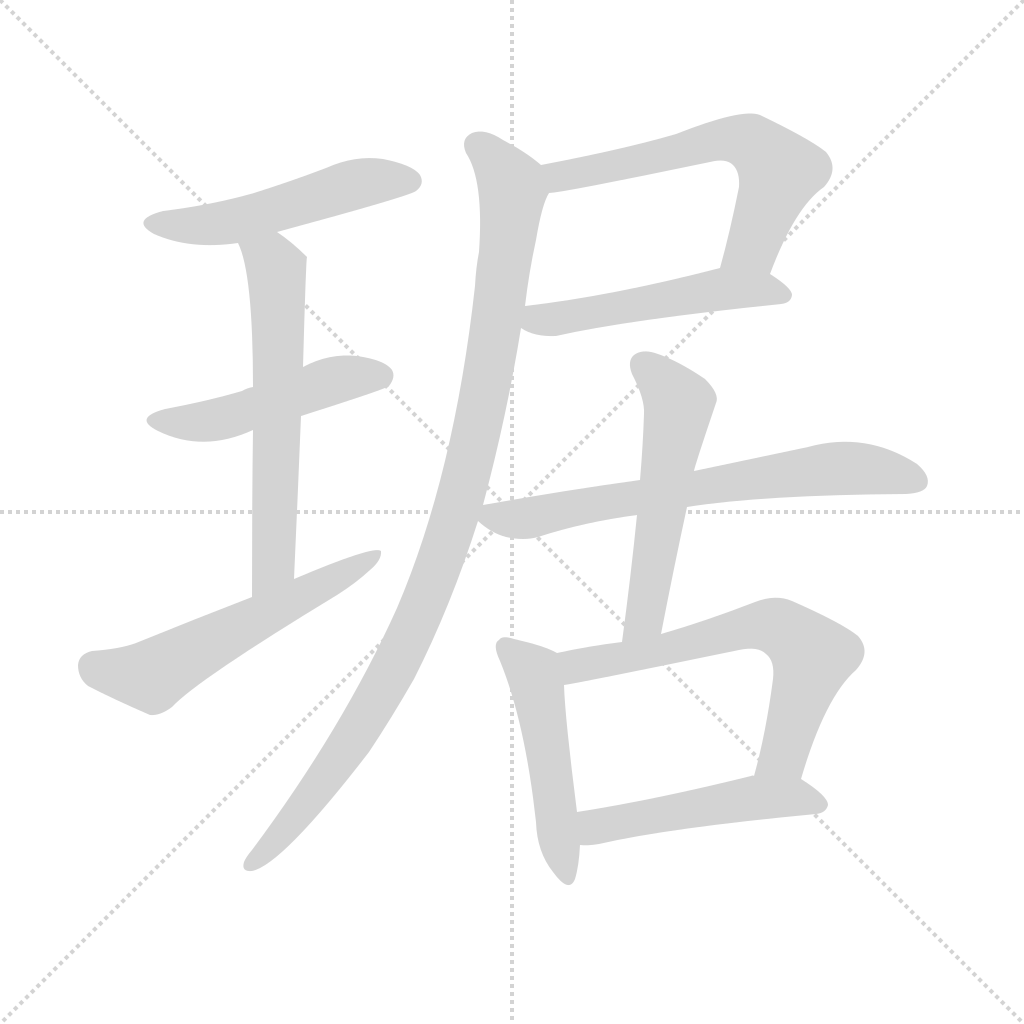
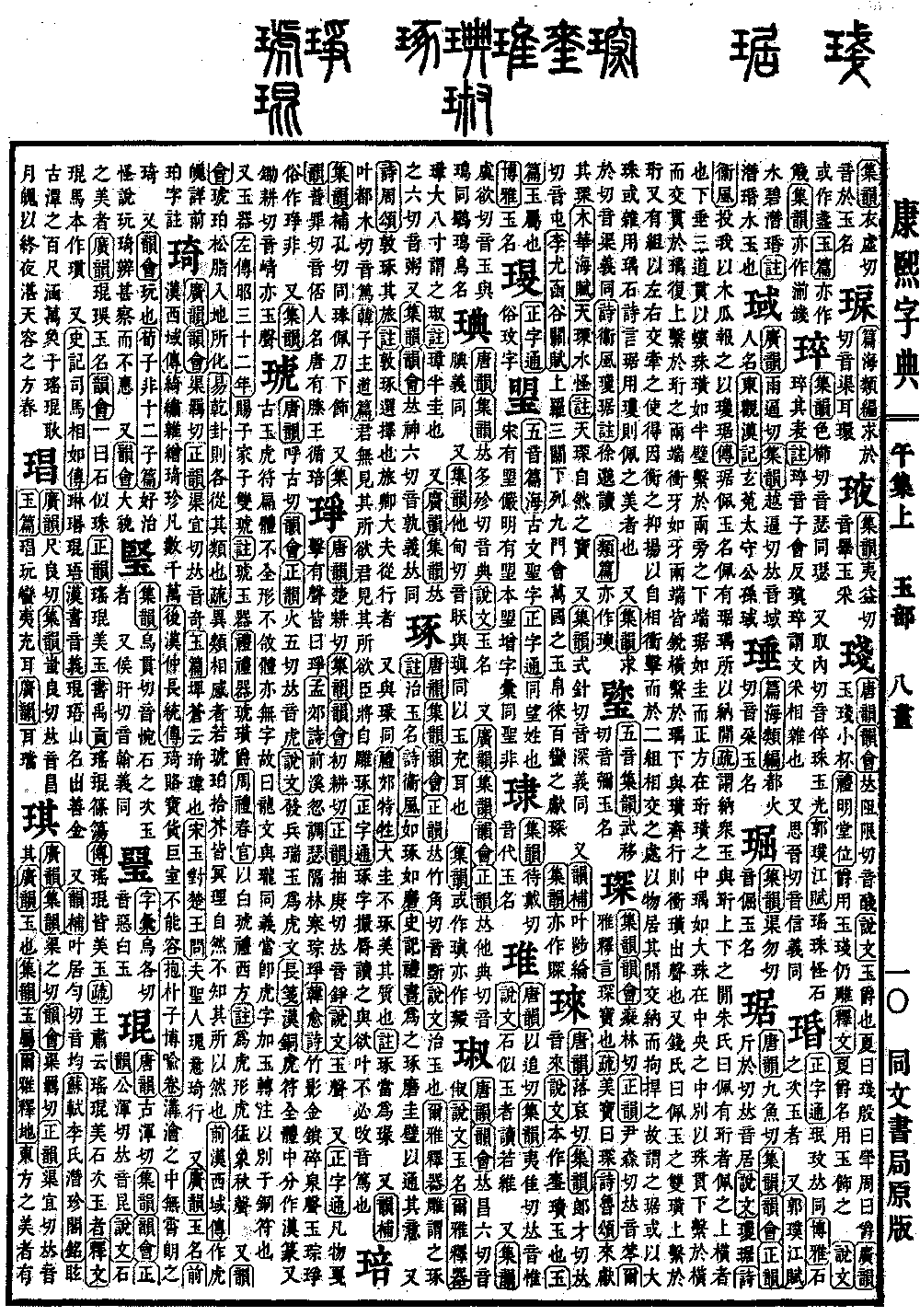
琚
Kangxi strokes: 13
Page 734, Entry 09
Pronounced ju
Shuowen Jiezi (Explanation of Simple and Compound Characters): Qiongju (a type of fine jade).
Book of Odes (Shijing), Odes of Wei: They presented me with a quince; in return I gave them a piece of fine jade (qiongju).
Commentary: Ju is the name of a jade pendant. A pendant consists of ju and yu stones, used to connect the gaps.
Sub-commentary: This refers to inserting the various jade pieces between the upper and lower sections of the heng (the top crossbar of a jade pendant).
Zhu says: The pendant has a heng, which is the horizontal piece at the top. Three strands hang down, threaded with pearls. The huang (a semi-circular jade) is like half a jade disc, attached to the lower ends on both sides. The ju is square like a jade tablet, placed between the heng and the huang. The yu is like a large pearl, placed in the center; it is separated by pearl threads, tied to the huang below, and threaded across the yu, then tied back to both ends of the heng. The chongya is like a tusk, both ends pointed; it is tied horizontally below the yu, level with the huang, so that when walking, it strikes the huang and creates sound.
Qian says: The double huang of the jade pendant is tied to the heng above. There are also cords pulling from left to right, allowing them to strike against each other due to the rise and fall of the heng. At the intersection of the two cords, an object is placed to hold, bind, and protect them, hence it is called ju. Sometimes a large pearl is used, or mixed with yu stones. The Book of Odes mentions using qiong (fine jade) for the ju, which indicates the beauty of the pendant.
Pronounced qu
Same meaning as above.
Book of Odes (Shijing), Odes of Wei, Qiongju commentary: Read as such by Xu Miao.
Leipian (Categorized Dictionary): Also written in a variant form.
Textual research: In the phrase separate with pearl threads, tie to the heng below, and thread across the yu, note that according to the text of the sub-commentary of the Book of Odes, heng should be corrected to huang.