Shen Collection, Lower Volume
Radical: Clothing (yī)
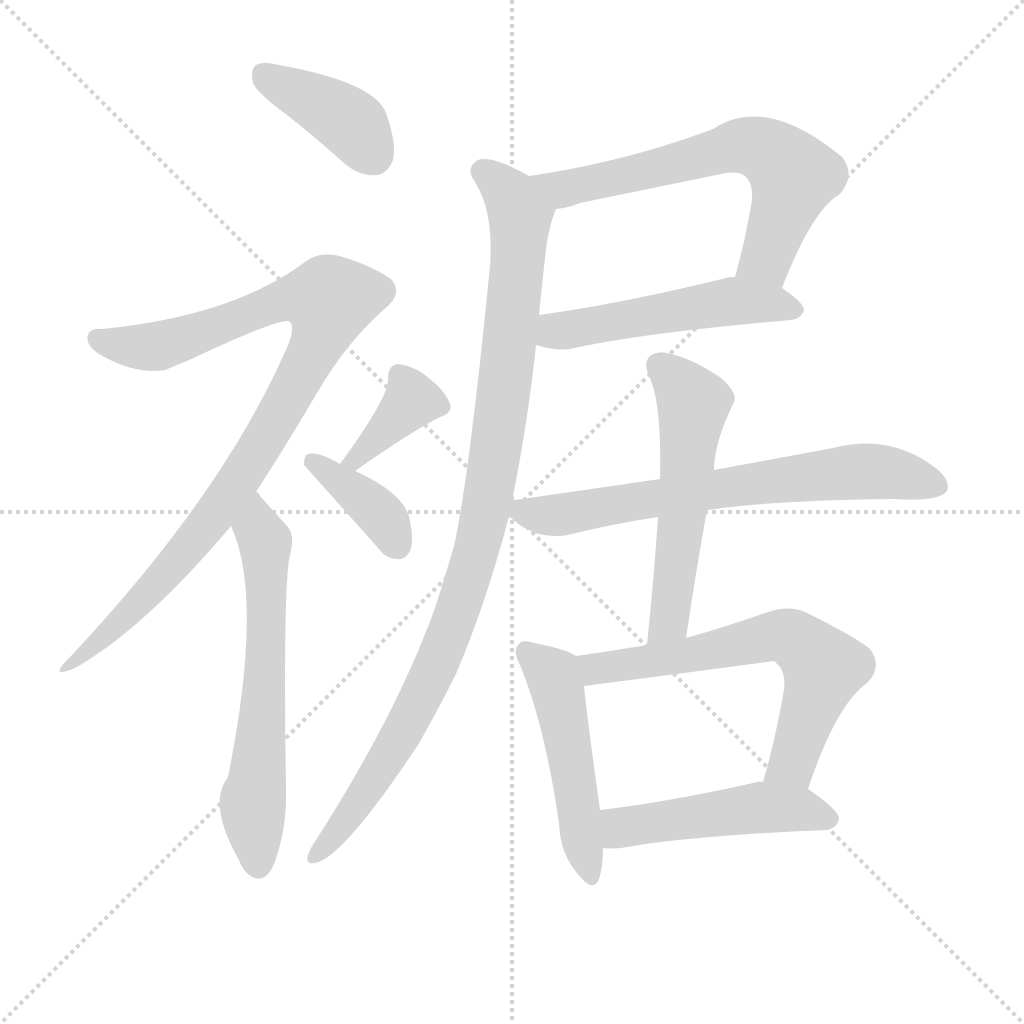
裾
Kangxi strokes: 14
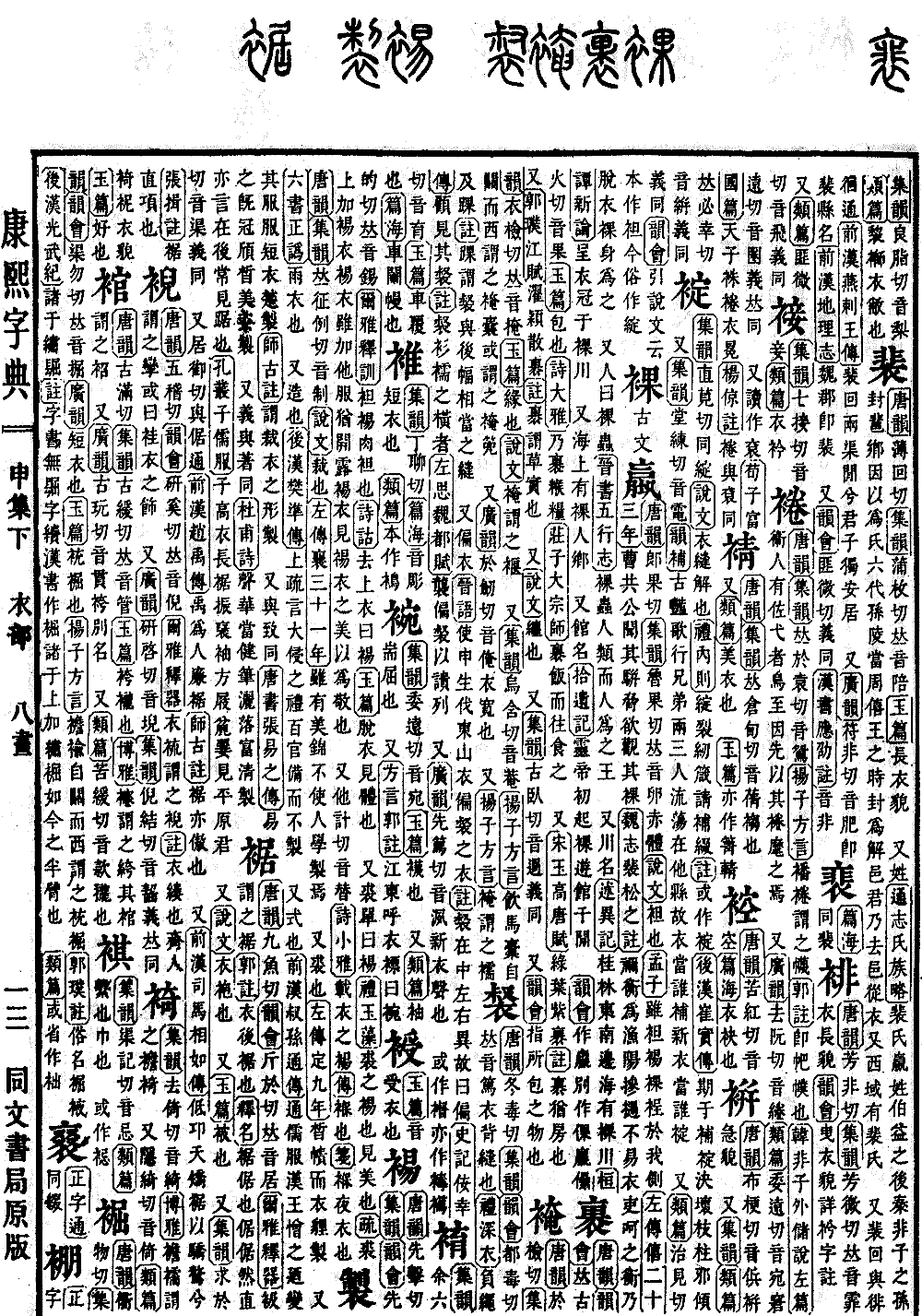
Page 1119, Entry 21
Pronounced ju.
Book of Rites (Erya), section on Explaining Implements (Shiqi): Jiao is called ju. Guo notes: Refers to the back panel of a garment.
Explanation of Names (Shiming): Ju means to be arrogant (ju). It refers to the appearance of a garment panel standing straight, and also suggests it is often seen hanging down behind one.
Confucian Family Teachings (Kongcongzi), section on Confucian Dress (Rufu): Zigao wore a long-paneled garment, waved his wide sleeves, wore square-toed clogs, and held a large fan when he went to visit Lord Pingyuan.
Also, in the Explaining Graphs (Shuowen), it refers to a robe.
Also, in the Collection of Characters (Yupian), it refers to a quilt.
Also, in the Collected Rhymes (Jiyun), it is pronounced qu. The meaning is the same.
Also, it is pronounced ju (falling tone), and is interchangeable with the character meaning arrogant (ju).
History of the Former Han (Qianhan), Biography of Zhao Yu: Zhao Yu was a man of integrity and arrogance. Shigu notes: Ju here means arrogant.
Also, History of the Former Han (Qianhan), Biography of Sima Xiangru: Lowering, bending, then raising the head and swelling the chest, galloping proudly. Zhang Yi notes: Ju refers to holding the neck straight.