Hai Collection, Lower Volume
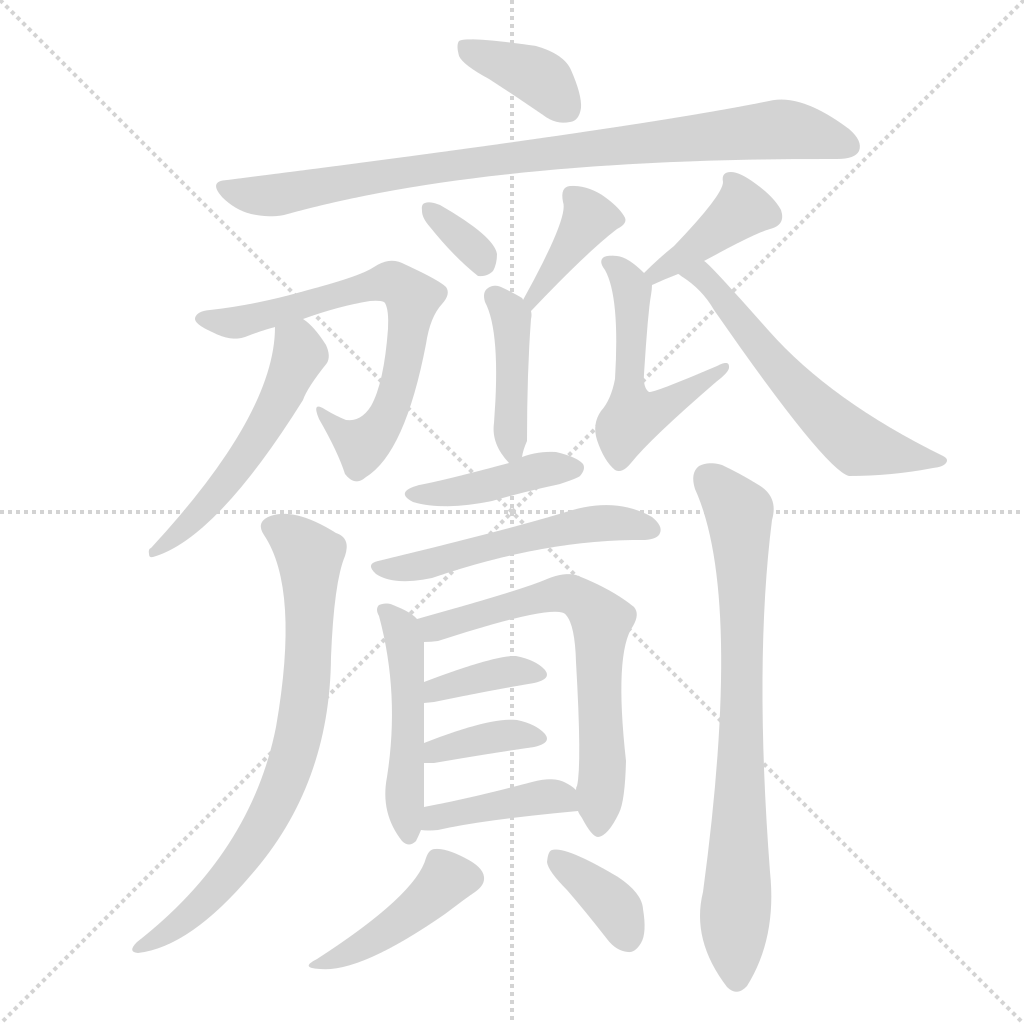
Radical: Neat (qí)
Kangxi Strokes: 21
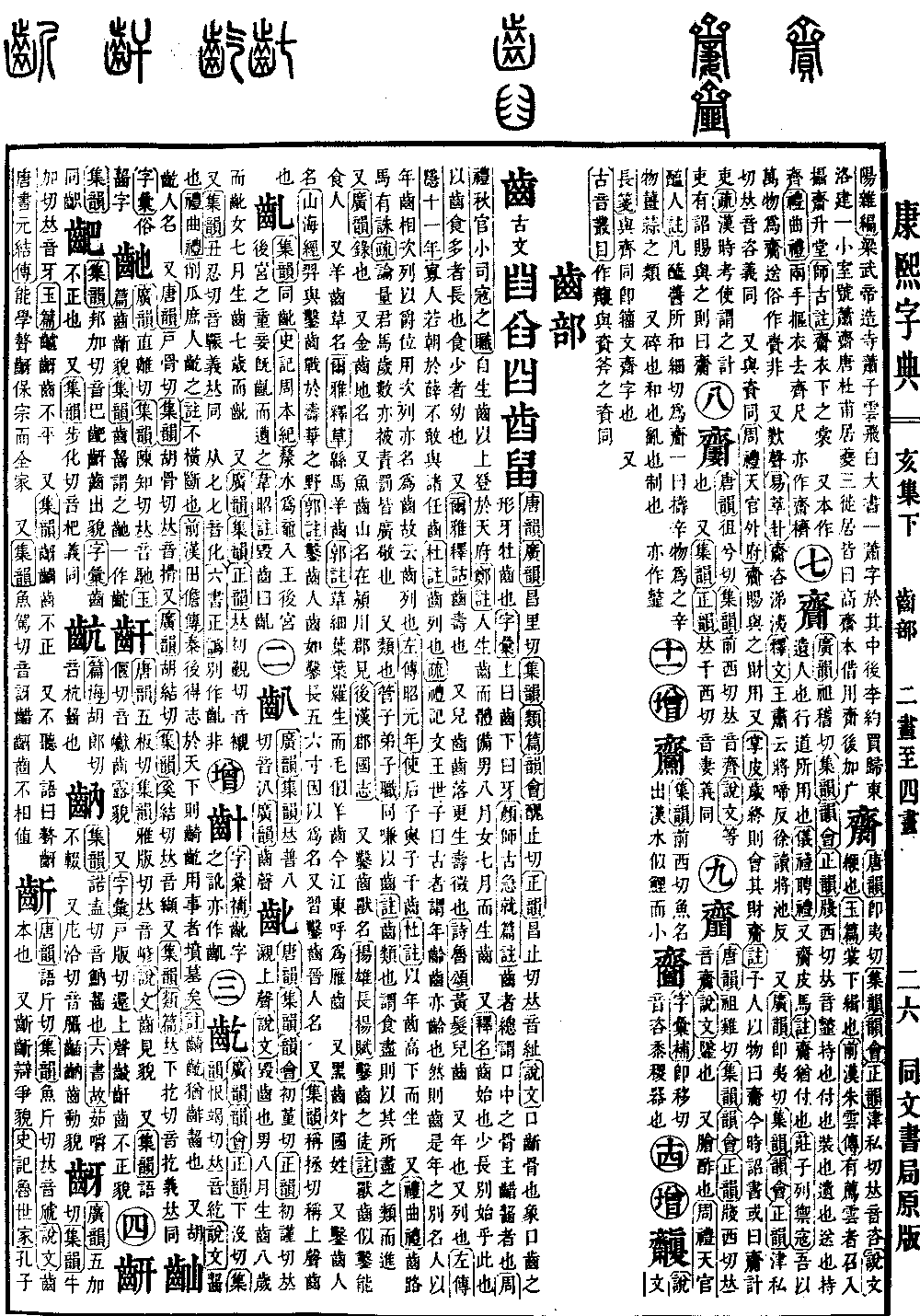
Page 1532, Entry 02
Pronounced ji.
Meaning: To carry, to deliver, to procure, to gift, to transport. It refers to carrying items to give to someone and is used for things taken while traveling.
Book of Etiquette and Ceremonial (Yili), Pitching Rites: Also, to gift hides and horses. Commentary: Ji means the act of delivery.
Zhuangzi, Lie Yukou: I treat the ten thousand things as a gift.
The common variant form (jī) is incorrect.
It also indicates a sound of sighing.
Book of Changes (Yijing), Gathering Hexagram (Cui Gua): Sighing and weeping.
Explanation of Texts: Wang Su says: Pronounced jiang ti. Xu Miao reads it as jiang chi.
Also, pronounced zi. Meaning is the same.
It is also the same as the character for resources (zī).
Rites of Zhou (Zhouli), Heavenly Officials, Outer Treasury: To provide the currency and materials needed for those expenditures.
Also, Office of Hides: At the end of the year, calculate those goods and supplies.
Commentary: To give things to people is called ji. Current imperial edicts sometimes mention granting gifts to reporting officials.
Commentary: During the Han dynasty, the envoys who conducted examinations were called reporting officials; when there were edicts granting them rewards, it was called ji.
Textual Research: Rites of Zhou, Heavenly Officials, Outer Treasury: Ji refers to the granting of money and materials. Based on the original text, the currency and materials provided should be read as one clause; the word ji does not belong to the following phrase. It has been corrected to provide the currency and materials.