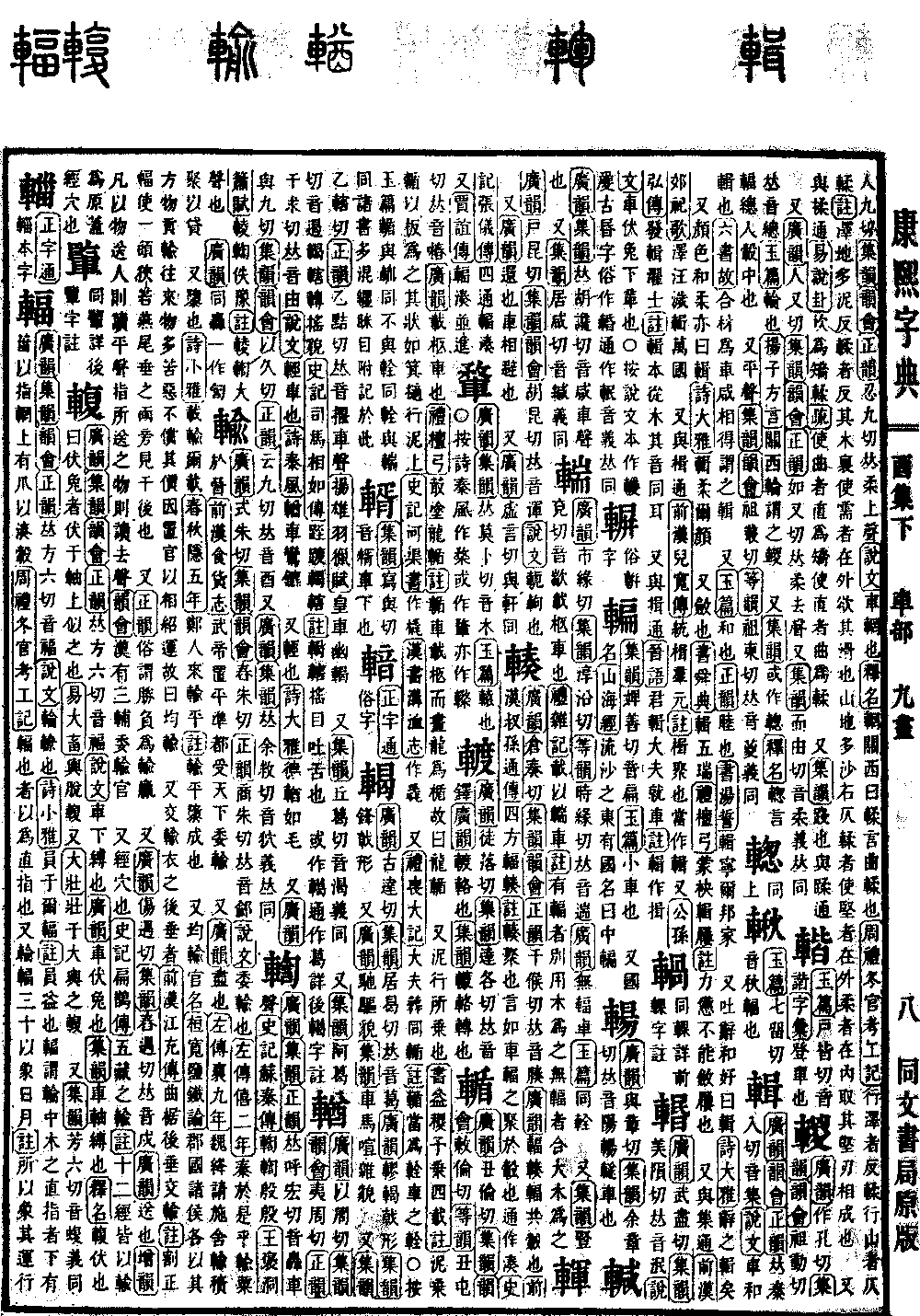
You Collection, Lower Volume
Radical: Carriage (chē)
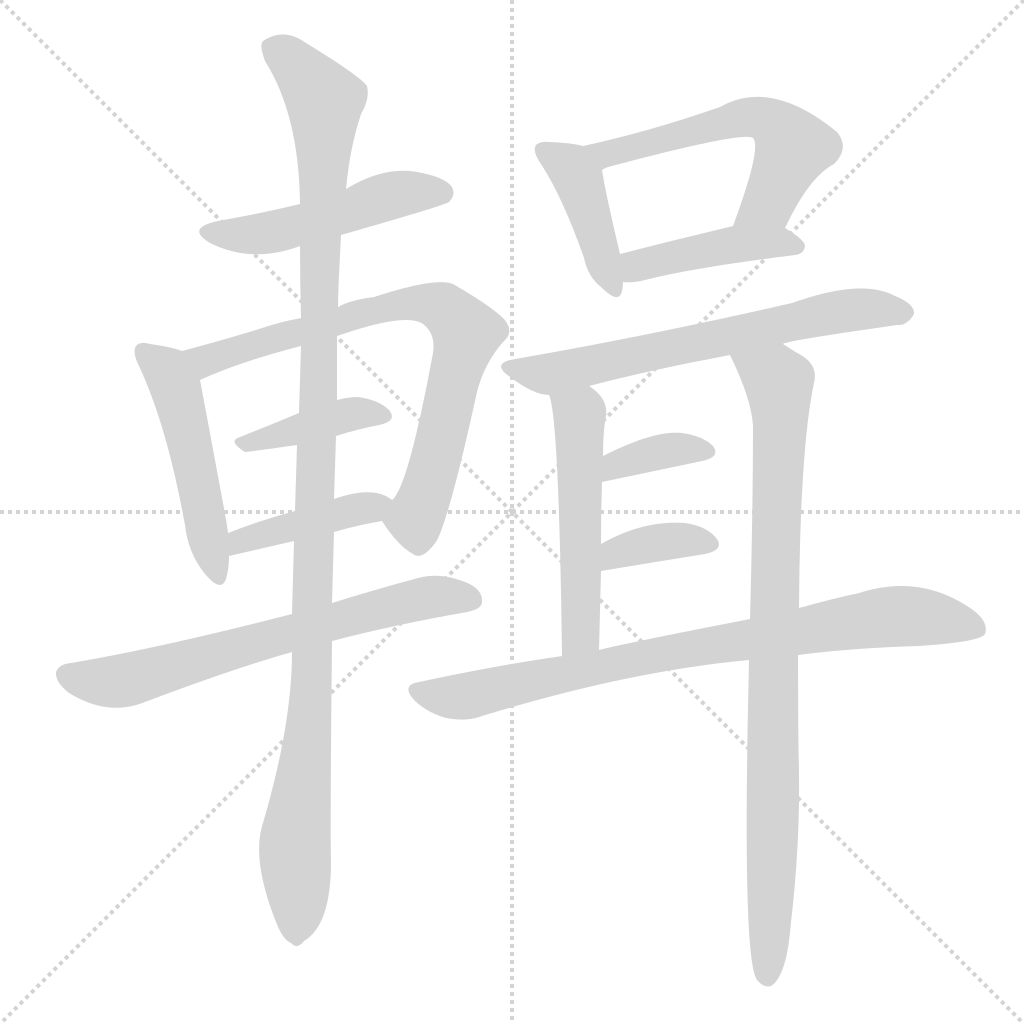
輯
Kangxi stroke count: 16
Page 1246, Entry 05
Pronounced jí.
As defined in the Analytical Dictionary of Characters (Shuowen Jiezi), it refers to the harmony and fitting together of carriage parts. According to the Six Categories of Writing (Liushu Gu), when materials are assembled into a carriage such that they all fit together well, this is called jí.
It also means to harmonize. It also means to be on friendly terms. As cited in the Book of Documents (Shangshu), in the Tang Pledge chapter: Bring harmony and peace to your states and families.
It also refers to using words to establish friendly relations. As cited in the Book of Odes (Shijing), in the Greater Odes section: His words are harmonious.
It also describes a gentle and harmonious countenance. As cited in the Book of Odes (Shijing), in the Greater Odes section: Harmonize and soften your expression.
It also means to gather or collect. As cited in the Book of Documents (Shangshu), in the Canon of Shun: Collect the five jade tallies. As cited in the Book of Rites (Liji), in the Tan Gong chapter: Covering his sleeves, he gathered his sandals. The commentary states: His strength was exhausted, and he could not collect his sandals.
It is also used interchangeably with the character for collect (jí). As cited in the History of the Former Han (Hanshu), in the Suburban Sacrifice Hymns: The grace is vast and deep, collecting the myriad states.
It is also used interchangeably with the character for oars (jí). As cited in the History of the Former Han (Hanshu), in the Biography of Er Kuan: To unify and assemble the many origins. The commentary states: Ji means to gather; it should be written as jí.
Also, in the Biography of Gongsun Hong: To promote and gather the illustrious scholars. The commentary states: The character jí originally included the wood radical, but the sound is identical.
It is also used interchangeably with the character for bow (yī). As cited in the Discourses of the States (Guoyu): The ruler bowed to the grand masters as he approached the carriage. The commentary states: Here jí is used for yī.