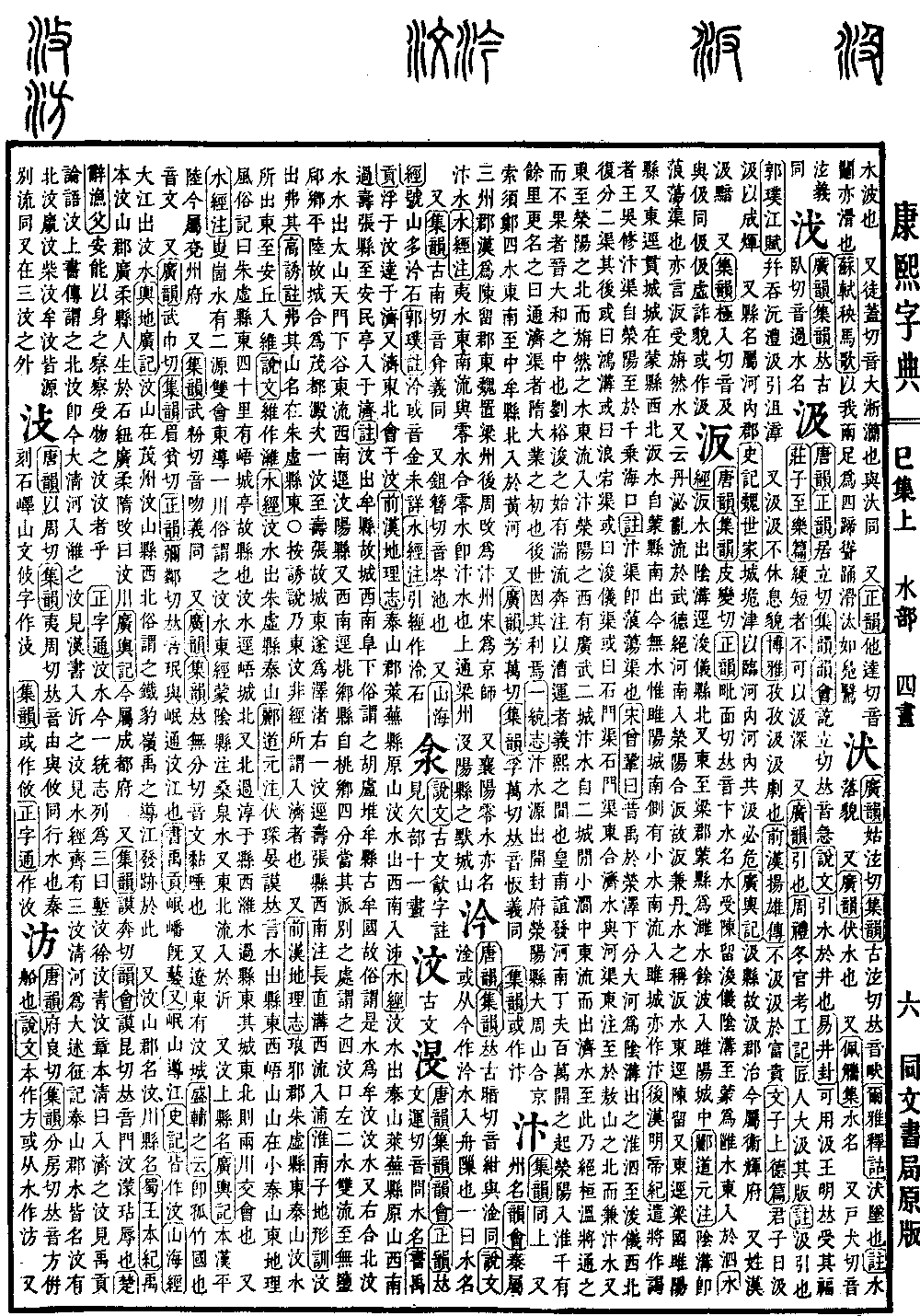
Si Collection, Upper Volume
Radical: Water (shuǐ)
Kangxi Strokes: 8
Page 608, Entry 03
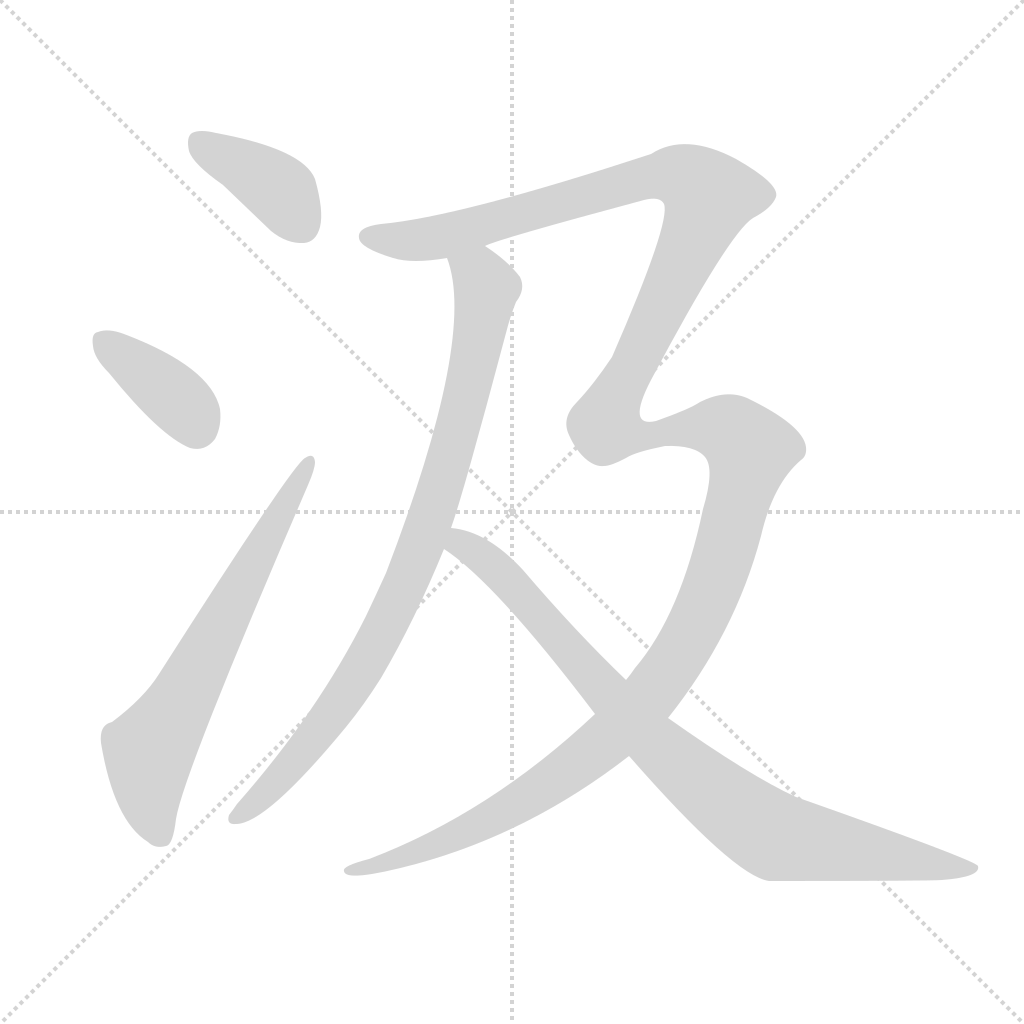
Pronounced jí.
As defined in the Analytical Dictionary of Characters (Shuowen Jiezi): To draw water from a well.
Book of Changes (Yijing), Well Hexagram: One may draw water; when a ruler is wise, he may obtain blessings.
Zhuangzi, Chapter on Perfect Happiness: If the rope is short, it cannot be used to draw water from a deep well.
Also, meaning to pull or draw.
Book of Rites, Winter Officials, Record of Trades (Zhouli, Dongguan Kaogongji): When the master builder constructs walls, he draws the clamping boards repeatedly.
Commentary: To draw, meaning to pull.
Guo Pu, Rhapsody on the Yangtze River (Jiang Fu): Swallowing the Yuan and Li rivers, drawing in the Ju and Zhang rivers.
Also, the term jiji describes the appearance of pursuing something eagerly and without rest.
Broadly Refined (Boya): Diligent and tireless, anxious and busy, describing a state of great urgency.
History of the Former Han (Qianhan Shu), Biography of Yang Xiong: Not urgently pursuing wealth and rank.
Wenzi, Chapter on Superior Virtue: The noble man makes urgent efforts every day to achieve brilliance.
Also, the name of a county, belonging to Henei Commandery.
Records of the Grand Historian (Shiji), Annals of Wei: Building a wall at Guijin to overlook Henei; the Gong and Ji counties of Henei will surely be in danger.
Comprehensive Geography (Guangyu Ji): Ji County, formerly Ji Commandery, the seat of government now belongs to Weihui Prefecture.
Also, a surname, such as Ji An of the Han dynasty.
Also pronounced jí. Same as the character jí. Jíjí, the appearance of being hypocritical and deceitful. Sometimes written in a variant form.