Si Collection, Upper Volume
Radical: Water (shuǐ)
Page 131, Entry 08
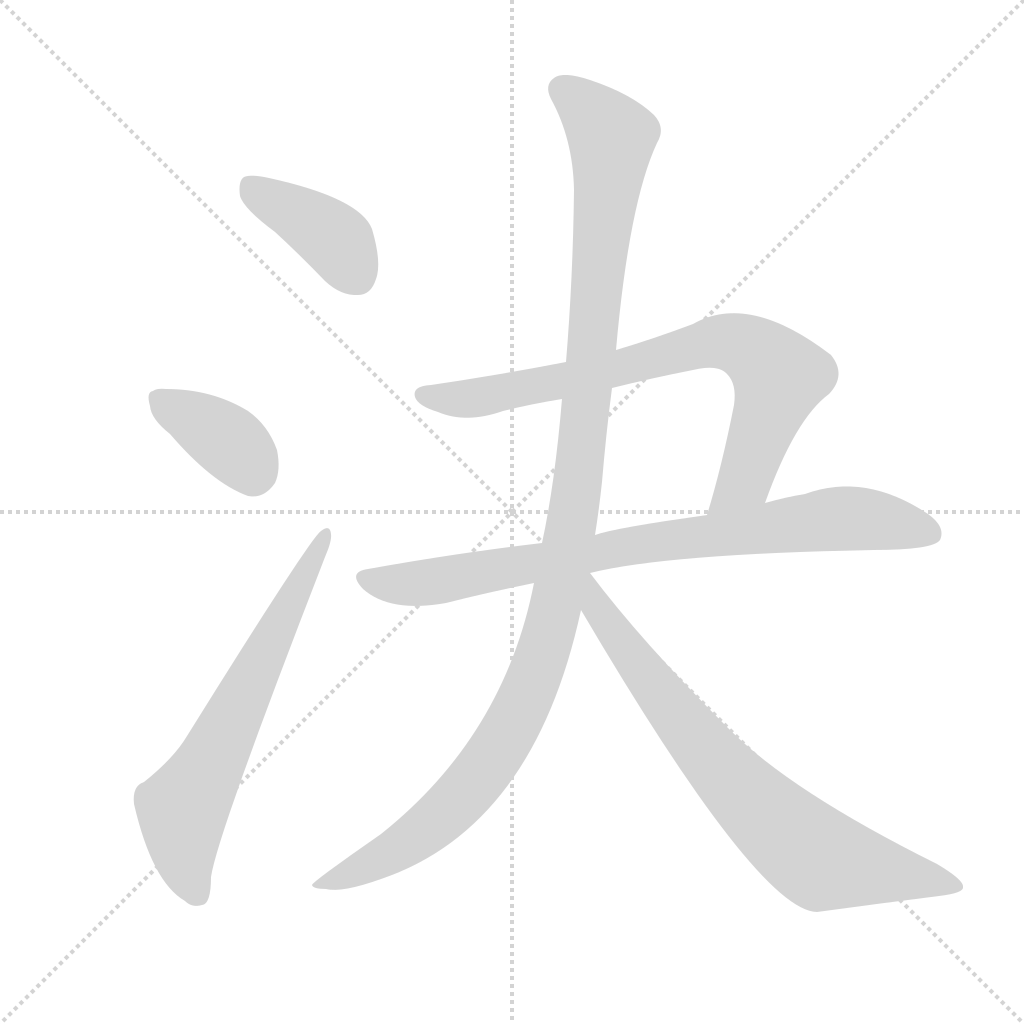
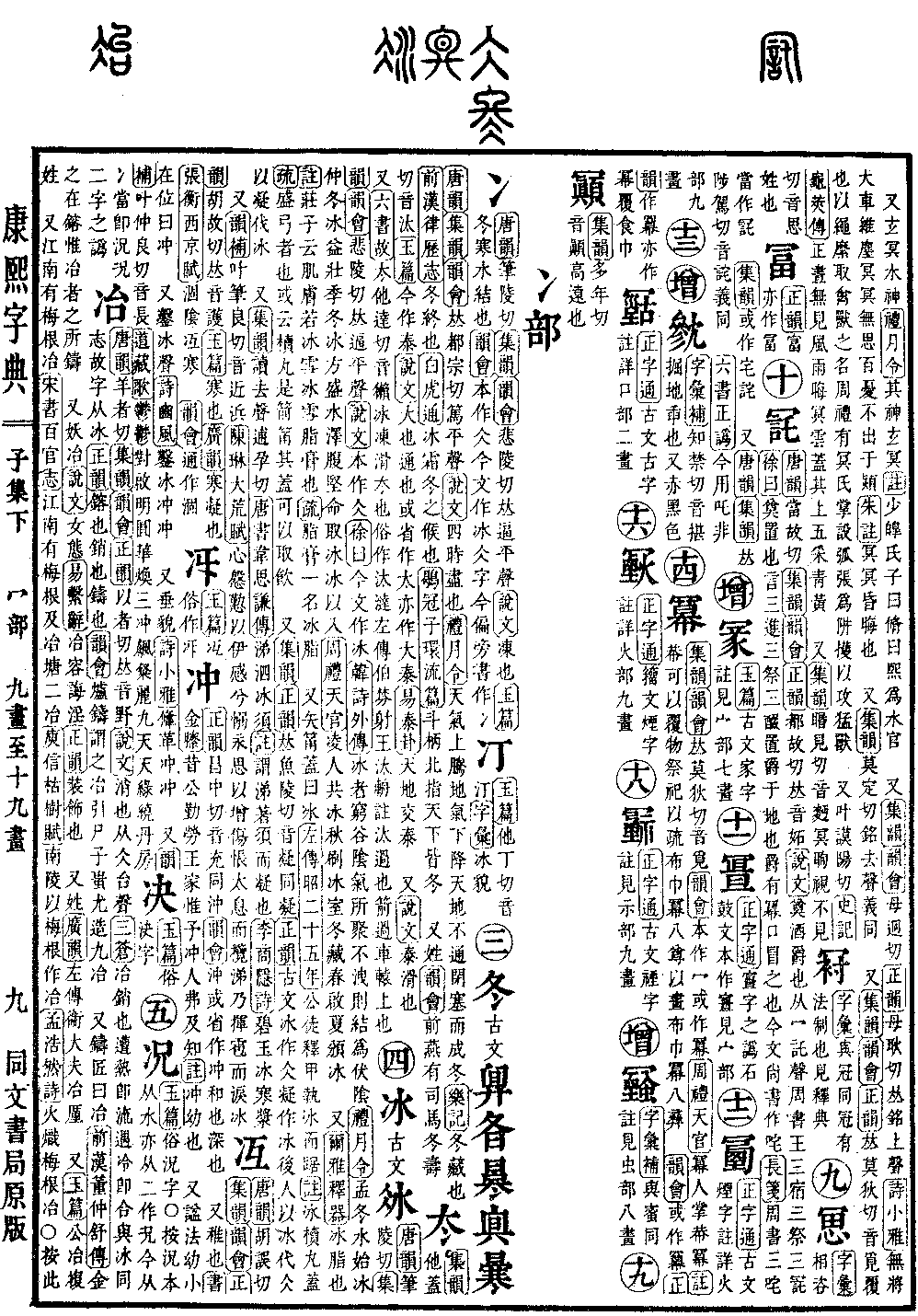
Broad Rhymes (Guangyun), Collected Rhymes (Jiyun), Dictionary of Rhymes (Yunhui): Pronounced jue. A river name. Water Classic (Shuijing): The Jue River originates from the south of Yulou County in Lushan and the Greater Dabie Mountain. Commentary: Known locally as Tanshan Xian, which is essentially an alternative name for the Greater Dabie Mountain. This water follows the bends of the mountain ridges, winding around the county, flowing northwest past the ancient city of Liao County. The Guan River flows into it; thus, the Treatise on Geography states: the Jue River flows north to enter Liao County and joins the Guan River, and the Guan River also joins the Jue River at Liao County. Also, Juejue, a northern river name. Classic of Mountains and Seas (Shanhaijing): Longhou Mountain, where the Juejue River originates and flows east into the Yellow River. Also refers to water flowing unimpeded. Guanzi (Guanzi): Channel it and it will flow; block it and it will cease. Zuo Commentary (Zuo Zhuan): It is better to open a small sluice to let it flow. Also refers to judgment or deciding. Book of Rites (Liji): Ritual is used to determine degrees of intimacy and to judge suspicions. Furthermore, in resolving disputes and lawsuits, without ritual, one cannot make a judgment. Also, biting through things with teeth is called jue. Book of Rites (Liji): Wet meat is bitten through with teeth; dried meat is not bitten through with teeth. Rites of Zhou (Zhouli), Winter Bureau, Record of Trades (Kaogongji): The woodworker has a sharp mouth, and the lips open and close quickly. Commentary: A bird’s beak is long; when pecking at food, because it bites through near the base of the beak, it is called a jue-mouth. Jue is read with its original sound. Also pronounced as wu xue. Also refers to opening or spreading. Ceremonial (Yili), Archery Rites of the Local Community (Xiangsheli): Expose the left arm, put on a thumb ring, and fit a bracer. Commentary: Jue is like the meaning of opening. Made of ivory, it is worn on the thumb of the right hand to hook the bowstring and open the bow. Kai is pronounced as open. Book of Odes (Shijing): The thumb ring and bracer are already prepared. Also refers to a final parting, same as the character jue. History of the Former Han (Qianhan Shu), Biography of Su Wu: Li Ling parted from Su Wu and left. Commentary: Jue means to separate. Also, Jue Cao, an official title. An official in charge of criminal law. History of the Later Han (Houhan Shu), Biography of Huang Chang: Studied law and served as a Jue Cao official in the commandery. Also, Broad Rhymes (Guangyun), Collected Rhymes (Jiyun), Correct Rhymes (Zhengyun): Pronounced xue. The appearance of being rapid. One theory says it refers to small flight. Interchangeable with a variant form. Zhuangzi (Zhuangzi), Free and Easy Wandering (Xiaoyaoyou): Swiftly flying up, soaring toward the elm and sandalwood trees. Sometimes written in a variant form. Also, Collected Rhymes (Jiyun): Pronounced que. Same as the character meaning broken or incomplete. Sometimes written with the blood radical. Also written as jue. Records of the Grand Historian (Shiji), Annals of Qin Shi Huang: Like driving a team of six horses across a gap. Also pronounced gui. The appearance of being rapid. Zhuangzi (Zhuangzi), Discussion on Making All Things Equal (Qiwulun): When the deer sees it, it will run away rapidly. Commentary: Jue, read by Xu Miao as gu hui.