Si Collection, Upper Volume
Radical: Water (shuǐ)
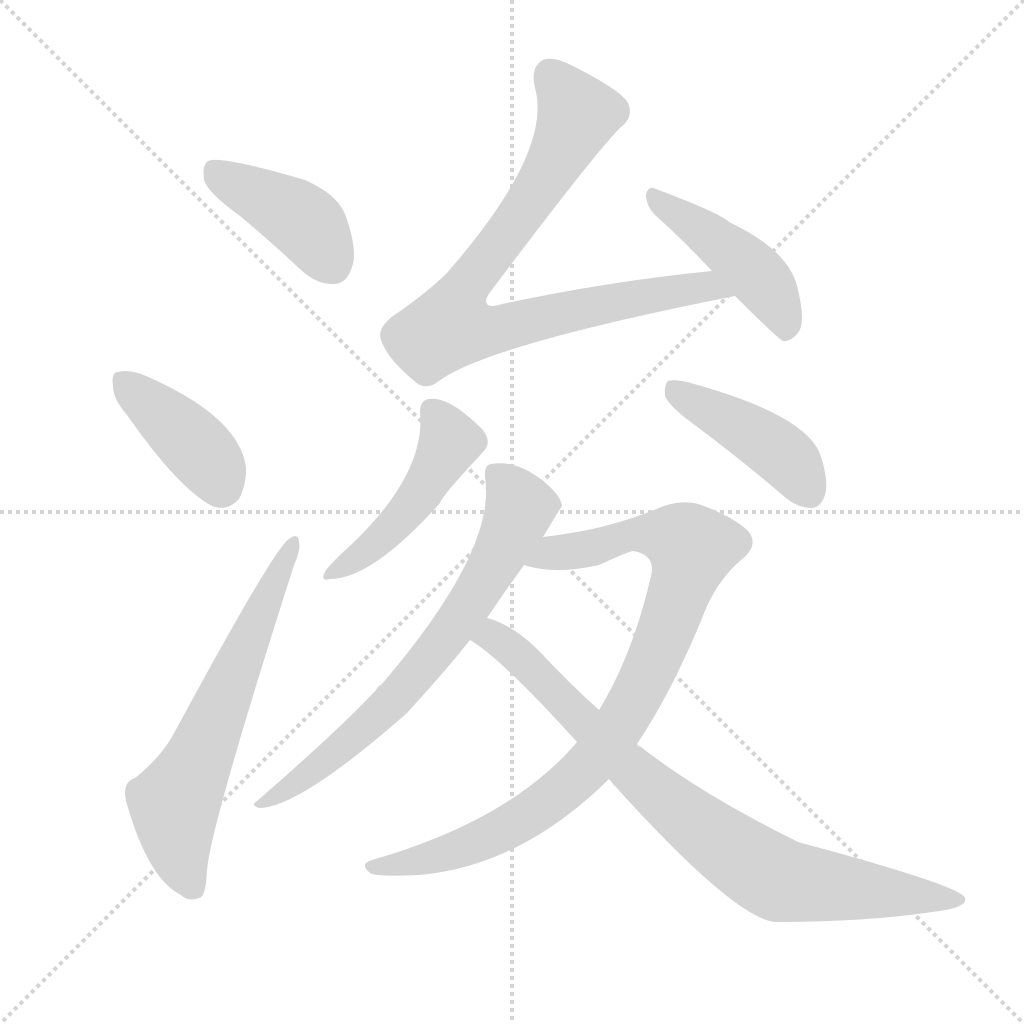
Jun
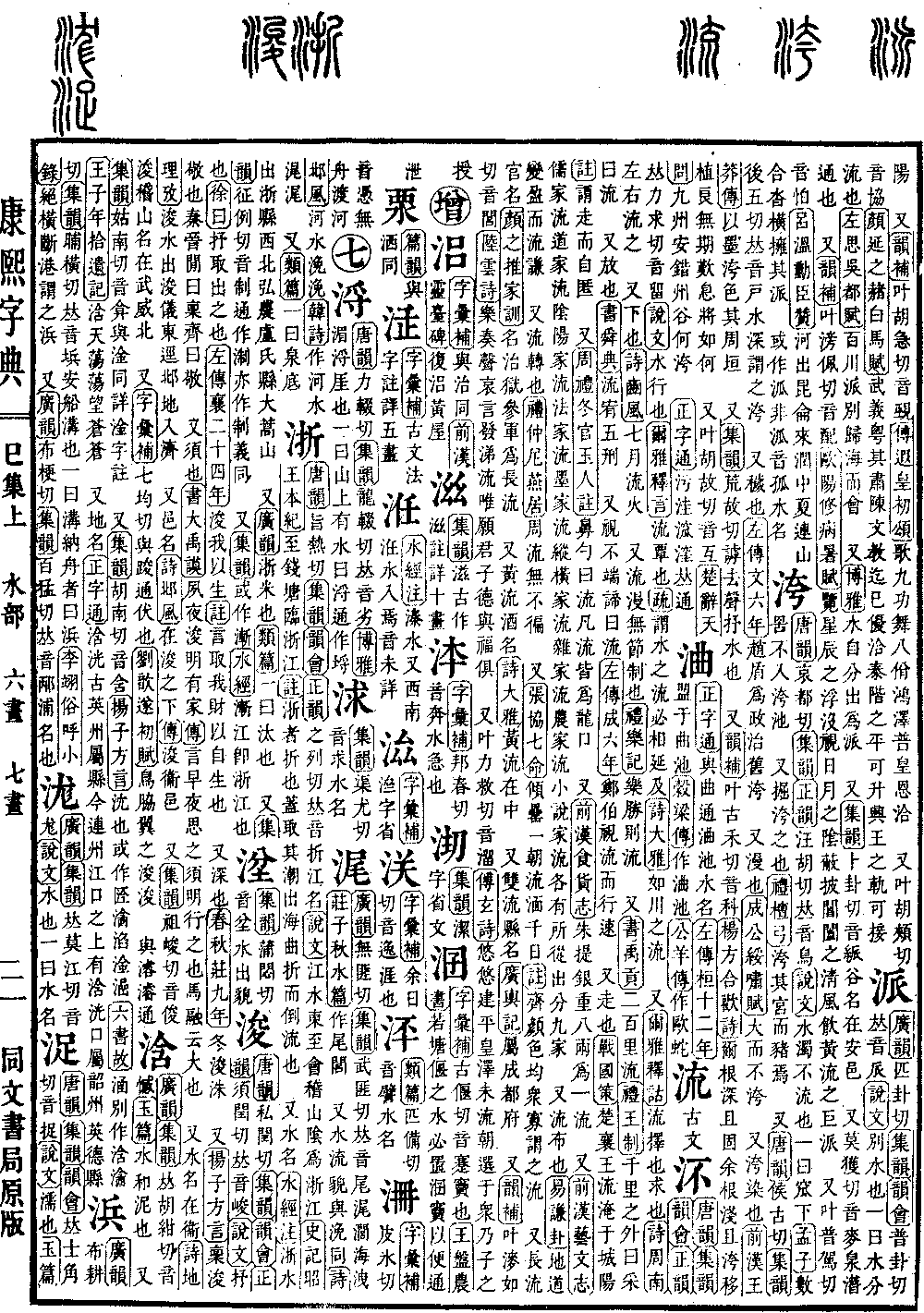
Kangxi strokes: 11
Page 623, Entry 23
Pronounced jun (falling tone).
In the Explanation of Characters (Shuowen Jiezi), it means to dredge or scoop out.
Xu says: It means to scoop out and remove.
Book of Zuo (Zuo Zhuan), 24th year of Duke Xiang: It means to take my wealth to sustain oneself.
It also means deep.
Spring and Autumn Annals (Chunqiu), 9th year of Duke Zhuang: In winter, they dredged the Zhu River.
In the Dialects (Fangyan) by Yang Xiong: Binjun means respect. In the Qin and Jin regions, it is called bin, while in Qi, it is called jun.
It also means to wait.
Book of Documents (Shangshu), Counsels of Gao Yao (Gaoyao Mo): From early morning until night, one must thoughtfully clarify the affairs of the family.
The commentary says: This refers to thinking about it from early morning until night and waiting to act upon it with clarity. Ma Rong says: It means great.
It is also the name of a river in the state of Wei.
In the Geographical Examination of the Book of Odes (Shijing Dili Kao): The Jun River originates from Junyi, flows eastward through the land of Bei, and enters the Ji River.
It is also the name of an ancient city.
Book of Odes (Shijing), Odes of Bei (Beifeng): Below Jun.
The commentary says: Jun is a city in Wei.
Pronounced jun (falling tone).
Junji is the name of a mountain located north of Wuwei.
Pronounced jun (level tone).
This is interchangeable with the character meaning to crouch or lie prostrate.
In Liu Xin's Rhapsody on Returning to One's Origins (Suichu Fu): The bird folds its wings and crouches.
This is interchangeable with the character meaning to dredge.
Textual verification:
In the Dialects (Fangyan) by Yang Xiong: Binjun means respect. In the Qin and Jin regions it is called bin, in Qi it is called jun. I have corrected the original text which stated the second term as respect to read as jun.
In the Book of Documents (Shangshu), Counsels of the Great Yu (Dayu Mo): From early morning until night, one must thoughtfully clarify the affairs of the family. I have corrected the original text which cited the Counsels of the Great Yu to read as the Counsels of Gao Yao.