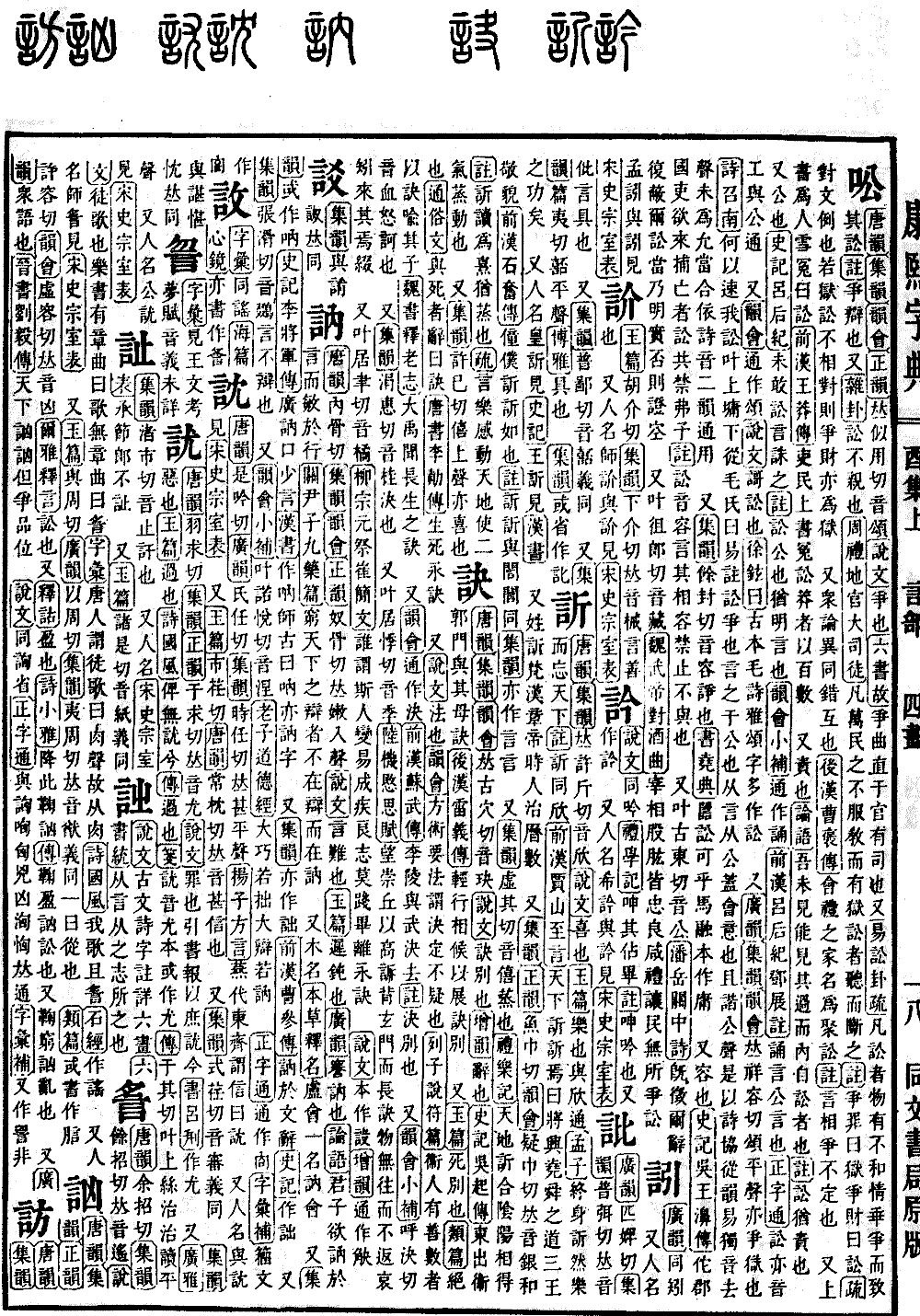
You Collection, Upper Volume
Radical: Speech (yán)
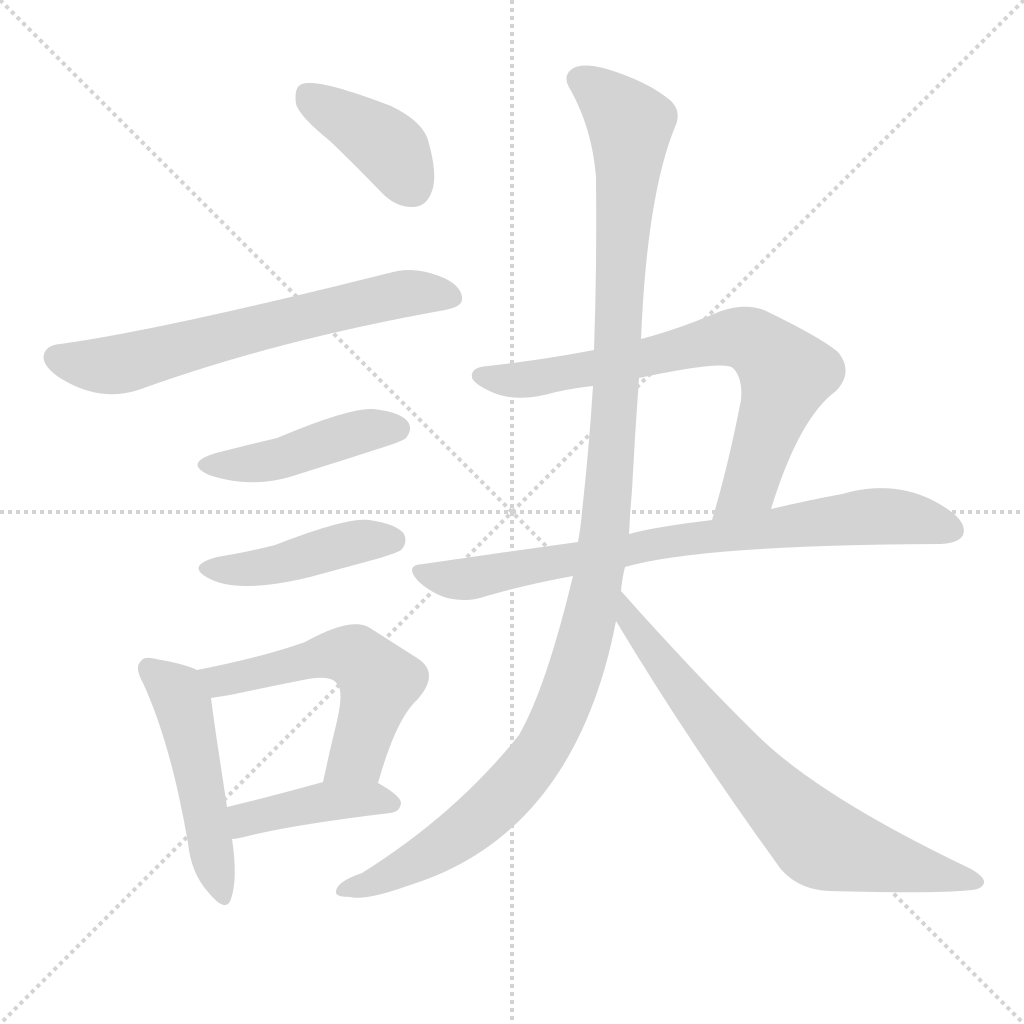
Jue
Kangxi strokes: 11
Page 1150, Entry 07
Tang Dynasty Rhymes (Tangyun), Collected Rhymes (Jiyun), and Rhyme Compendium (Yunhui): Pronounced jue.
Shuowen Jiezi: To part ways.
Zengyun: To bid farewell.
Records of the Grand Historian (Shiji), Biography of Wu Qi: Exiting the gate of Wei, he bid farewell to his mother.
Book of the Later Han (Hou Hanshu), Biography of Lei Yi: Traveling lightly to visit each other to extend a final farewell.
Also: To part by death.
Leipian: Eternal separation.
Tongsuwen: A farewell to the deceased is called jue.
Old Book of Tang (Tangshu), Biography of Li Ji: Eternal separation in life and death.
Also: Method.
Yunhui: Methods or techniques in various arts, referring to decisions made without doubt.
Liezi, Shufu chapter: There was a man in Wei skilled in calculation who taught the method to his son.
Book of Wei (Weishu), Treatise on Buddhism and Taoism: Great Yu heard the secret method for longevity.
Also: Yunhui: Interchanged with jue.
Book of Han (Hanshu), Biography of Su Wu: Li Ling parted from Wu to leave.
Commentary: Jue means to separate.
Also: Yunhui Xiaobu: Pronounced xue. An angry scolding.
Also: Jiyun: Pronounced gui. To decide.
Also: Rhyming with ji.
Lu Ji, Minsi Fu: Looking toward the high hill, I cry out, turning my back on the gate to bid a long farewell. Things never depart without returning, but how can sorrow be comforted once it arrives.
Also: Rhyming with ju.
Liu Zongyuan, Ji Cui Wen: Who would say this person would transform and fall ill. Good intentions remain unfulfilled, separated forever in a final farewell.
Shuowen Jiezi: Originally written as jue.
Zengyun: Interchanged with jue.