Wei Collection, Middle Volume
Radical: Silk (mì)
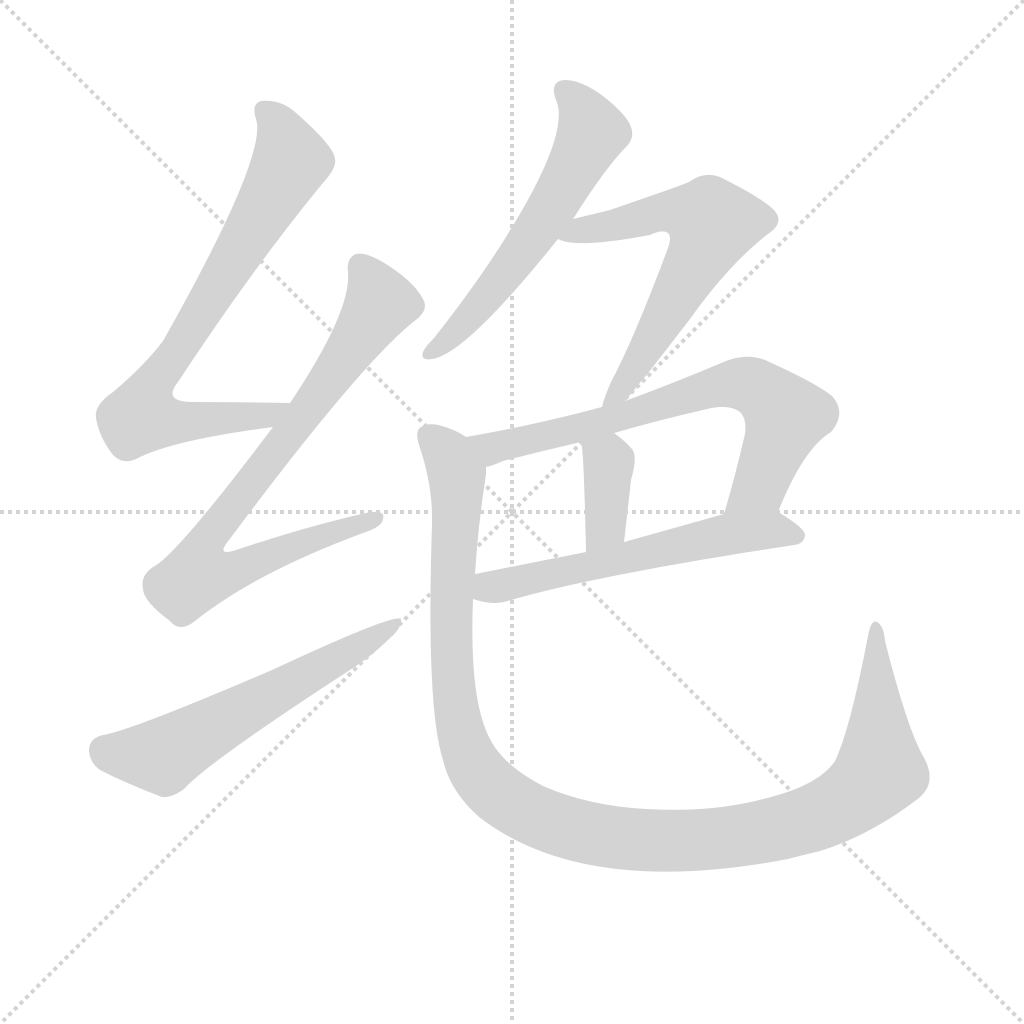
Character: 绝
Kangxi Strokes: 12
Page 922, Entry 01
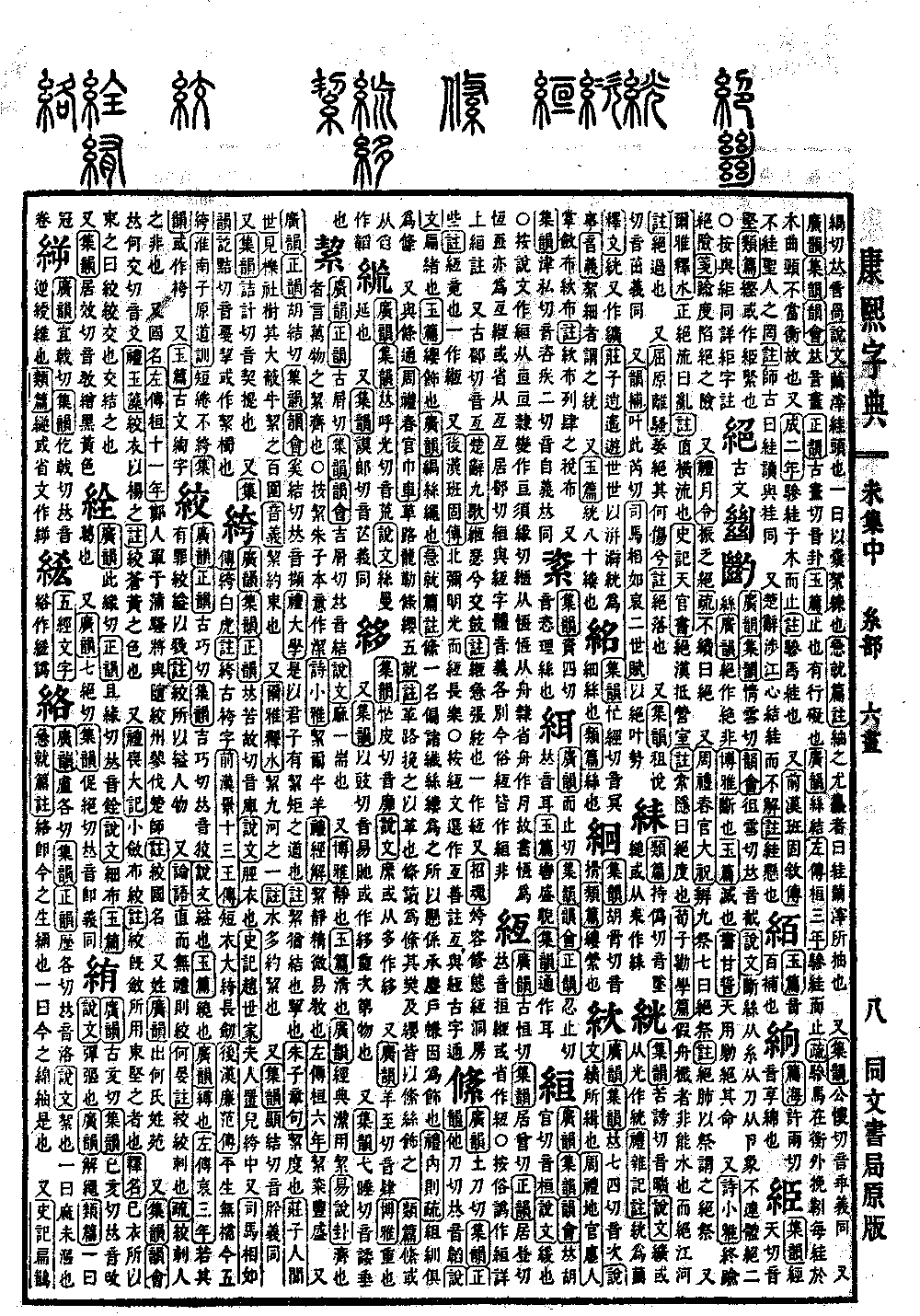
Ancient form. According to the Rhyme Dictionary (Guangyun) and Collected Rhymes (Jiyun), the pronunciation is jie. According to the Rhyme Collection (Yunhui), the pronunciation is jie. According to the Explaining Graphs and Analyzing Characters (Shuowen), it means cut silk. It is composed of the radicals for silk, knife, and seal, representing two silk threads that are not connected. The Rhyme Dictionary states that the character is written as a variant form, but this is incorrect. The Comprehensive Glossary (Boya) states it means to sever. The Jade Treatise (Yupian) states it means to extinguish. In the Book of Documents (Shangshu), section Oath at Gan (Ganshi), it says, Heaven uses this to terminate his mandate. Also, in the Book of Odes (Shijing), section Lesser Odes (Xiaoya), it says, Finally crossing the dangerous pass. The commentary states this means to cross over a dangerous and cut-off location. In the Book of Rites (Liji), section Monthly Ordinances (Yueling), it says, To provide for the weary and destitute. The commentary states that which does not continue is called jue. In the Rites of Zhou (Zhouli), section Spring Officials (Chunguan), Great Invocation, it mentions distinguishing the nine sacrifices, the seventh being the severed sacrifice. The commentary explains that one severs the lungs to offer the sacrifice, which is called a severed sacrifice. In the Er Ya (Erya), section Explaining Woods (Shimu), it says, To cross straight across a current is called luan. The commentary says this means to go directly across the current. In the Records of the Grand Historian (Shiji), section Treatise on the Celestial Offices (Tianguanshu), it says, It crosses the Milky Way and reaches the Encampment mansion. The commentary states that jue means to cross over. In the Xunzi, section Exhortation to Learning (Quanxue), it says, Those who borrow a boat and oars are not capable of swimming, yet they cross the rivers. The commentary states that jue means to pass over. Also, in Qu Yuan’s Encountering Sorrow (Lisao), it says, If they wither and fall, what harm is there? The commentary states that jue means to fall. According to the Collected Rhymes (Jiyun), the pronunciation is zhuo. The meaning is the same. According to the Rhyme Supplement (Yunbu), it rhymes with the sound rui. In Sima Xiangru’s Lament for the Second Generation (Ai Ershi Fu), it says, Thereby severing the momentum of the situation.