Shen Collection, Upper Volume
Radical: Grass (cǎo)
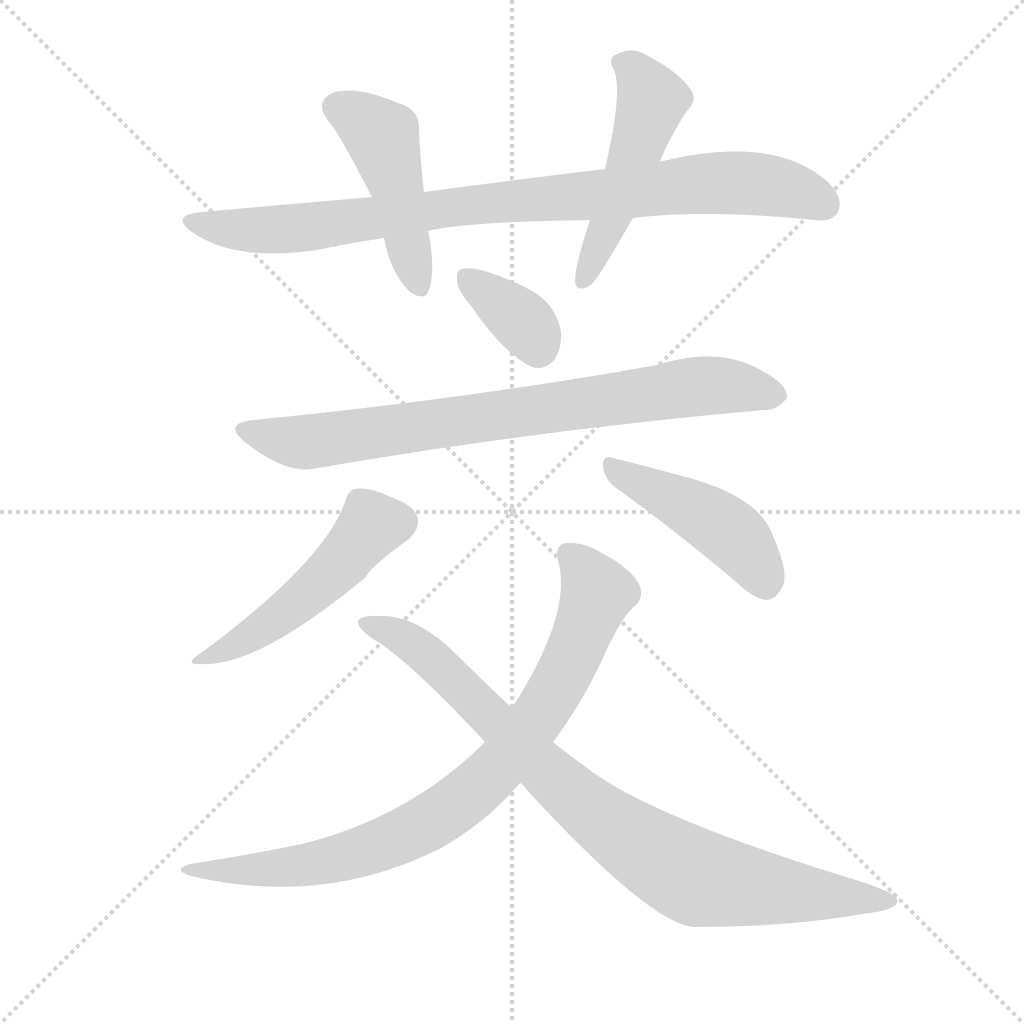
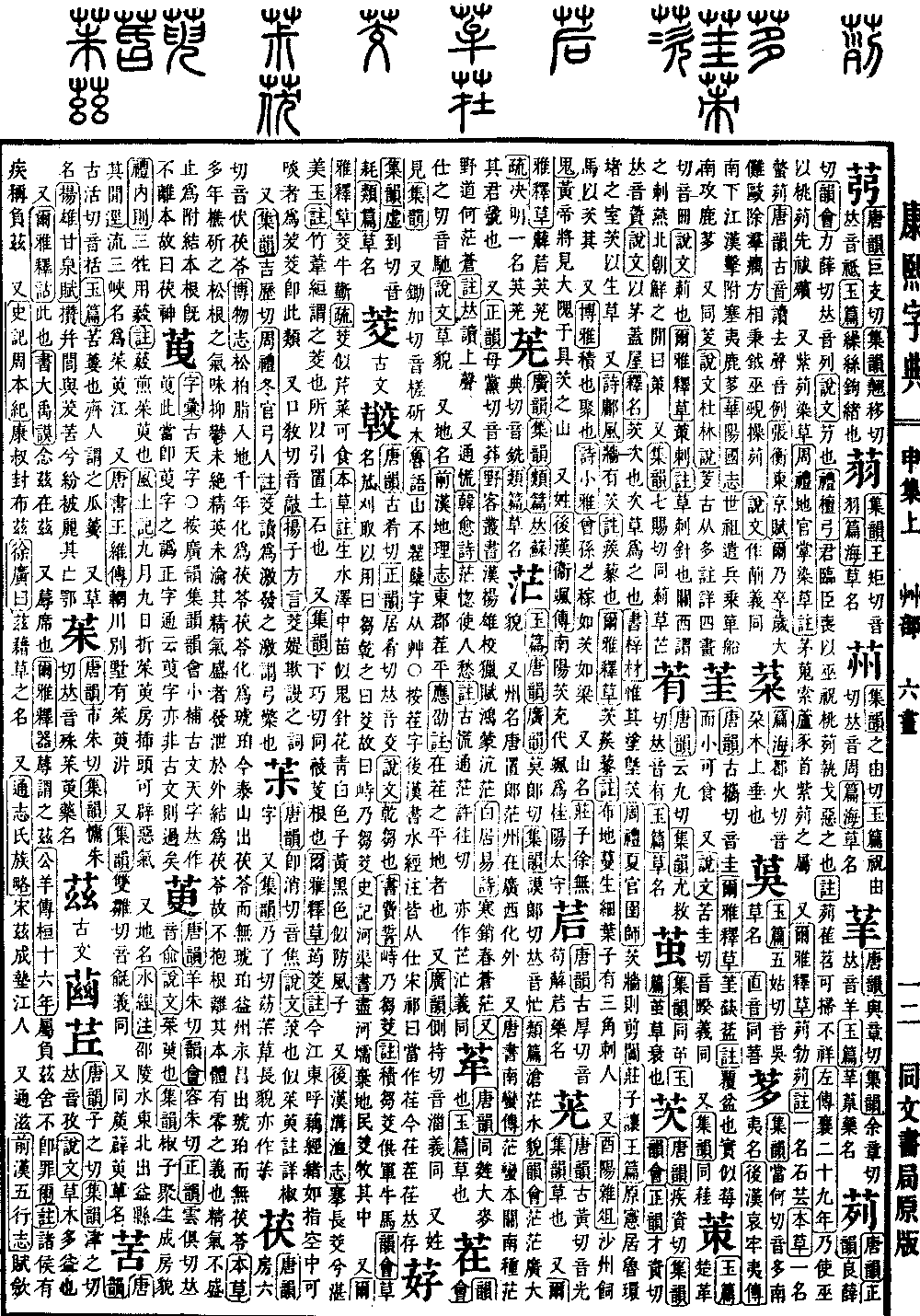
Jiao; Kangxi stroke count: 12; Page 1028, Entry 21
Ancient text: According to Tang Rhymes (Tangyun), pronounced jiao; according to Zheng Rhymes (Zhengyun), pronounced jiao.
Shuowen Jiezi: Dried grass for fodder.
Book of Documents (Shangshu), Feishi chapter: Store up good fodder. Commentary: Accumulate fodder to supply oxen and horses for the army.
Rhyme Anthology (Yunhui): Name of a grass. Also known as gu grass. Grass that is cut for use is called fodder, and sun-dried grass is called jiao, hence the instruction to store good fodder.
Records of the Grand Historian (Shiji), River and Canal Treatise: Throughout the abandoned lands along the Yellow River, the common people cut grass and grazed their livestock.
Also, Erya: Explaining Plants: Jiao is known as niuqi. Commentary: Jiao resembles celery and is edible.
Compendium of Materia Medica (Bencao) Commentary: Grows in marshes. The sprouts resemble beggar-ticks, the flowers are blue-white, and the seeds are yellow-black, resembling the seeds of fangfeng.
Also, Book of Han (Hanshu), Treatise on Rivers and Canals: Pulling on long bamboo ropes and sinking beautiful jade. Commentary: Ropes woven from bamboo or reeds are called jiao, used to tow and position earth and stone.
Also, Collection of Rhymes (Jiyun): Pronounced qiao, synonymous with the roots of the water caltrop.
Erya: Explaining Plants: Yun jiao. Commentary: Nowadays in the Jiangdong region, the finger-like, hollow, edible filaments found within lotus roots are called ba jiao, which belongs to this category.
Also, pronounced qiao.
Yangzi: Regional Speech (Fangyan): Jiao ti refers to deceptive or confusing speech.
Also, Collection of Rhymes (Jiyun): Pronounced ji.
Rites of Zhou (Zhouli), Winter Official, Bow Maker Commentary: Jiao is read as the jiao of excitation, referring to a corrective device for bows.
Textual research: In the Book of Han, Treatise on Rivers and Canals, the text reads: Pulling on long jiao ropes and sinking beautiful jade. Following the original text, changed Late Han to Former Han.