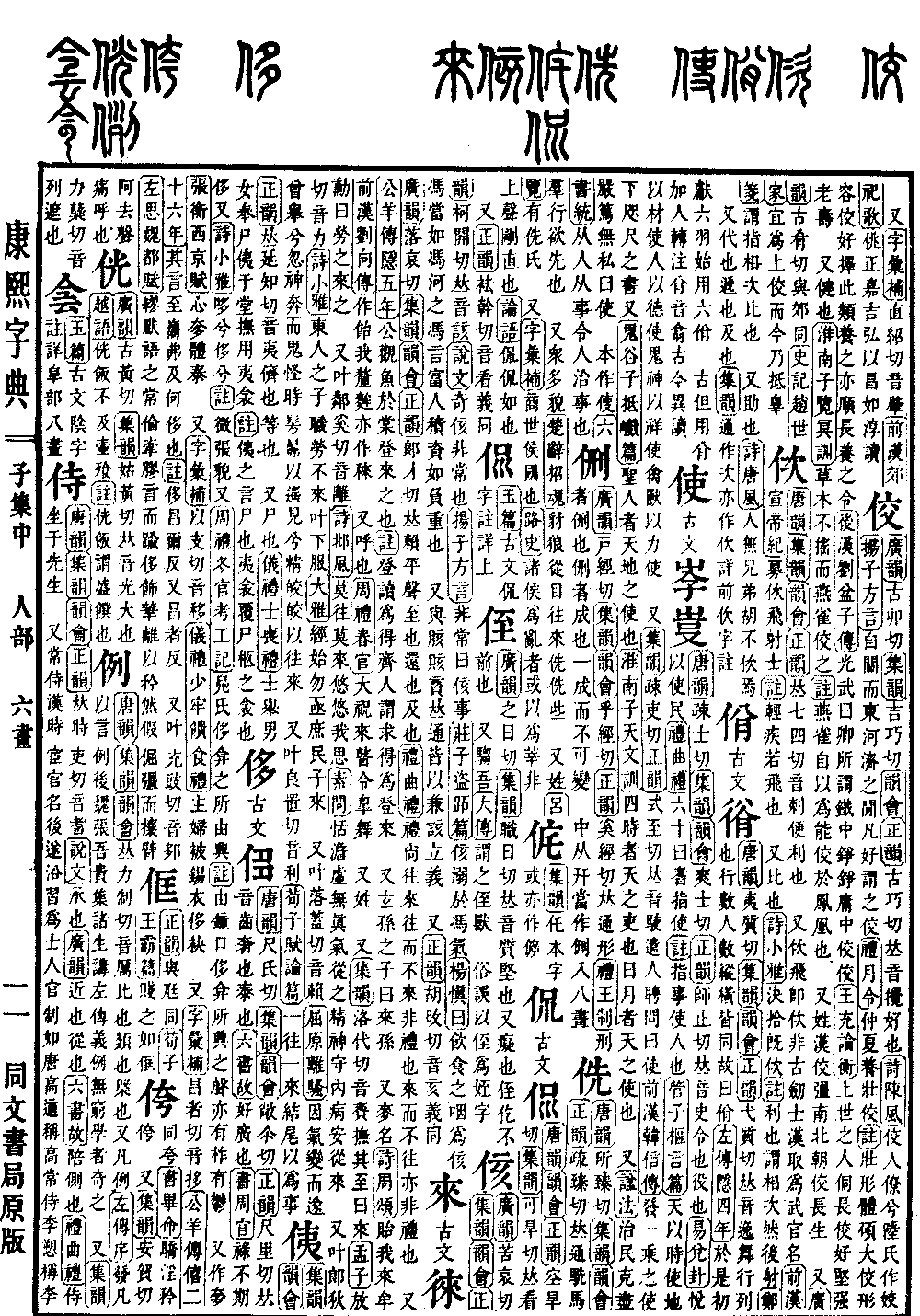
Zi Collection, Middle Volume
Radical: Person (rén)
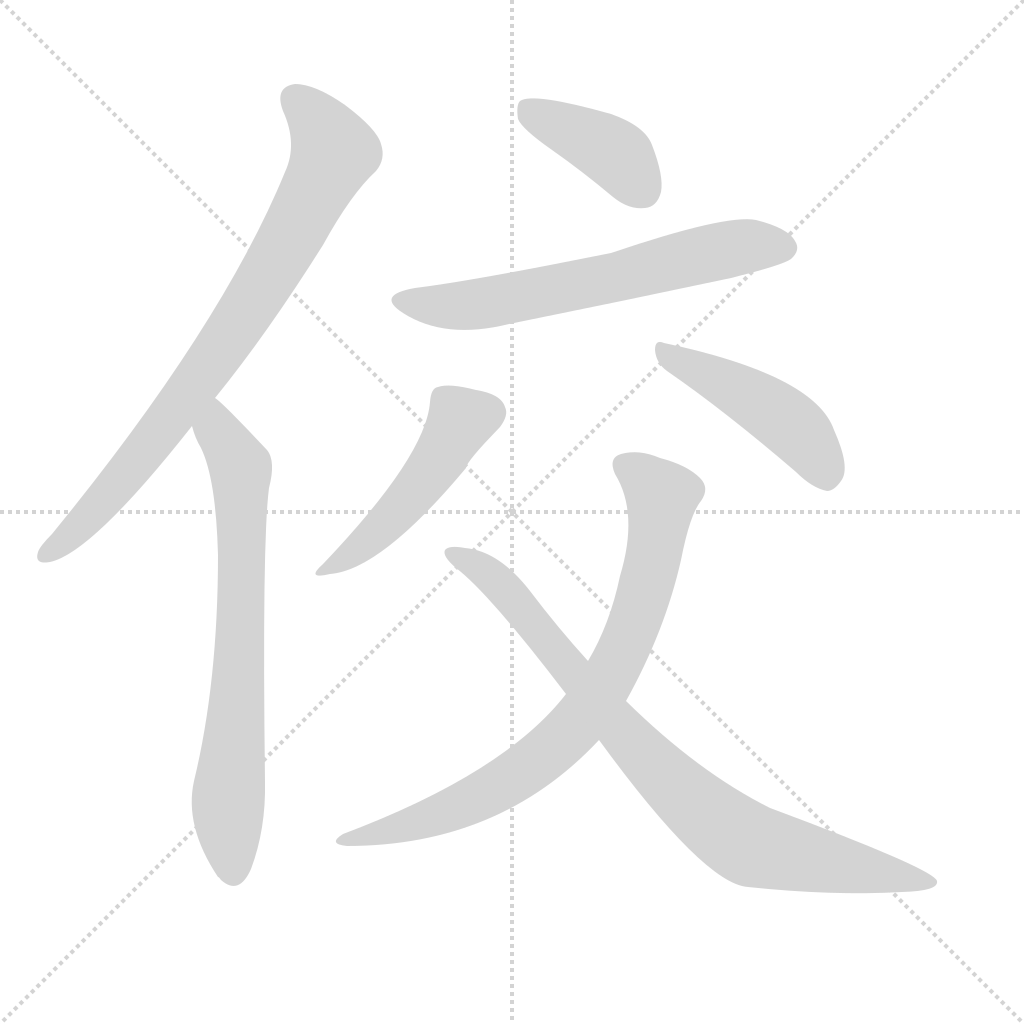
Jiao
Kangxi stroke count: 8
Page number: Page 101, Number 01
Guangyun pronunciation: Initial gǔ and final mǎo (jiǎo). Jiyun pronunciation: Initial jí and final qiǎo (jiǎo). Yunhui and Zhengyun pronunciation: Initial gǔ and final qiǎo (jiǎo). Pronounced the same as jiǎo.
Meaning: Beautiful or good.
How beautiful is that lovely person — Book of Odes (Shijing). The scholar Lu wrote this using a variant form pronounced jiǎo.
Dialects (Fangyan) by Yangzi: From the east of the Pass, in the area between the Yellow River and the Ji River, anything good is called jiǎo.
Book of Rites (Liji), Monthly Ordinances (Yueling): In the middle month of summer, nurture those who are robust and handsome. Commentary: Robust refers to those with large physiques. Handsome describes a beautiful appearance. Selecting these types for nourishment follows the ordinances for growth and development.
Book of the Later Han (Houhanshu), Biography of Liu Penzi: Emperor Guangwu said: You are what is called the clanging of fine iron, the outstanding among the mediocre.
Balanced Discourses (Lunheng) by Wang Chong: People of ancient times were tall and handsome, strong and long-lived.
Meaning: Also means vigorous or competitive.
Master Huainan (Huainanzi), Profound Training (Lanmingxun): The plants and trees do not sway, yet the swallows and sparrows boast of their vigor. Commentary: Swallows and sparrows believe themselves capable of competing in vigor with the phoenix.
Meaning: Also a surname. Examples include Jiao Qiang of the Han Dynasty and Jiao Changsheng of the Northern and Southern Dynasties.
Also recorded in Guangyun with the phonetic spelling of initial gǔ and final yáo, pronounced jiāo. In this sense, it is interchangeable with the character jiāo meaning outskirts or social intercourse.
Records of the Grand Historian (Shiji), Hereditary House of Zhao: He should have been a superior associate, yet now he has committed a crime.