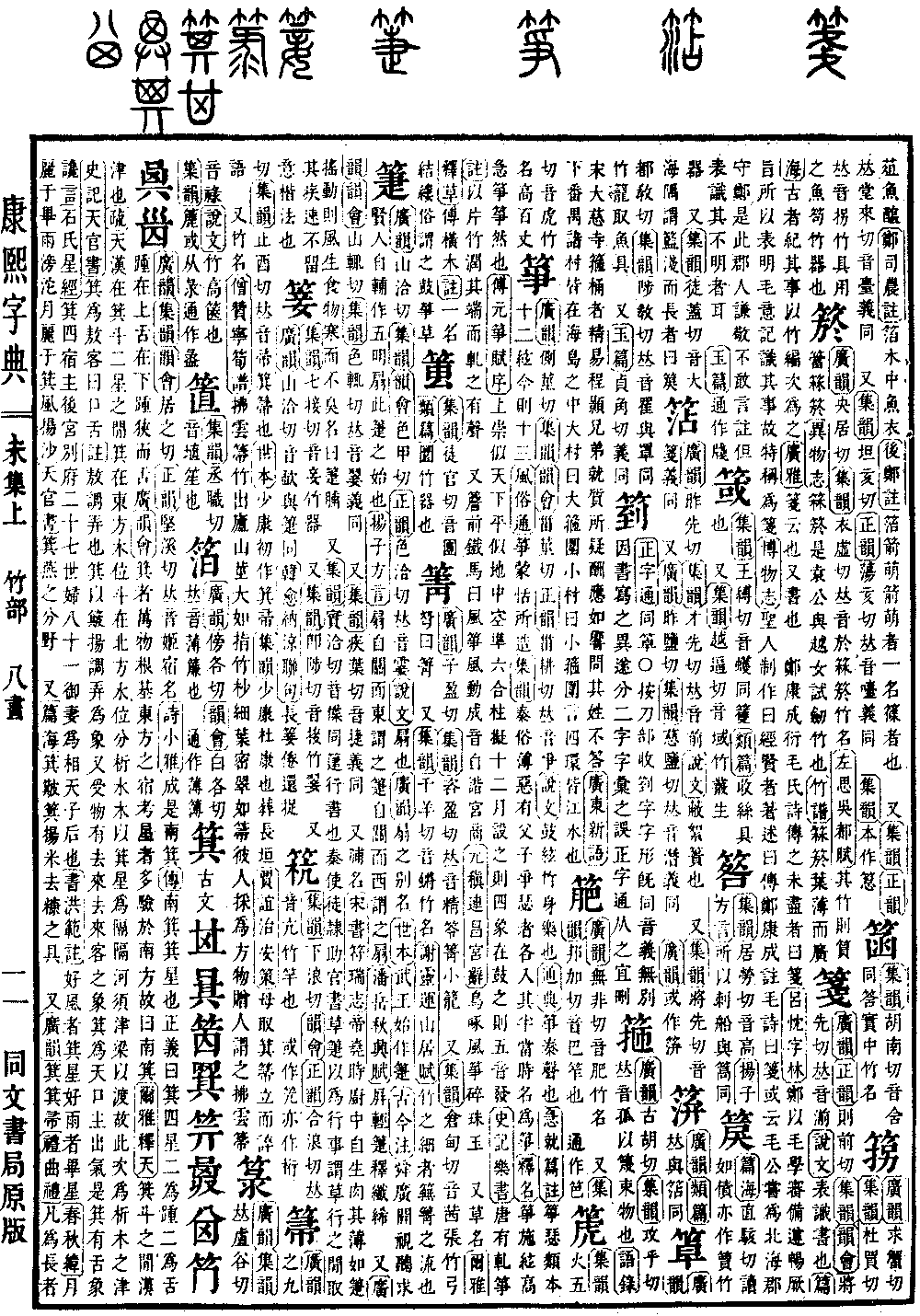
Wei Collection, Upper Volume
Radical: Bamboo (zhú)
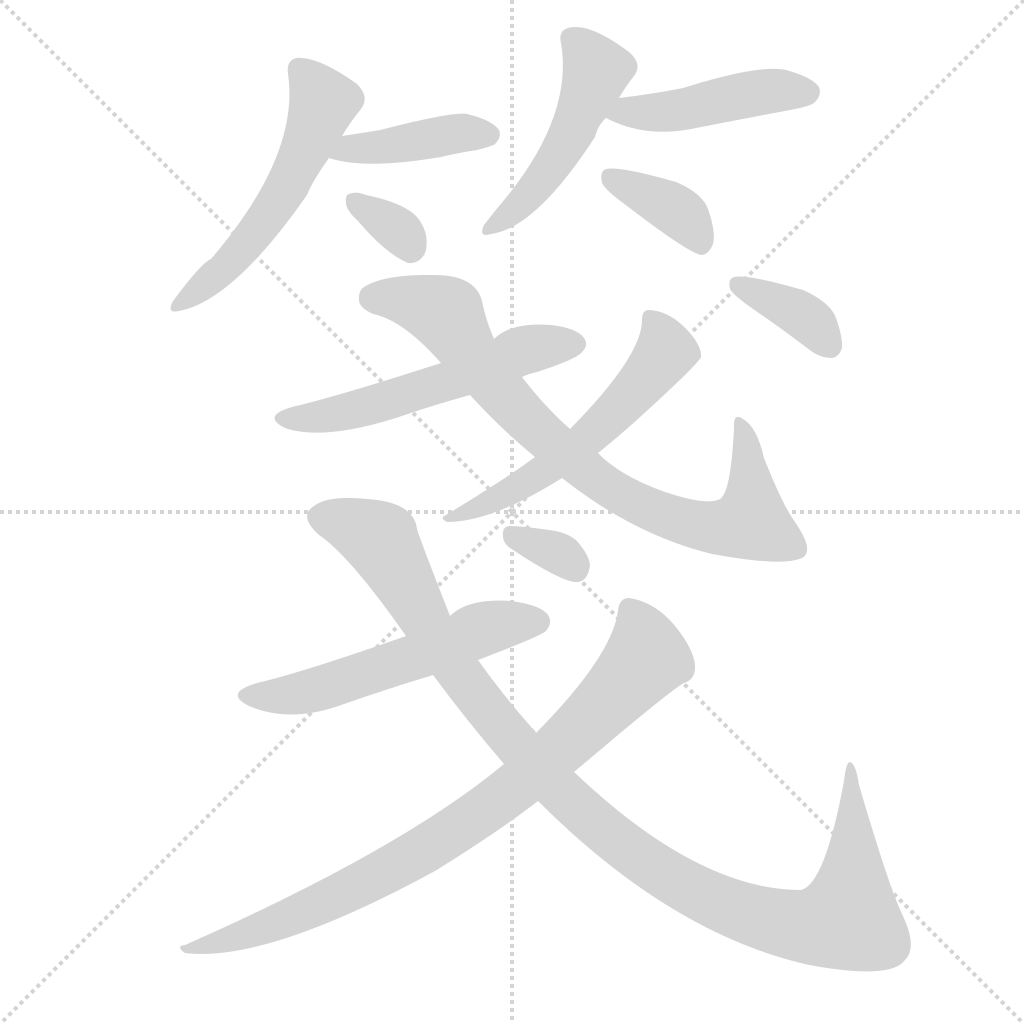
Jian
Kangxi strokes: 14
Page 887, Entry 04
Pronounced jian.
Shuowen Jiezi (Shuowen): A mark or identification placed on a book.
Pianhai: In ancient times, events were recorded by arranging them on bamboo strips.
Guangya: Jian means to explain. It also refers to a book.
Zheng Kangcheng expanded upon the Mao version of the Book of Odes (Shijing); those parts not fully covered by the commentary were called jian.
Lü Chen, Zilin: Zheng considered the Mao school of thought to be accurate and comprehensive, and he followed and clarified its principles. Therefore, he labeled his work as jian to clarify the intent of Master Mao and to note and identify the events therein.
Bowuzhi: The works of sages are called jing (classics), and the writings of virtuous men are called zhuan (commentaries). Zheng Kangcheng noted the Mao version of the Book of Odes (Shijing) and called it jian. Some say that Master Mao once served as the Administrator of Beihai, and because Zheng was a person from this same commandery, he was modest and respectful and dared not call his work a commentary; instead, he merely marked and identified the parts that were not yet clear.
Yupian: Commonly written as the variant form (jian).