Chou Collection, Lower Volume
Radical: Woman (nǚ)
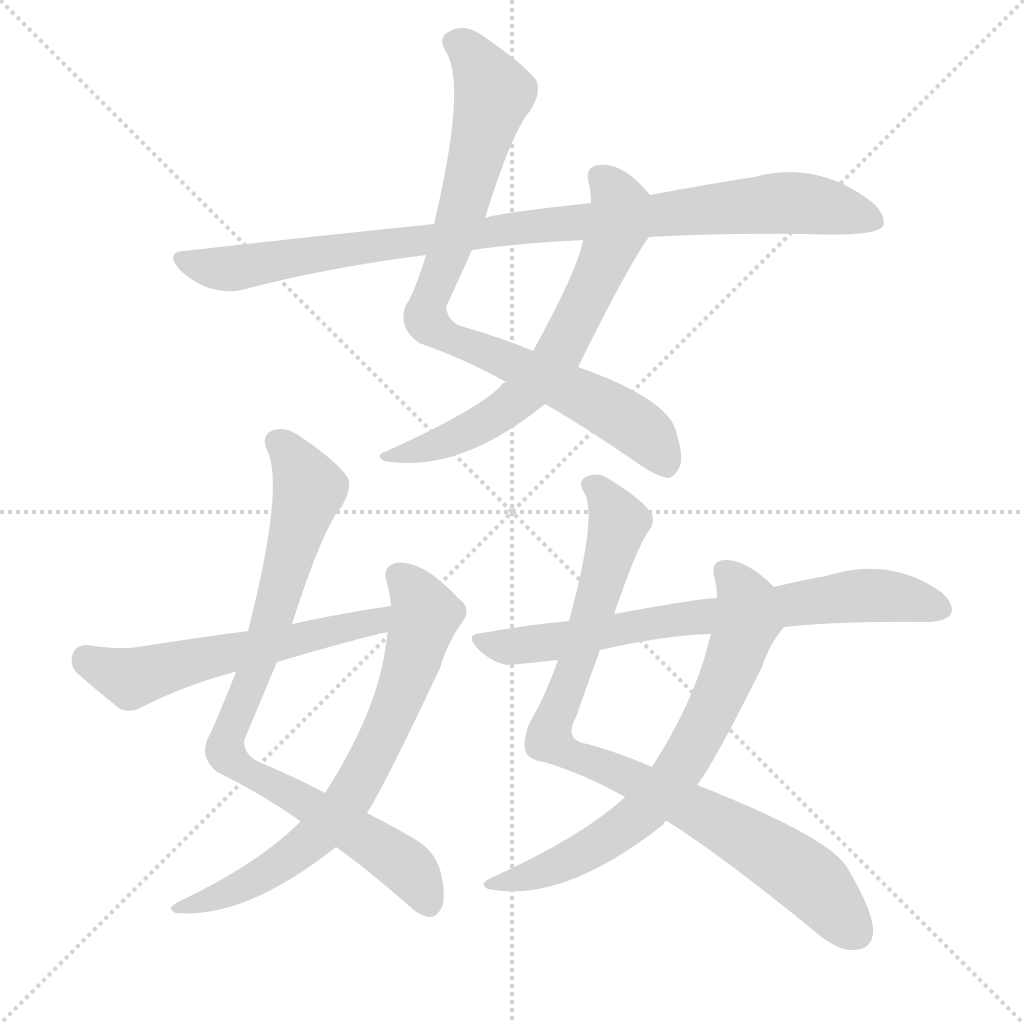
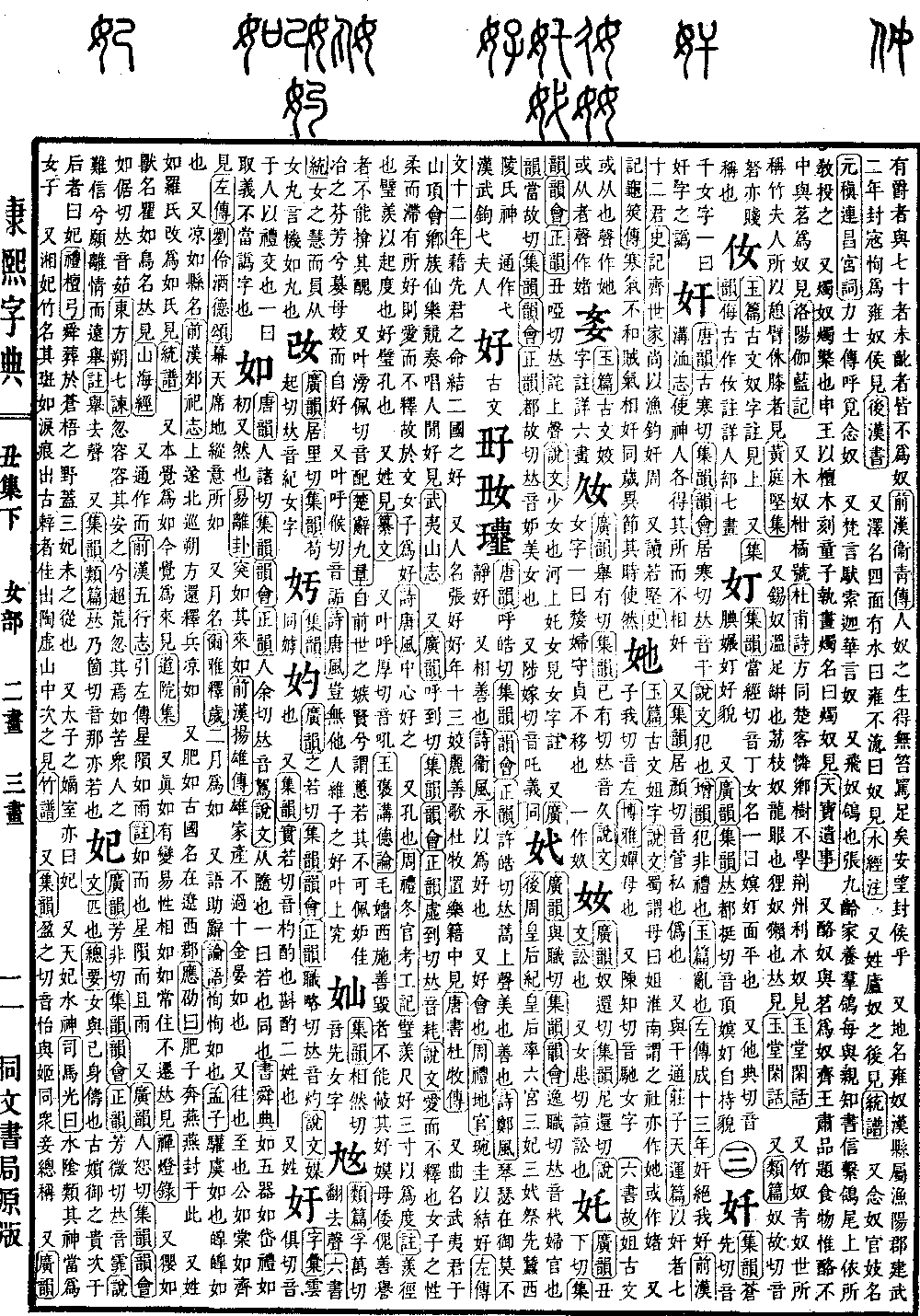
姦; Kangxi stroke count: 9; Page 255, Entry 01
Ancient character form.
According to the Guangyun (Guangyun), pronounced jian.
According to the Jiyun (Jiyun), the Yunhui (Yunhui), and the Zhengyun (Zhengyun), pronounced jian.
According to the Shuowen (Shuowen), it means private. Another meaning is to deceive, and another is to be licentious.
Book of Documents (Shangshu), Chapter on the Canon of Shun: To harm, to act with treachery, and to commit internal wrongs.
Annotation: To rob people is called harming, to kill people is called thieving, to be treacherous from the outside is called jian, and to be treacherous from the inside is called gui.
Record of Music (Yueji): Government serves to unify conduct and prevent treachery.
Guanzi (Guanzi), Chapter on Ruler and Ministers: Stopping deception and restraining treachery is the way to strengthen the state.
Zhang Heng, Western Capital Rhapsody (Xijing fu): Prohibitions are not enough to know the treacherousness of spirits. Demons and strange creatures cannot encounter them.
The Tianyun (Tianyun) edition treats them as interchangeable.
Zihui (Zihui): Rhymes with jian, but this is incorrect.
Furthermore, in Korea, which uses Chinese texts, they uniquely use this character to mean good, and use the character for good to mean this character. See the Zhengzitong (Zhengzitong).
Textual research:
Book of Rites (Liji), Record of Learning (Xueji): Government serves to unify conduct and prevent treachery.
I have corrected Record of Learning to Record of Music in accordance with the original text.