Chou Collection, Lower Volume
Radical: Woman (nǚ)
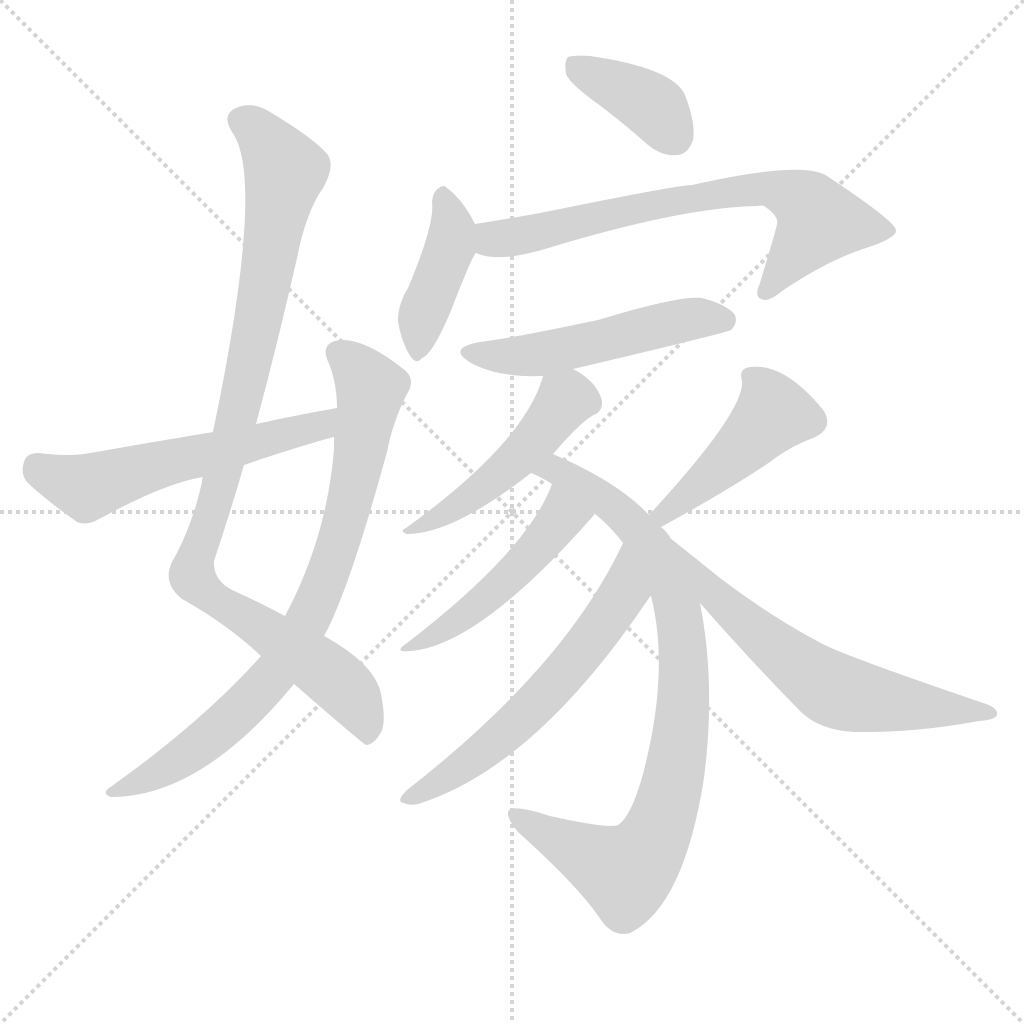
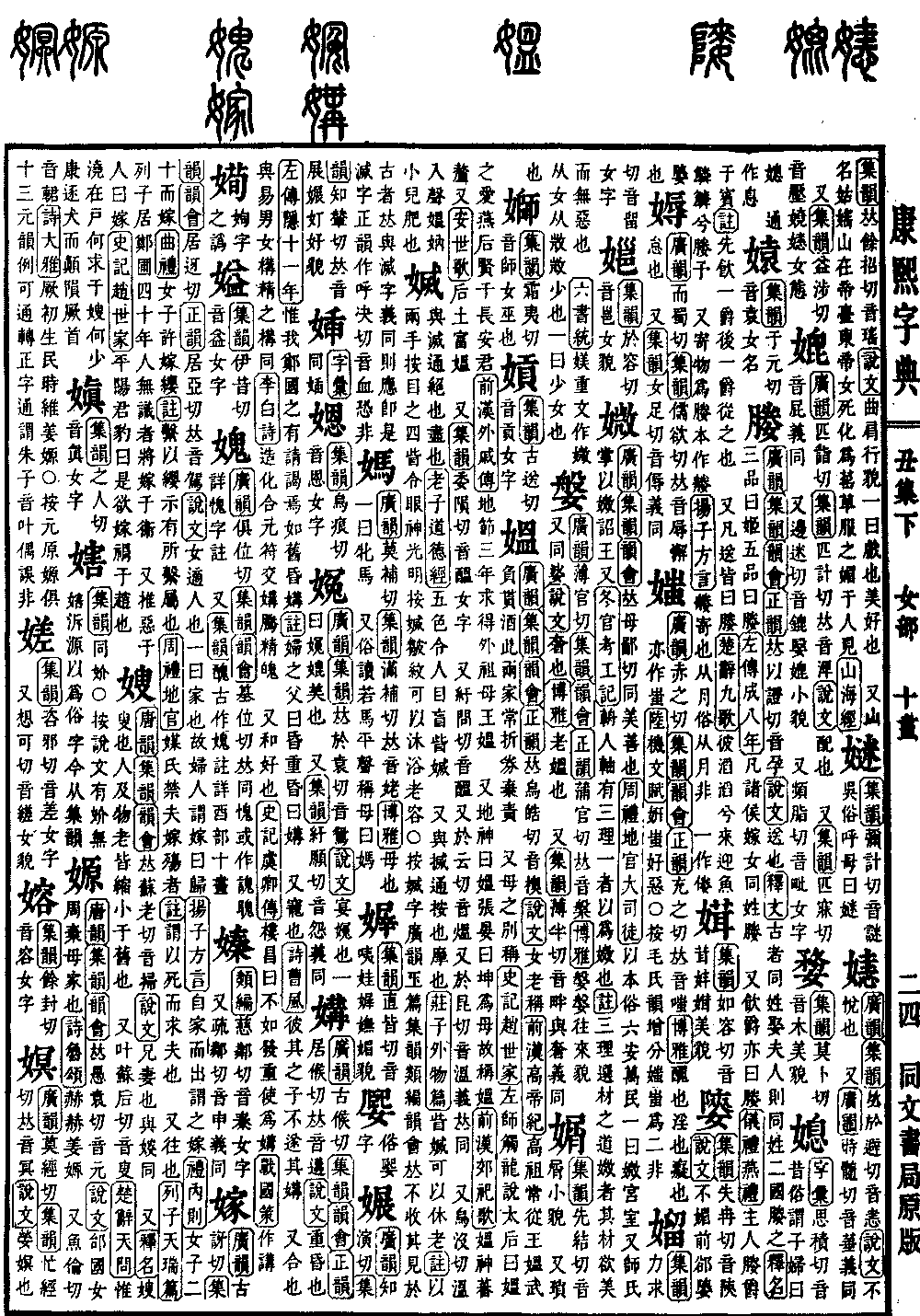
嫁
Kangxi Strokes: 13
Page 268, Entry 33
Pronounced jia (falling tone).
According to the Shuo Wen Jiezi (Shuo Wen), it refers to a woman marrying into her husband's family. One interpretation states that "marriage" is synonymous with "home," which is why women refer to the act of marrying as "returning."
Yangzi Dialect Dictionary (Fangyan): Leaving one's own home is called marriage.
Book of Rites (Liji), Inner Rules (Neize): A woman marries at the age of twenty.
Book of Rites (Liji), Quli: After a woman becomes betrothed, she wears a tasseled ornament. Annotation: Tying on the tasseled belt signifies that she now belongs to someone.
Rites of Zhou (Zhouli), Earth Official (Diguan): The Matchmaker's Office prohibits arranging marriages for those who have died as minors. Commentaries (Dingyi): Refers to seeking a spouse for the deceased.
Also denotes proceeding toward a destination.
Liezi, Heavenly Questions (Tianrui): Liezi lived in the gardens of the Zheng state for forty years, unknown to anyone, and was about to proceed to the Wei state.
Also, shifting misfortune onto others is called marriage.
Records of the Grand Historian (Shiji), House of Zhao (Zhao Shijia): Lord Pingyang, Zhao Bao, said: This is an attempt to shift the misfortune onto the Zhao state.
Textual Research:
Rites of Zhou (Zhouli), Earth Official (Diguan): The Matchmaker's Office prohibits marriage for the deceased. Annotation: Refers to seeking a spouse for the deceased. Note that the original text omitted the word "husband" after "prohibit." The phrase "seeking a husband for the deceased" originates from the Commentaries (Dingyi) on the Rites of Zhou; thus, the word "Annotation" has been changed to "Commentaries," and the word "and" has been changed to "those who."