Chen Collection, Middle Volume
Radical: Tree (mù)
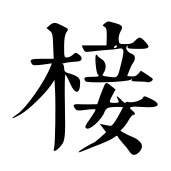
Jie
Kangxi strokes: 12
Page 535, Entry 20
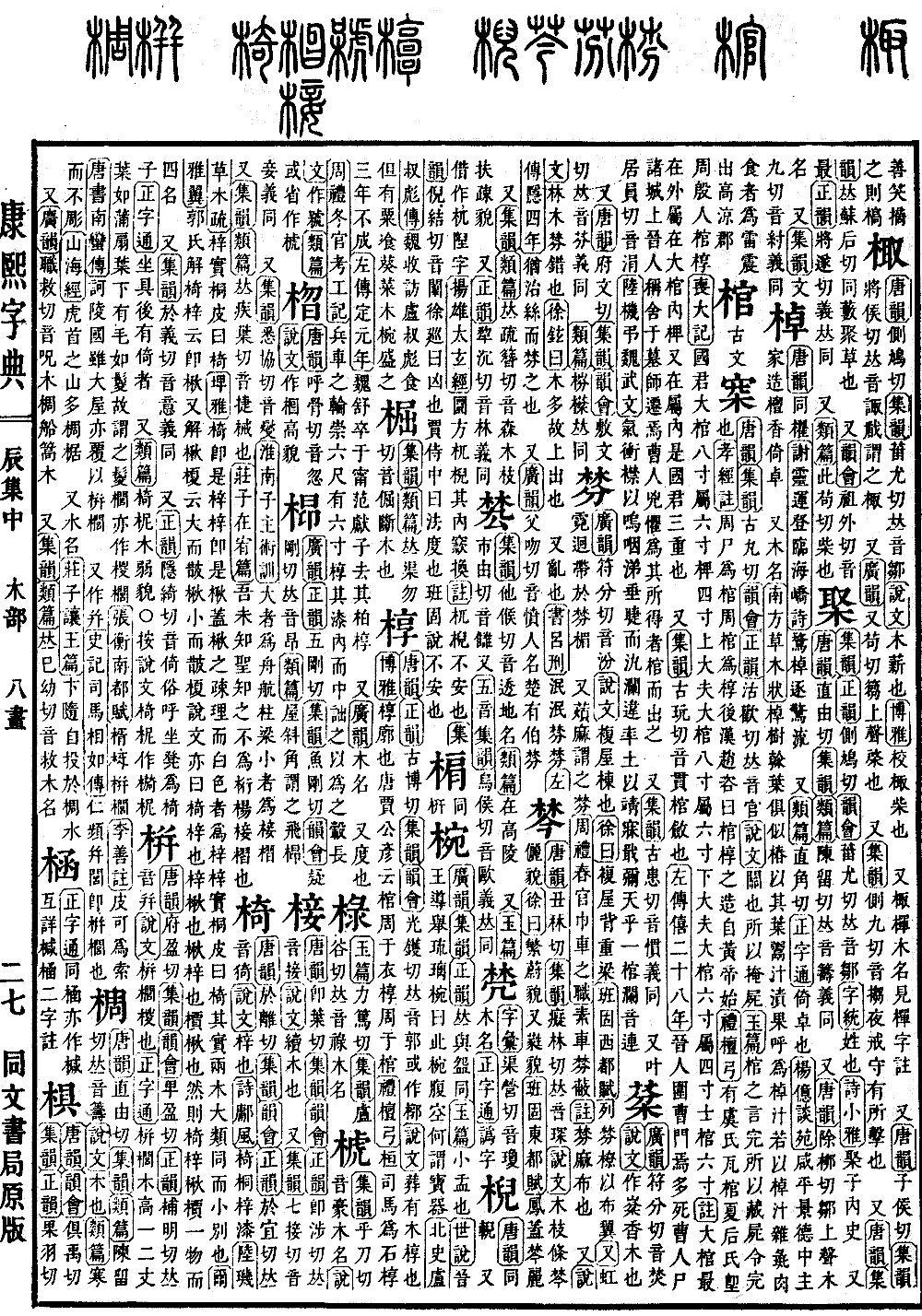
According to Tang Rhyme (Tangyun), pronounced jie (falling tone). According to Collected Rhymes (Jiyun), Rhyme Compilation (Yunhui), and Correct Rhymes (Zhengyun), pronounced jie (falling tone), sounds like jie. According to Explaining Graphs and Analyzing Characters (Shuowen), it means to graft wood. Also, according to Collected Rhymes (Jiyun), pronounced qie (falling tone), sounds like qie. The meaning is the same. Also, according to Collected Rhymes (Jiyun), pronounced xie (entering tone), sounds like xie. According to Huainanzi (Huainanzi), regarding the principles of lordship, large ones are used for boats and pillars, while small ones are used for connecting joints. Also, according to Collected Rhymes (Jiyun) and Classified Texts (Leipian), pronounced jie (entering tone), sounds like jie. It means a device or wooden restraint. According to Zhuangzi (Zhuangzi), in the chapter on letting be and exercising forbearance, I do not know if sagely knowledge might not also become a cangue or restraint for the body.